Federica Zambeletti / KOOZ Digital Vertigo is an interdisciplinary gathering that brings the research of the Chilean Pavilion — initially framed as ‘Reflective Intelligences’ — back to Chile. What changes when a project for the Venice Architecture Biennale returns to the territories, institutions and communities that it addresses?
Nicolás Díaz Bejarano Reflective Intelligences was developed through an examination of the actors and processes shaping Chile’s plans and policies for artificial intelligence. We worked with local organisations to reveal their struggles and concerns around existing and upcoming data centre projects. In doing so, the pavilion produced architectural reconstructions of all 25 projects submitted to Chile’s Environmental Impact Assessment System. In parallel, we traced debates within the country’s institutional foresight processes — particularly the Senate’s Future Commission — to examine exactly how expectations surrounding AI and its associated problems had been defined. Together, these lines of inquiry informed the project, connecting local experiences of data centre development with the institutional debates shaping Chile’s AI agenda. This revealed how defining ‘the future of AI’ involves design: deciding which relationships matter, who can participate and which futures deserve consideration. Through that process, we studied how territories, material conditions and human and more-than-human communities appeared as resources, apparently available to support Chile’s ambition to become Latin America's digital hub. Water, energy and land were incorporated as a passive asset while the experiences of those inhabiting these territories had limited influence over its formulation.
"Defining ‘the future of AI’ involves design: deciding which relationships matter, who can participate and which futures deserve consideration."
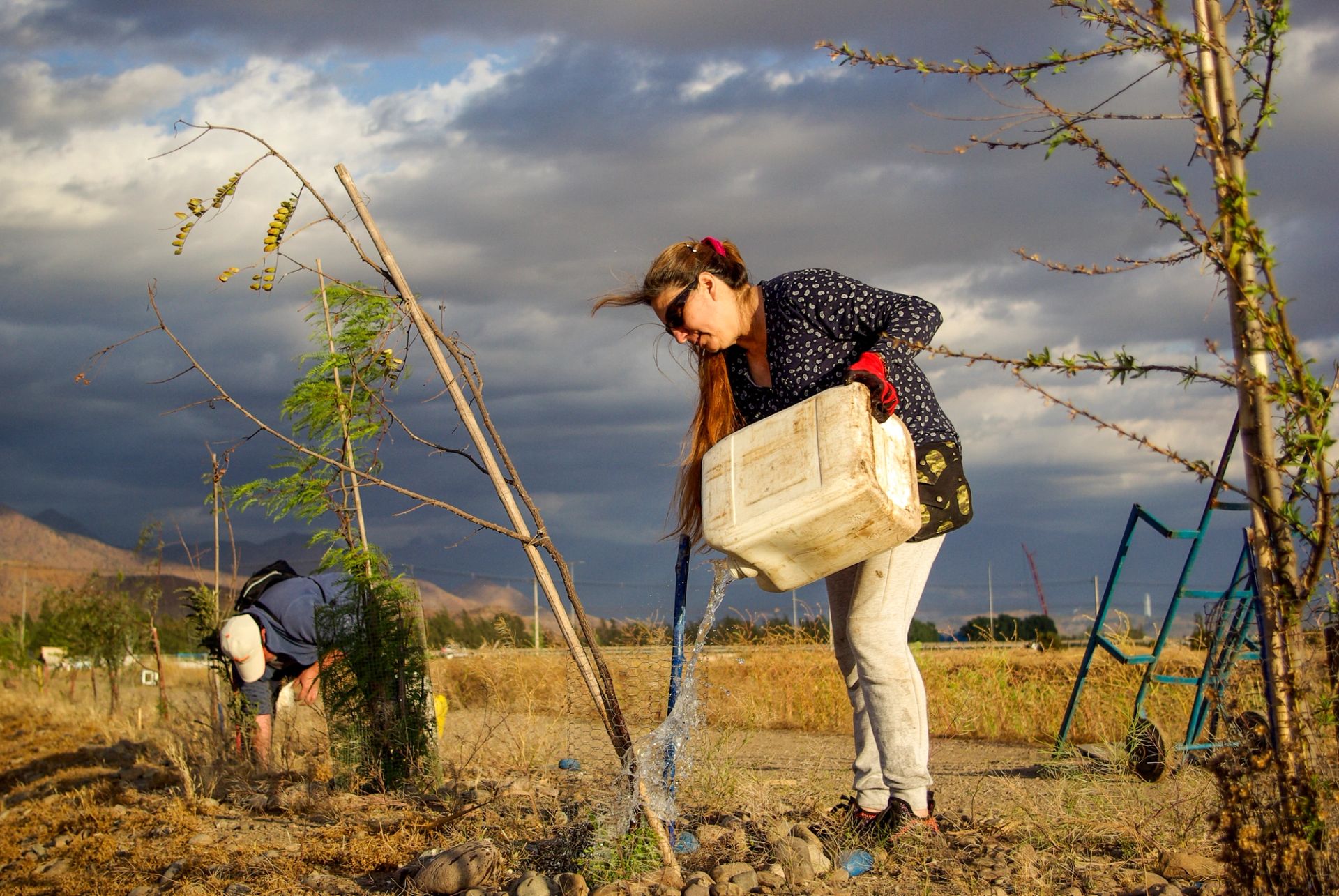
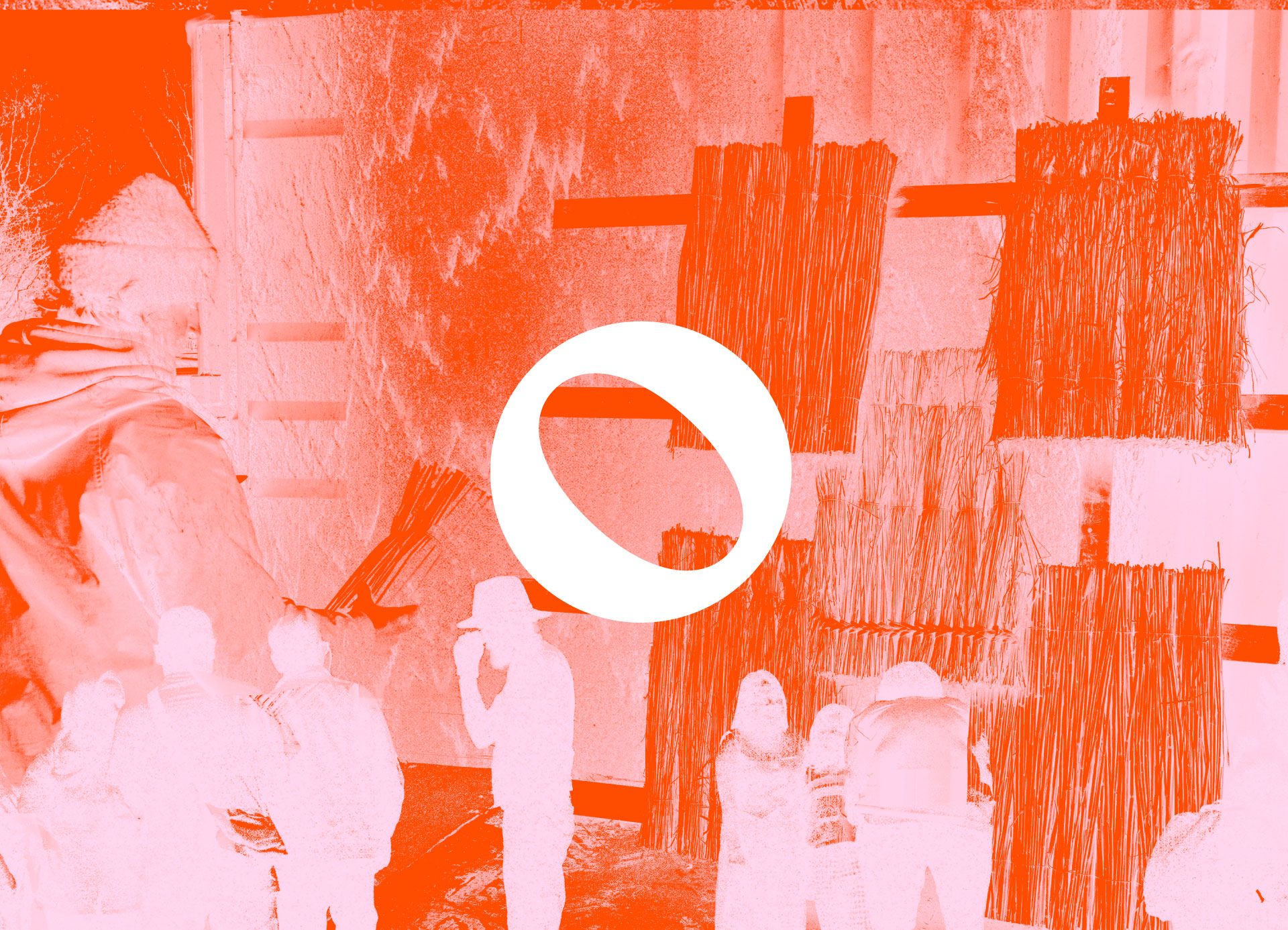
Community irrigation day at the Quilicura Wetland (by Alex Pereira Garrido)
The pavilion’s return as Digital Vertigo takes place as the ambitions around AI are rapidly materialising. Environmental controversies have received technical responses, such as replacing cooling systems based on ‘water’ with systems based on ‘air’. The speed of these responses seemed to prematurely close an architectural and political discussion: namely, what infrastructures do we want, for which activities, under what conditions and with what territorial responsibilities? We speak of ‘vertigo’ partly to describe this mismatch between what we imagine a data centre to be and what is materially taking shape. Through Digital Vertigo, these trajectories enter a space of direct exchange. Organisations whose experiences informed the research can discuss how the future of their territories is being conceived with companies, researchers and public institutions. For example, Resistencia Socioambiental Quilicura’s struggle to protect the wetlands includes asking Google to assume the responsibilities of a neighbour with whom a territory and a decades-long history has been shared.
Serena Dambrosio Digital Vertigo also brings international voices into these local conversations. Cécile Diguet, Felicity Scott, Susan Schuppli, Marina Otero Verzier, Laura Kurgan, Mario Santamaría, David Capener and Cheng-Luen Hsueh have each examined, from different disciplines and geographies, the relationships between digital infrastructure, territory, environmental evidence and architectural practice. Their participation connects the Chilean debate with discussions unfolding elsewhere, where the energy and water demands of data centres, their governance and their place in the landscape are equally contested. For us, ‘returning’ involves making space to convene these conversations, as well as putting our own assumptions up for interrogation. As architects, we want to reclaim the possibility of imagining other building type configurations; that is, to examine the relationships it establishes with the places it inhabits and reopening decisions first introduced as inevitable. The table, our curatorial architectural device, in that sense provides a setting on which to undertake that work collectively.
"For us, ‘returning’ involves making space to convene these conversations, as well as putting our own assumptions up for interrogation."
Placing the Chilean Pavilion in conversation with other curatorial experiences also allows us to reflect on the conditions under which such projects are produced. In Chile, curating the national pavilion requires an almost heroic effort. ‘Reflective Intelligences’ was produced in just two and a half months, through slow and cumbersome bureaucratic procedures, with a limited budget and minimal institutional support. Under these conditions, curators take on many roles at once, becoming producers, fundraisers, administrators and logistics coordinators; the questions that motivated the research compete for time with the work required to realise the project. Exchanging our experiences with curators of other pavilions allows us to compare how different countries sustain the research threads they`ve brought to Venice from their local architecture discourse, while advocating for institutional frameworks that give continuity to these inquiries.
KOOZ In Reflective Intelligences, an interactive table operated as a curatorial device through which typically excluded social, mineral and water bodies could enter discussions around AI. How does Digital Vertigo translate this proposition into a situated public programme?
Linda Schilling Cuellar The table has accompanied this research as an object, a metaphor and a space of encounter. In Venice, its surface brought together trajectories that had largely remained separate: institutional discussions about AI, the technical descriptions of data centres, community struggles and the material conditions sustaining computation. Water carried the projected images, making their perception dependent on the very material whose use was being contested. Visitors encountered those parallel trajectories around the table, and were challenged to think about their own positionality. With Digital Vertigo, Reflective Intelligences public programming, we bring people involved in these trajectories into direct conversation. Alongside public talks, the programme includes three working tables addressing energy; environmental assessment and public participation; and territorial planning. The people we`ve convened to sit around these tables draw on the idea of the hybrid forum, gathering people whose knowledge comes from different forms of involvement: designing and operating infrastructure, developing policy, researching environmental processes or inhabiting the affected territories.
Each session invites participants to think from that experience. We want to uncover further layers of the problem, examine opportunities and establish relationships through which the discussion can continue, for this is still an unsettled environmental controversy that rears its head in different ways depending on the context. In Stengers’s sense, the cosmopolitical ambition concerns making room for what each participant brings, without granting any discipline or institutional position the authority to define the entire situation in advance. The presence of water, minerals and other non-human bodies requires an ongoing effort of representation. Environmental records, drawings, community observations submitted as part of environmental impact assessments, and accounts of material behaviour bring their conditions into the conversation. A discussion about cooling, for example, must attend to the waters being extracted, treated and circulated, together with the ecosystems and communities that depend on them.
These encounters can be uncomfortable. Participants have unequal resources and conflicting interests, as well as unequal social standing, the table itself cannot erase those asymmetries . Its potential lies in sustaining the exchange long enough for established positions to be questioned and sometimes even shifted. Through that process, we hope to cultivate a shared capacity to formulate problems and possibilities of data infrastructure from the realities of Chile.
"The presence of water, minerals and other non-human bodies requires an ongoing effort of representation."
KOOZ The project asks us to understand intelligence not as exclusively human or computational, but as spatial, material and communal. How might these other forms of intelligence challenge the institutional processes currently anticipating the arrival of AI in Chile?
NDB Our understanding of intelligence resonates with the work of Laura Tripaldi, James Bridle and Marina Otero Verzier, particularly their attention to the capacities of materials and living systems to respond, adapt and establish relationships with their surroundings. From this perspective, intelligence emerges through intra/actions. The materials through which we construct our lives participate in shaping what those lives can become. This has consequences for how we imagine digital infrastructure. In the institutional processes we studied, the infrastructures sustaining AI were largely treated as given. Their expansion became an objective around which territories were assessed for available resources. Water, air, minerals and energy appeared as inputs whose availability could support that development. Yet each has properties, histories and relationships that affect what an infrastructure can do and how it might be designed.
"The materials through which we construct our lives participate in shaping what those lives can become. This has consequences for how we imagine digital infrastructure."
Following the cooling system of a data centre makes that interdependencies tangible. Water carries heat, contains minerals, sustains microorganisms and changes as it circulates through chemical/biological treatment systems and pipes. Its behaviour connects the operation of a building to geological processes, urban networks and ecological conditions. Attending to these relationships introduces other architectural questions: how could the system respond to the seasonal conditions of the territory? What must remain habitable for the bodies sustaining its operation? What effects should its design prevent? Community knowledge is essential to formulating those questions. In Quilicura, organisations have reconstructed the histories of local waters and articulated possibilities for their care. Their understanding of the territory’s fragility also identifies capacities for regeneration and other ways of inhabiting/understanding a borough long assigned as ‘industrial’.
These forms of intelligence challenge institutional anticipation by bringing the configuration of infrastructure itself into discussion. Decisions about its location, scale, operation and purpose would need to develop through engagement with those material capacities and collective experiences. For architecture, this opens a field of experimentation around how a data centre might participate in relationships of mutual care with the territory on which it already depends.
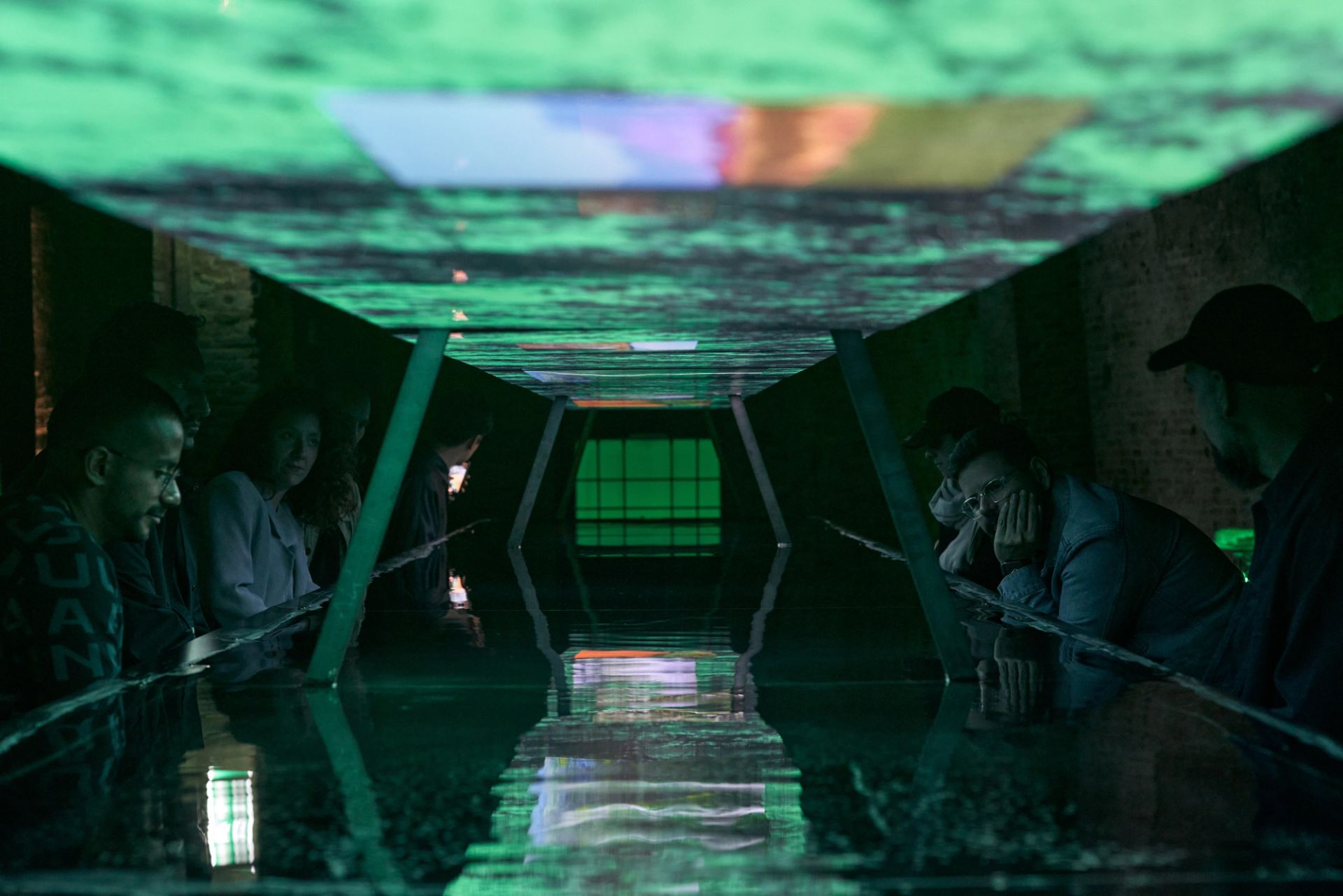
Reflective Intelligences, Chilean Pavilion at the 2025 Venice Architecture Biennale (Photo: Cristóbal Palma)
KOOZ The programme brings academic, artistic and research perspectives into conversation with data-centre operators, state agencies and neighbourhood organisations. What productive tensions might emerge between these distinct—and unequally empowered—forms of knowledge?
SD Our approach draws on Keller Easterling’s Medium Design, particularly the idea of interplay: working with the dispositions and relationships already present in a situation to explore how they might develop differently. The public programme begins with a concrete disposition shared by participants: their willingness to come together. That willingness provides an opportunity to compose encounters whose consequences remain open. Easterling’s discussion of political “superbugs” warns that opposition organised around fixed positions of enemies and innocents can feed the very confrontation through which power sustains itself. Controversies around data centres can become caught in such a loop. Participants repeatedly defend or contest the same claims, while the terms through which the infrastructure is understood remain largely unchanged.
The convening of our tables attempts to interrupt that repetition by creating opportunities to approach the problem from other directions. In Quilicura, for example, asking Google to assume the responsibilities of a neighbour introduces questions about how to inhabit a shared territory over time. Discussions of consumption and compensation acquire further dimensions: where regeneration might occur, whose knowledge would inform it and what commitments would be necessary to sustain it. The willingness expressed by Google and Resistencia Socioambiental Quilicura to explore initiatives becomes a disposition with which further work can begin. The tensions thus become productive when they affect what participants can ask of one another and what they recognise as possible. A community’s account of a wetland, an engineer’s description of cooling or an institution’s explanation of its assessment procedures can expose relationships that each perspective had left unexamined.
"Asking Google to assume the responsibilities of a neighbour introduces questions about how to inhabit a shared territory over time."
Differences in power remain part of this interplay. Companies, institutions and community organisations arrive with unequal resources and capacities to act. The curatorial task then involves attending to those asymmetries while arranging conditions in which established positions can encounter unfamiliar questions. So when we discussed how to keep the pavilion’s topics as part of the country's architectural agenda, we came to the realisation that the public programme could become an experiment in cultivating relationships through which the problems of data centres can be reformulated collectively, from the territories already involved in their operation.
KOOZ By moving between archives, visual regimes, environmental evidence and data storage, how does the programme connect what AI appears to be as an interface, with the territories, resources and bodies that sustain it?
LSCDigital Vertigo examines the changing relationship between information and the spaces that hold it. Analogue techniques of recording and preservation involved particular objects, architectures and bodily practices like consulting a card catalogue, opening a drawer, or entering a reading room. Digitisation reorganises these relationships across interfaces, platforms, cables and data centres. Existing practices of classification and selection persist within that transformation, while the material presence of the archive becomes increasingly difficult to locate from the position of its user. As Nicolás mentioned, ‘vertigo’ names that disorientation. We encounter information through an interface that gives few indications of the territories involved in storing or processing it.
"We encounter information through an interface that gives few indications of the territories involved in storing or processing it."
Our research follows those connections through an archive produced by the infrastructure itself: environmental impact assessments with its technical reports, plans, institutional responses and citizen participation observations. Read together, these documents reveal both the material arrangements of data centres and the procedures through which their consequences become recognised, disputed or left outside the discussion, as has recently happened with new thresholds established by Chilean environmental law that effectively exempt these infrastructures from submitting environmental impact assessments, therefore effectively foreclosing citizen participation processes from taking place within an institutional framework.
In a highly mobile scenario, where regulations are trying to keep up with a fast moving industry, we see architectural representation contributing to this discussion via its ability to reconstruct relationships dispersed across those records. Take cooling for example, it connects computation to heat, pipes, water treatment, urban supply networks and groundwater. The relationship between a data centre and a wetland becomes perceptible through that trajectory. Establishing it requires bringing drawings, technical descriptions, territorial histories and community observations, understood as environmental testimonies,into relation. A single image offers only a partial account. Quili.AI, an initiative by Ngen deserves a mention, they approached this distance through performance. Residents of Quilicura answered queries behind an interface, bridging and bringing the people inhabiting a territory that sustains digital infrastructure into the encounter with its users. In our reading, that gesture was very powerful, it succeeded in making present those bodies of water with which their lives and the operation of data centres are entangled.
The programme connects these ways of knowing while examining how each constructs its own account. An interface, an environmental report and a community archive direct attention towards different relationships. Working across them makes it possible to reflect on its aesthetics, questioning what becomes perceptible, what remains difficult to register and who gets the right to intervene in the material arrangements through which information circulates.
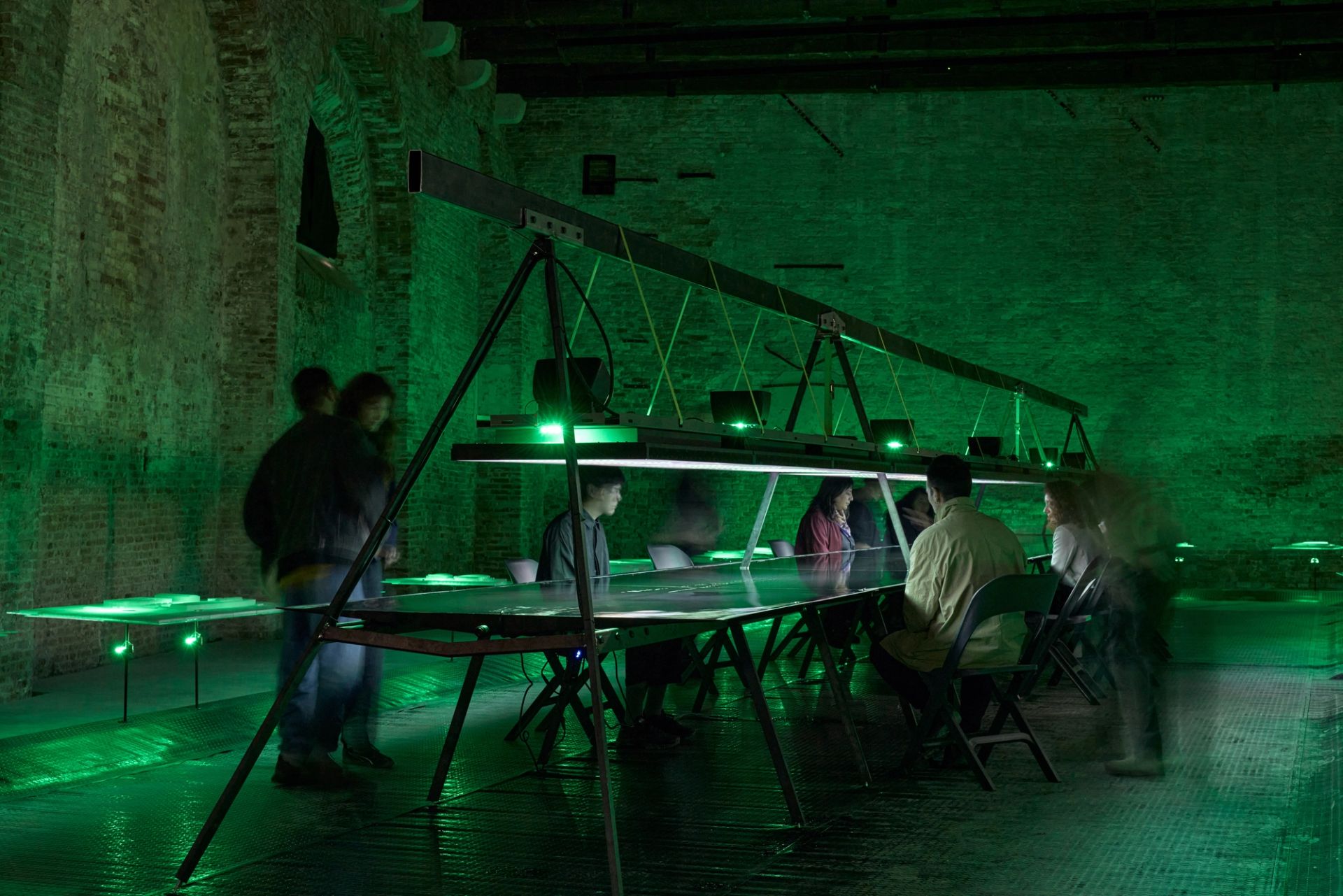
Reflective Intelligences, Chilean Pavilion at the 2025 Venice Architecture Biennale (Photo: Cristóbal Palma)
KOOZ The pavilion proposed that architecture might play a fundamental role in negotiating the environmental controversies surrounding AI. Beyond making these infrastructures visible, how might architecture intervene in the systems of governance and forms of cohabitation through which they are produced?
NDB We have encountered a kind of architectural paralysis around the possibility of reimagining the data centre. Liam Young described it as the great library of our generation. Rem Koolhaas associated its vast dimensions and remote locations with a continuation of land art. Niklas Maak declared it the most important building type of the twenty-first century. Marina Otero Verzier, in her own work and collaborations, has examined it as a nonhuman typology shaped by the automation of space. Jesse LeCavalier has described it as a young typology whose characteristics are still taking shape. These accounts recognise the architectural significance of the data centre, yet its repeated designation as a typology has rarely been accompanied by a sustained inquiry into what architecturally constitutes it as such.
"We have encountered a kind of architectural paralysis around the possibility of reimagining the data centre."
That unfinished inquiry offers an opportunity to reconsider its spatial organisation, territorial relationships and the decisions that have made its current configurations seem inevitable. For the pavilion, our commitment to the communities with whom we work gives this inquiry a specific location. We are interested in pursuing it through the conditions of Chile: its institutional practices, territorial histories, material dependencies and the demands of those already living alongside these infrastructures. Other architectural teams could undertake-—-and have undertaken— comparable work from the conditions of their own countries, take for example States of Entanglement by the collective Annex, which looked at the data centre issue in Ireland from the point of view of the heat signature it generates .
During our earliest collaborations in Quilicura, community members asked whether we could design a device to capture the vapour escaping from cooling towers, or build a pipe to return water used for cooling to the wetland. These proposals may initially sound naive yet they make sense within a territory where communities experience the disappearance of water while living alongside infrastructure that depends on it. The desire to capture that fugitive water expresses an understanding of interdependence and gives architecture a question to work with. Exploring these proposals would require examining the conditions under which water could return and sustain life. Their imaginaries invite us to investigate what relationships a data centre sensitive to its territory could establish, and how its design might contribute to the persistence of the bodies of water sustaining it.
In the imagination of cloud computing, information is stored and processed “somewhere”. That nebulous location not only sustains data but reinforces a distance between the experience of digital services and responsibility for their material and territorial footprint. Following that “somewhere” to Quilicura brings us into a place with existing inhabitants, histories, conflicts and aspirations. These conditions must participate in how the architecture is conceived and governed. Our tables provide one setting for that work. Communities, operators, researchers and public institutions can question the categories through which Data Centers are described, the boundaries through which their consequences are assessed and the responsibilities attached to their continued operation. We see architecture participating in this by giving spatial and material form to those questions and exploring configurations that emerge from the encounter.
Reimagining the data centre therefore involves a collective capacity to decide what it could become in a particular place. In the case of Quilicura, that means serious consideration of the demand of Resistencia Socioambiental: namely, that Google’s data centre PARAM 1 & 2, already sharing the territory, should also participate in caring for its future.
BIOS
Serena Dambrosio is an architect, researcher and editor based in Santiago, Chile and trained in Milan. She is interested in the relationship between abstraction and neutralization rethorics on discourses about socio-technical progress and its material and environmental implications, mainly through destructive and extractive practices. In 2025, alongside Nicolas Díaz Bejarano and Linda Schilling Cuellar, she was the co-curator of the Chilean Pavilion at the Venice Architecture Biennale, titled ‘Reflective Intelligences’.
Nicolás Santiago Díaz Bejarano is an architect and researcher based in Santiago, Chile. His research focuses on spaces for storing information and knowledge as material processes within the Anthropocene. In 2023, alongside Marina Otero Verzier and Serena Dambrosio, he received the Architecture as Public Concern Fellowship 2023 by the Canadian Centre for Architecture; in 2025, alongside Serena Dambrosio and Linda Schilling Cuellar he was the co-curator of the Chilean Pavilion at the Venice Architecture Biennale, titled ‘Reflective Intelligences’.
Linda Schilling Cuellar is an architect, urban designer, and educator between Santiago and London. Her research interests are the spatial arrangements of extractive activities and their ecologies. She is a PhD candidate at Goldsmiths Centre for Research Architecture (CRA) She has previously studied architecture and urban design at Columbia University Graduate School of Architecture Planning and Preservation (GSAPP) and Universidad Técnica Federico Santa María (UTFMS). In 2025, alongside Serena Dambrosio and Nicolas Díaz Bejarano, she was the co-curator of the Chilean Pavilion at the Venice Architecture Biennale, titled ‘Reflective Intelligences’.
Digital Vertigo is an international and interdisciplinary gathering that brings together architects, designers, and artists, taking place in Santiago, Chile between 06–16 October 2026,. It examines how digital transformation and data infrastructure (like servers and data centers) replace traditional analog archives (like libraries, vaults, and reading rooms) from a material, spatial, and ecological lens. It extends the critical research first developed by Inteligencias Reflexivas, the Chilean Pavilion at the 2025 Venice Biennale of Architecture.