Federica Sofia Zambeletti/KOOZ Tudor, Andreas, thank you both for joining me as the BETA Biennale — which you’re curating — takes shape, with a soft launch in May before the full programme in September. Per your curatorial note, let’s start from this idea of being “in practice, as opposed to ‘in theory’”. What counts as practice within the Biennale that you are putting together?
Tudor Vlăsceanu Thank you. For us, the curatorial narrative is rooted in the whole arc of the project itself. To give you a little background, this year the BETA Biennale will take place in what is a former school — a technical high school which has been abandoned for the last eight to ten years, possibly because of a diminishing number of students. In this day and age, everyone wants to go to universities; maybe in the future, the idea of a craft school or craft professions could come back. Anyway, the school has been abandoned for the last ten years, and now there is this opportunity to turn this building around as a cultural center. This project connects with the City Hall and private investors too, so it has all the foundations that are needed but also a high level of complexity.
Right now, the site is at a point where it could become something else; with the Biennial, we found this opportune moment to investigate all these possibilities about: what this place could be in the future? We’re interested in investigating potential ideas and futures for this building, and the Biennale provides a vehicle to do that. The “in practice” part for us occurs when projects really interact with the fabric of the building and its possible futures.
We see that, on one side, there is the authorial and artistic mode of practice. Certain architects can't give that up; they want to be identifiable, they want everyone to know that this is their installation. Sometimes, this can introduce a sort of detachment of their work from the existing reality. On the other side of the spectrum are those who would really engage with the building or the site itself, to figure out some solution for an existing problem that they identified. I think the installations that engage practically and creatively with the building have a high chance of becoming a reality in the near future, perhaps integrated in the next set of design processes and then implemented in the functioning building - and to us, this counts as being “In Practice”, as opposed to remaining “in theory”. All the results we exhibit are a result of an open call as a process of selection, and now a period of development, adaptation, implementation. Some architects are more practical in their approach, others are less so.
Andreas Kofler The real “heroes” of the biennial are, for example, the people who found a strategy to repair the windows. These issues are really practical and show an understanding of what the building urgently needs right now. These are actually the most valued approaches.
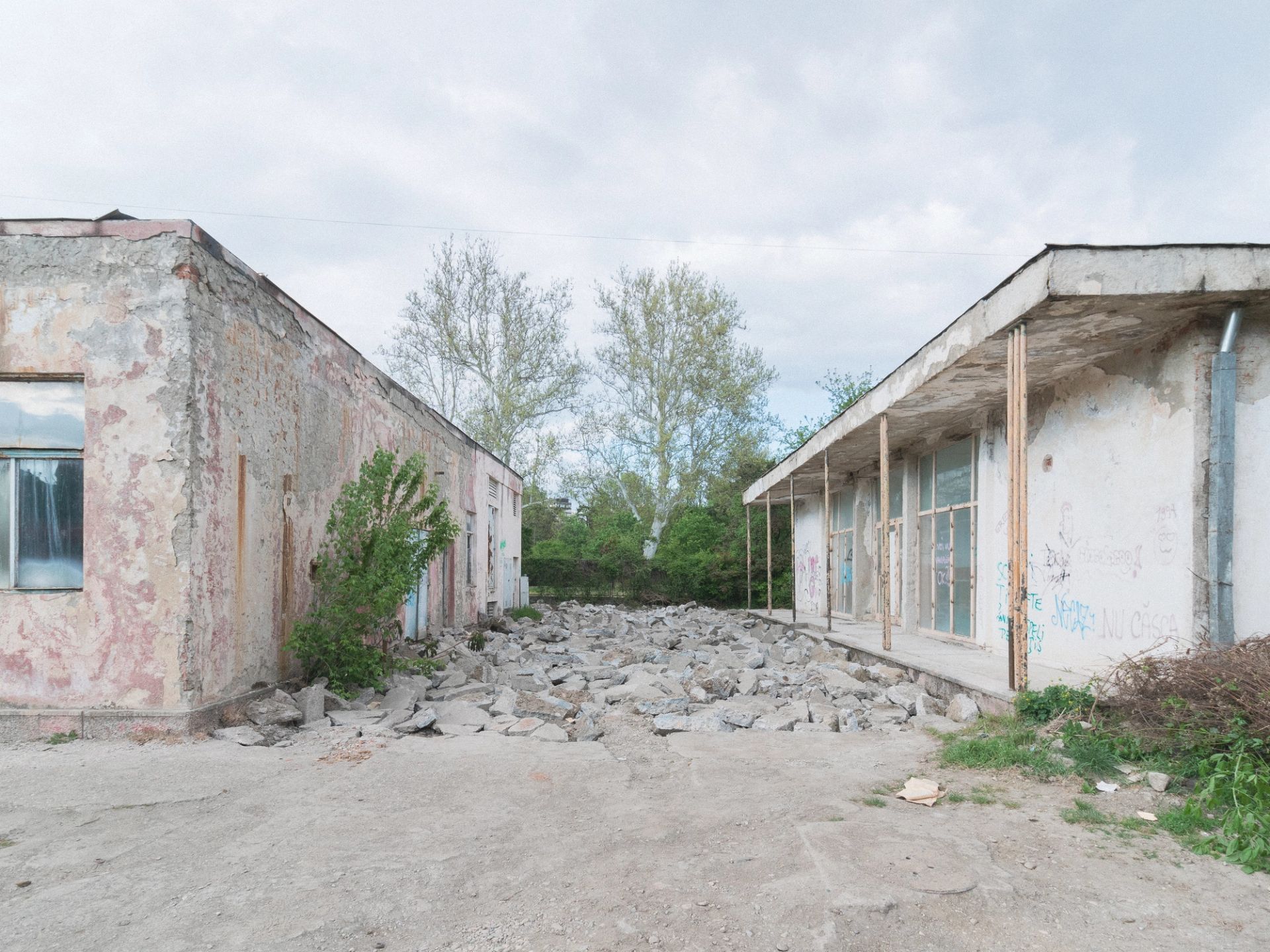
Beta 2026 reactivates the former “Ion Mincu” Technical High School as a space for experimentation, reuse, and collective transformation.
TV Now, the building is tucked away at the end of a long dead-end street, accessible only via a route that is notably difficult for pedestrians and it neighbours a very important park in Timișoara, but funnily enough, it turns its back to it - there is no connection from the building to the park. In reality, this building is hidden so people don’t have a real connection with it.
And to come back to your question about what counts as “in practice”, with this biennial we are reconnecting the building to the park; we are turning it around. This is a change that has an undeniable positive palpable effect felt by everyday people.
As outlined in our open call, many opportunities arise to manifest this idea of connection and to think about how this building becomes truly public and how by working with the existing infrastructure, the building can again become part of the city and its community.
We find ourselves now working with a few good projects that will address this connection. Again, these are moments where these things are not by themselves; they try to connect with an existing infrastructure, and they try to implement a transformation for a better future. I think this is a possible definition of being “in practice”.
"Many opportunities arise to manifest this idea of connection and to think about how this building becomes truly public and how by working with the existing infrastructure, the building can again become part of the city and its community."
AK But your question was about what we count as being “in practice”. That's more difficult to answer, but one aspect at the Biennale that we wanted to include from the beginning, and that is to mediate the actual labour of architects. In Romania — as in many other places, unfortunately — the architectural profession is not as highly valued as it might be. So part of our efforts are also intended to show what an architect does: this continuous struggle of developing twenty options for something that might be built, but maybe not; participating in competitions, losing them, this constant mourning — which may explain why we always wear black…
KOOZ I like that. I never thought of it that way!
AK But one still wonders why architects are not the most depressed profession on Earth. I think there is no other practice where you become so accustomed to losing something you value so much and develop with so much passion, and we wanted to show this resilience too.
"Architects are not the most depressed profession on Earth. I think there is no other practice where you become so accustomed to losing something you value so much and develop with so much passion, and we wanted to show this resilience too."
Normally a biennial lands on a particular place and then it needs to vanish, without leaving any trace at all. Yet here, the idea of taking the production budget for the Biennial and redirecting it directly into the building seemed like the most logical thing to do. As Tudor mentioned, we launched three open calls with the help of Brussels’ BMA: one is really about the building, another is more about threshold spaces, but the third one is an ‘office in residence’ of which we will host several practices over six weeks.
These groups are developing visions for the school building, and what it might become in the future; visitors can observe and peek in, see models and drawings — they can be part of the conversation and discover all the tools and processes involved. So there will be a constant in situ office, allowing visitors to discover all the ways architects can actually work on a building.
We also wanted to be “in practice” ourselves — personally, my main job over the last ten years has been producing architecture exhibitions. Maybe I became a bit frustrated by always showing buildings and ideas “in theory”, as proxies of real projects. I really wanted to get more hands-on again, and in this case, we had a unique opportunity for it.
TV On the other hand, I have more regular professional experience, but I'm still part of this category of continuous “emerging” architects. A lot of my work has occupied the territory of competitions, biennials, festivals and installations that many architects enter very eagerly, as a way to showcase their design capabilities. Yet my feeling after all these years is that this kind of work becomes so ephemeral, and ultimately only driven by one’s own perspective; you don't really interact so much with the context. A festival lasts a week, and then it disappears, as if nothing was there. In the end, it's just a huge consumption of materials and it creates waste. Of course, there is value generated on the level of culture and discourse, but I feel like we could do so much more. Then too, architecture is a physical, material thing. It's about working with your environment, making a change in that fabric, transforming things. These were like our initial discussions when we got the commission for BETA, and we crafted a critical narrative with these thoughts in mind — we hope something remains, in another ten years’ time.
"A festival lasts a week, and then it disappears, as if nothing was there. In the end, it's just a huge consumption of materials and it creates waste. Of course, there is value generated on the level of culture and discourse, but I feel like we could do so much more."
KOOZ A lot of questions come to mind; firstly, about why the school abandoned this building in the first place. Operating within the building, did you encounter many technical difficulties — is the building not performing? In approaching this building and thinking of its next or future life, what are the complications? Are there particular elements that require special acts of maintenance and care?
AK I was personally so surprised to find out the building was abandoned only ten to fifteen years ago, and yet to see how nature really took over so quickly. On one hand, that is really beautiful and somewhat romantic, and on the other side, that rewilding process left a lot of damage, especially on elements we didn't notice at first. On a larger scale, it is probably also the fact that the function of this particular building was diminished in relation to preferred forms of education.
TV Some aspects of the building were super evident, but we can't claim to have done a perfect survey of the site either. We have neither the time, nor the resources in reality — but we could already sense some possibilities, which we highlighted. For what we cannot see, we hope that the “office in residence” will provide some elaboration and space for discussion. The Office is a much lengthier construction that operates over six weeks, with several minds working on the site, looking at different topics from different perspectives. We hope they may take our initial audit further. This biennial interrupts a process that happens quite frequently here in Romania: public buildings get a very quick makeover —
AK … Or sometimes are demolished —
TV … We are trying to introduce a gap for thinking; further still, we would like to prototype and really implement some of the ideas we produce at a one-to-one scale, on site. I believe we will find lessons that are super relevant for the future, from what we discover in the building. It’s an evolving process; some things we could not foresee, and there are still things that remain to be realised as we go forward.
AK Absolutely. For example, the heating works in this building, but there's no electricity right now. Some things survived; others didn't. For the open calls, we asked a photographer to take pictures of each room from all four sides, so participants would have an archive of information where they would find plans and photos of each space. In the photos, the state of the rooms are quite clear, in terms of what is probably broken and what needs to be repaired. I must say, we were really impressed by the responses that we received. Most people immediately understood the challenge of this particular building and the exercise of reimagining it. Personally, I was struck by how the participants set their ego aside and embraced a form of collective authorship. Nobody needed or requested a clear perimeter demarcating their place, where they would perform their act, then adding to their portfolio or gallery on social media. On the contrary, most of the proposals are really hands-on.
"Most people immediately understood the challenge of this particular building and the exercise of reimagining it. Personally, I was struck by how the participants set their ego aside and embraced a form of collective authorship."
KOOZ It's interesting that the cultural institution of BETA almost takes the place of a client in the act of transforming the building as an artefact. There was a time when architectural institutions were more insular, hosting exhibitions that contained reproductions of built objects — here it appears as though the opposite is happening — which happens to coincide with the fact that BETA does not have a permanent home. What is the potential of cultural institutions acting as agents of transformation in a city?
AK I guess it’s like ‘practice what you preach’, right? Almost all contemporary museums recognise that we are in the midst of several crises. Such institutions are places where ideas are discussed and displayed, mesmerising an audience — but at the end of the day, those exhibitions are installed, potentially dragged elsewhere and then trashed. BETA has always maintained a culture of installing themselves in sites that were either in states of decay, or otherwise not open to the public — and has therefore always been obliged to leave. By now, the institution has expertise in this metabolism, but in this case — where the building can become a permanently transformed place — it seemed like the logical step to put into practice what had once only been discussed in theory.
TV Having known and observed the BETA biennale for many years. I see the organisation stepping up their game each time, with every edition introducing a new layer of complexity. Right now, the complexity is also the fact that this building is not only a single object; there is no clear perimeter in which things are taking place. We are acting at an urban level here: looking out of the window, a bulldozer is reshaping something that was previously in decay. Then too, we are connecting the site with the park; several installations produced for BETA will be sprinkled around the park. The building indicates the idea of a transformed object, but the scale of impact has grown and with it, the complexities — like access to funding and identifying the various actors and stakeholders who need to be integrated in this process. It's a whole octopus.
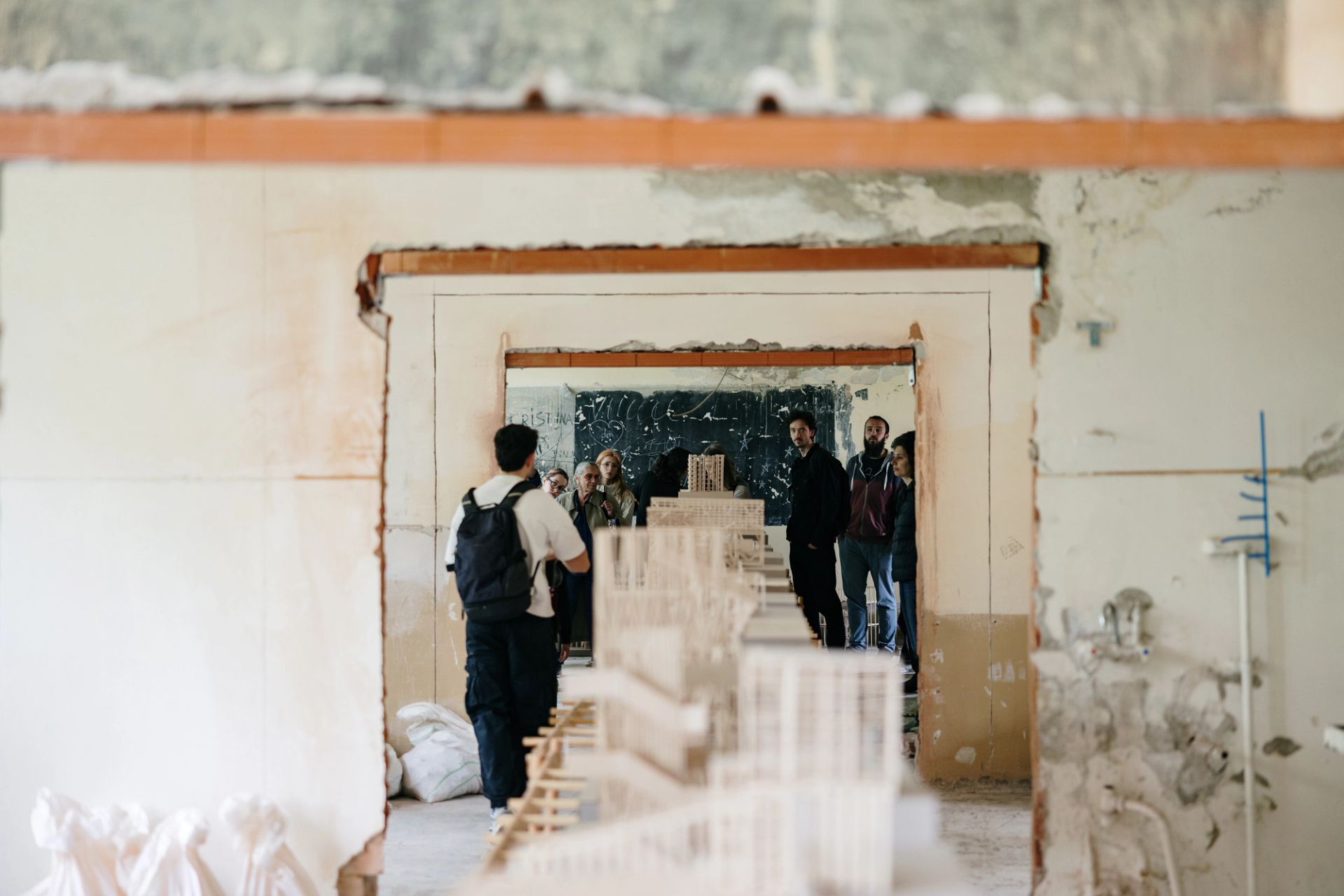
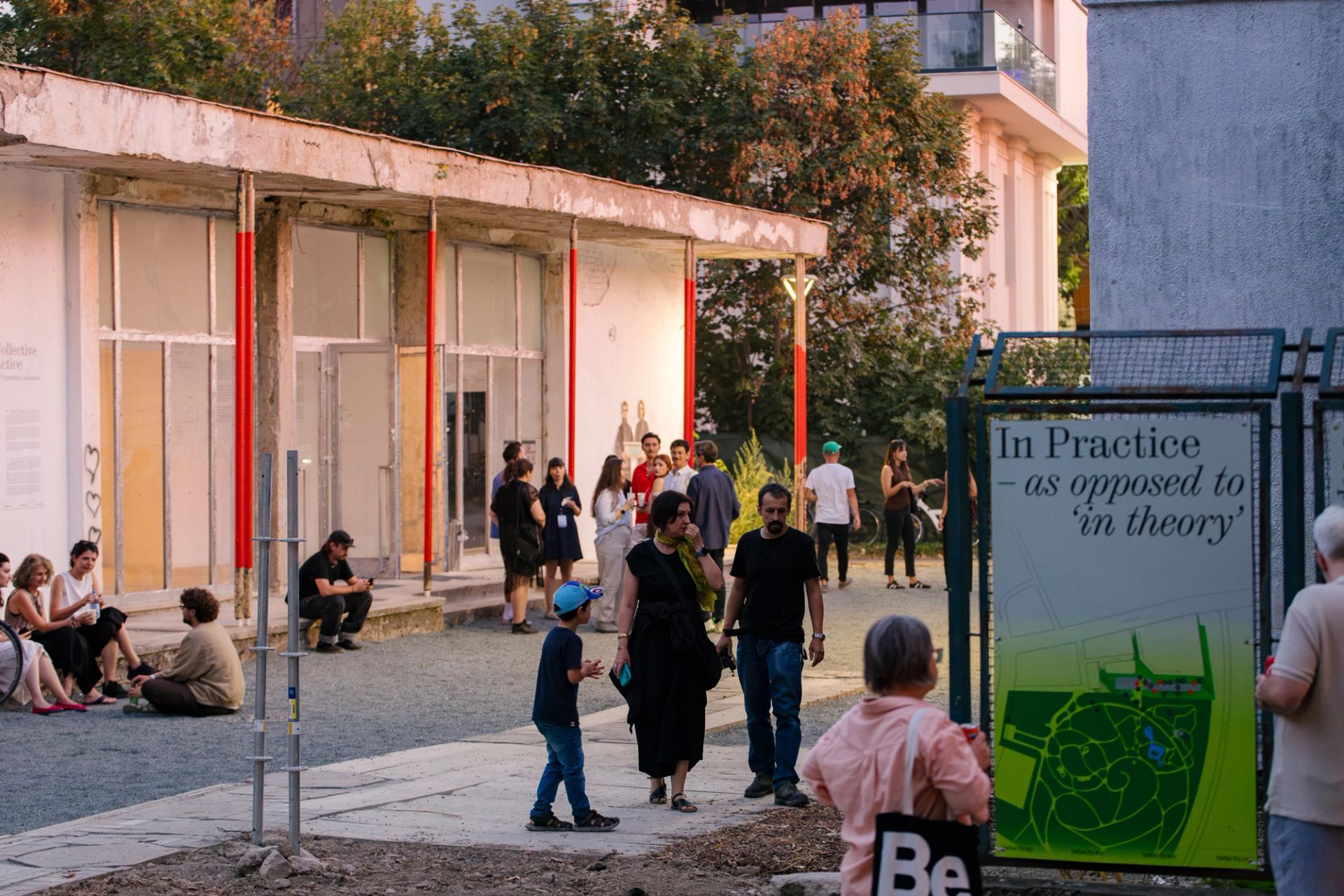
Beta Preview – Curator’s Guided Tour, Site related model exhibition of year I student, Timișoara Faculty for Architecture.
KOOZ We have touched on the idea of being ‘in progress’ as well as in practice. The majority of programming for BETA — including the practice residencies — will take place in September, while the initial launch of some activities will happen in May. How important is it to be adaptable and agile, remaining ‘in progress’ and shifting when conditions change?
AK For us, it was both obvious and surprising to recognise that not everything would be complete at the same time with this project. We elected to keep BETA’s original opening date in May, in order to show the work and the site in progress. We will guide visitors through the building and share challenges with them. Then they can come back in a few months to see something that has developed. We never had the ambition to deliver a fully wrapped-up project. Even in September, we will still be in progress, and the possibilities of the site will remain open. That's something we always were aware of.
"We never had the ambition to deliver a fully wrapped-up project. Even in September, we will still be in progress, and the possibilities of the site will remain open."
KOOZ Going back to the in-practice residencies, where offices will occupy the site over six weeks — I'm really interested in understanding how you designed that programme.
AK There will be two practices working simultaneously on site and on a specific theme for a week, then there's a handover each Friday, and then the next pair will continue.
TV Well, the idea is that they have the unique opportunity to consider and directly apply their knowledge and design practice on the building that they are actually occupying . In their applications, many teams proposed to interact directly with the building; they will make models and mock-ups within and upon the building itself. Some things are not completely fixed, because we are dealing with a site full of complexity and open ended interactions between diverse architects with their own view on how things should be done But what is certain is that they will collectively embody the epitome of the architectural office.Every time you try to pin everything down, something new happens, Yet this is the reality of the design process: even the most established architecture offices will escape predictability. Buildings are delivered later than planned or budgets run over because there are always new factors that emerge. So this is architecture, and we wanted to be transparent with the hope of transmitting these realities to a larger public.
BETA addresses architects but we also hope to convey to the larger public what this job is about: on one hand, what you gain by employing architects, but also what that implies. At a certain level, people don't know anything about the realities of our job, which sometimes can appear so simple, when in reality it is not
AK The main argument comes as to why not demolish this building, or any building. Of course it would be easier, of course it would be cheaper, but we want to demonstrate the possibilities of thinking around, within and with architecture.
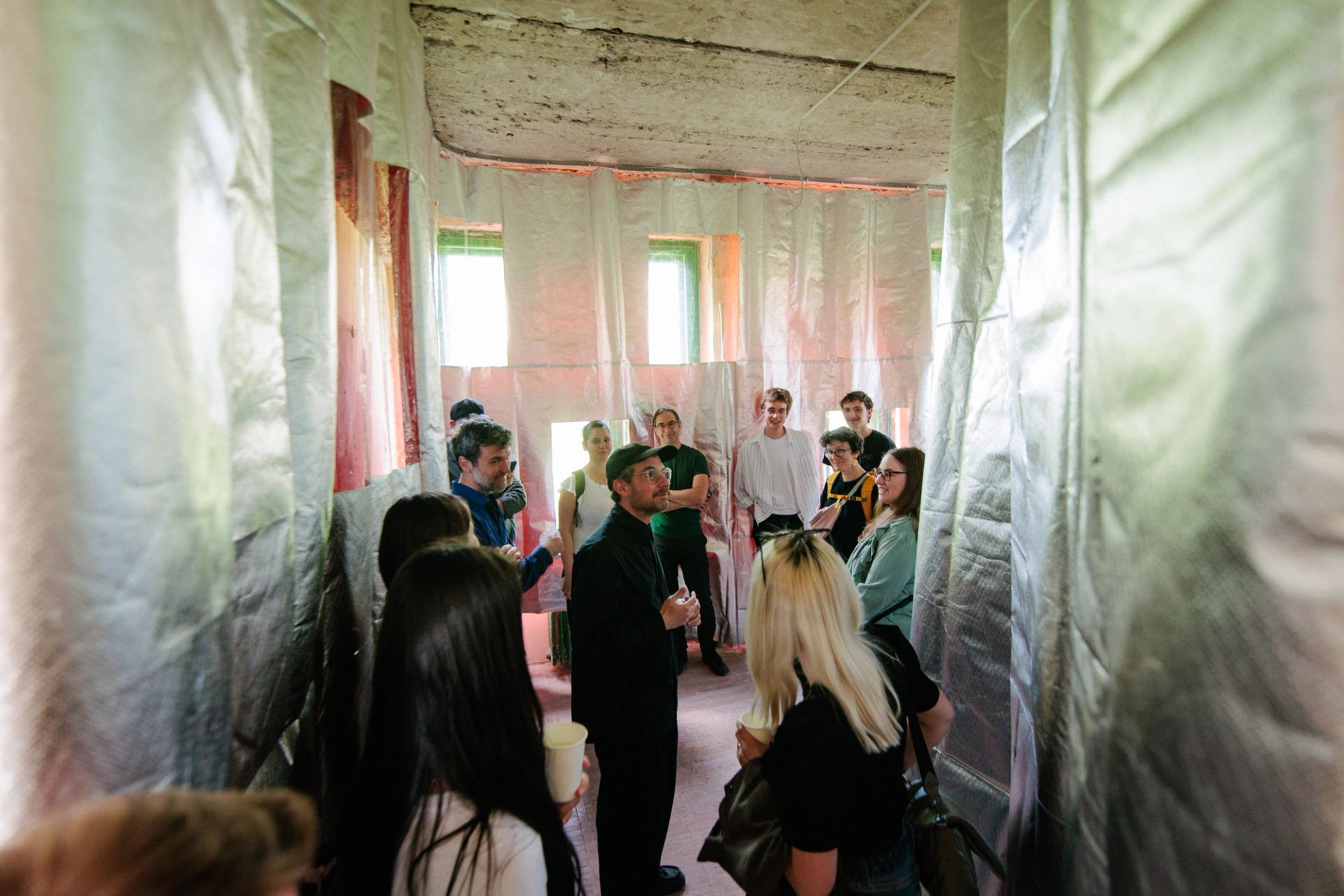
Beta Preview – Curator’s Guided Tour in Curtain Room by Office for Roundtable (Denver/Guangzhou)
KOOZ You mentioned that you’re hoping to reach a larger public with BETA. Potentially, the biggest audience would be the government or the state, demonstrating the use of cultural infrastructure. If not, as ambitious as the programme is, it risks becoming another temporary or precarious attempt to breathe new life into a building. To what extent has the biennale been designed to engage with larger stakeholders?
TV Yes, it's true and we must give a lot of credit to BETA for arranging a good dialogue with the local government. They were so open to engaging with us from the first instance and then also to change their thinking: ultimately that's what we are trying to do, to convince people that there are other ways to do things. Obviously, we hope that what we preach here will be embraced.
Through the responses to our open call, a broader outcome has emerged—one that acts as a 'proof of concept' for the idea that collaboration with architects consistently leads to better results.
We will host the team of the Brussels BMA (bouwmeester maître architecte) as our last week of “office in residence” and together with them, we hope to wrap up our efforts and project the next steps. Of course, our power will start to diminish as the Biennial is ending, but we hope to leave behind a good legacy and package of proposals. And then why not — maybe a competition can happen on this site, something a bit more daring. Maybe the community realises, hey, we want more than this; we can't have another rapid renovation followed by an empty space — we own this building, it's ours. We came to care for it during this period, and we would like to be part of the discussion around what happens next.
So these are some of the ideas that we want to foster.
AK There is this institutional level, and there's also the community level. But there is also the individual level of experience. As such, you see there's a process, you see a construction site. I also teach, and as we do the admissions interviews, we ask students why they want to become architects. Quite a few mention that their parents built or transformed their house while they were teenagers, or that they witnessed these renovation works and found that really exciting. Showing people this process and how it evolves over time — rather than demolishing, calling an architect, and receiving a shiny new house — has a real value. So I hope that every non-professional visitor is also able to identify with the profession. We hope to plant the seeds.
BETA will use this building due to a partnership made between the city and a private foundation. The building is publicly owned and will be operated through a board represented by both the city and those investors, while being open for all sorts of events for the community in Timișoara.
KOOZ Let’s extend this idea of the un-finished building or project, and the level of engagement that one is interested to maintain once the consignment is delivered, so to speak. What is your general approach towards the long term and in the case of BETA, how do you seek to remain engaged in the transformation of this building over the coming years?
AK There is also an art biennial that takes place in Timișoara; we know that they're considering this location to see if this place might be suitable for an art exhibition — they already did use the canteen area, some years ago.With the “offices in residence” programme, there are always two teams — usually an international and a local team — who will work together for one week on a specific topic, from thermal comfort to the façade programme. Each residency addresses one aspect of the building; they will leave their acknowledgements behind, and then another office pair will take over. It’s something like a huge, staggered brainstorming; at the end of the six weeks, it is also up to Tudor and I to wrap up things with our closing guests,and to give recommendations for what the site could become in the future.
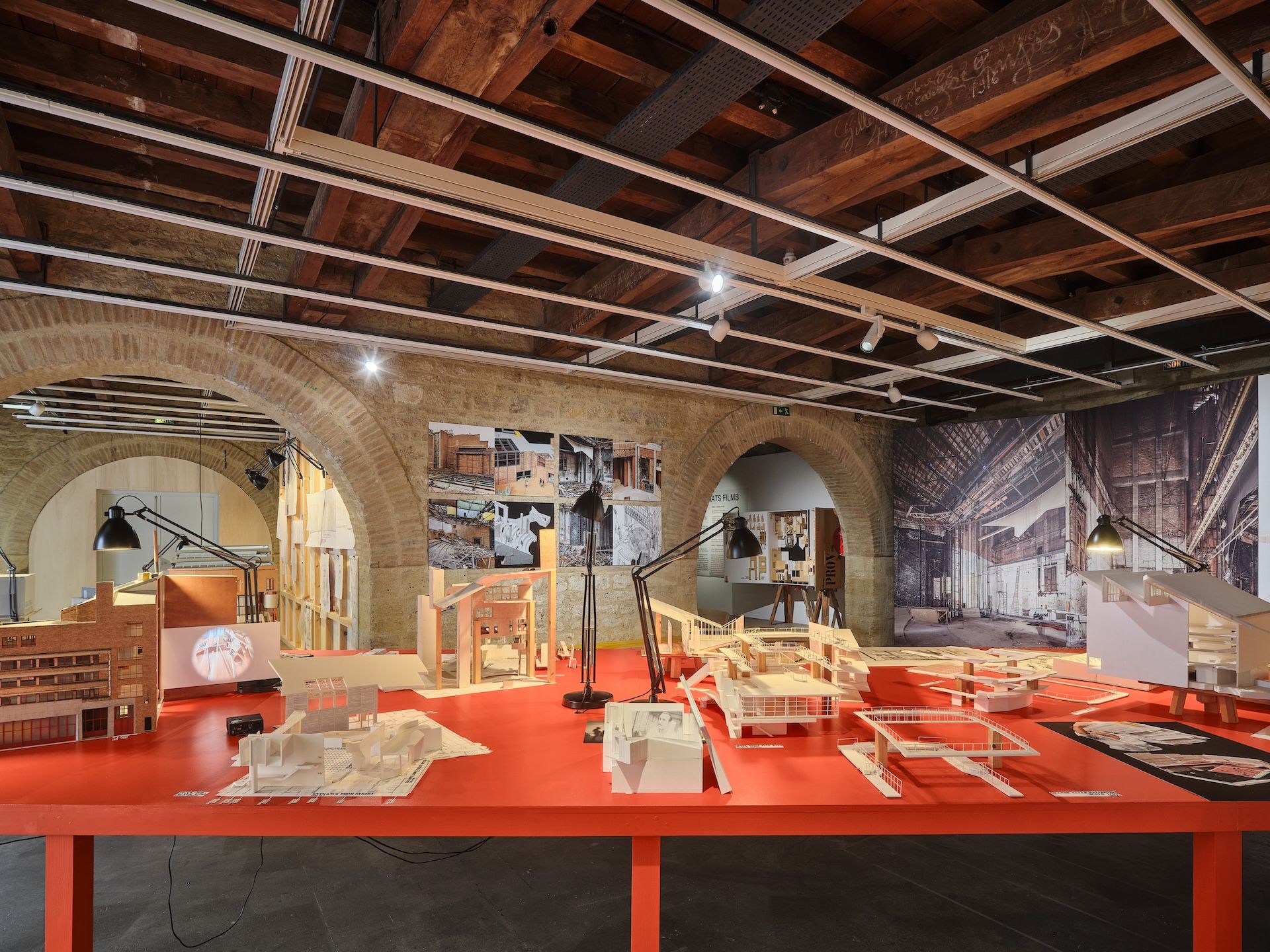
Beta is just the first event in the building, it will — in theory — have its own annual programming; The only risk is whether the process gets stuck somewhere or not. As a building, it is actually very generic, which makes it difficult to explain why it should be preserved. Why don't we demolish this generic building, what's the value of it? Many still think that a building can claim reasons of heritage, like an extraordinary vault or a specific story to tell, only then should it really be preserved. Here, the heritage arguments are very few on the contrary to the ecological ones, about the gray matter that is embedded in this building. During the Biennial, we will have an exhibition called “Matière Grise” by Encore Heureux, emphasizing this point. At the same time and as you will walk through the exhibition, you will also see how the grey matter is being put into practice within the spaces of the building. We will also host HouseEurope! and screen a film about material extraction commissioned by Rotor and A+ to Bêka & Lemoine. What we are really mediating together is the ecological value of existing buildings.
One main thing that is happening as we speak — and it will only take a few hours — is that the fence between this building and the botanical park is going to be removed. With that one element, we are already making a radical change at the urban scale: suddenly this building can be approached in another way, where currently it remains separated. Effectively the building will become part of the Botanical Garden, and its public vocation will be stronger for that.
TV Now that you mention it, I think that maybe the fact that this building is generic also makes it future-proof . One could see its generic quality as an act of generosity, allowing for its adaptability. We could think of cases where buildings are super specific; arguably, the architecture may be more valuable in terms of unique design. But often, because its very design and layout doesn't comply with ever-changing conditions and requirements, those buildings become obsolete. In this case, the space is simply arranged on a long grid, meaning that it can adapt quite easily, becoming many things. It’s quite amazing. For me, this stands as even more of an argument to keep it.
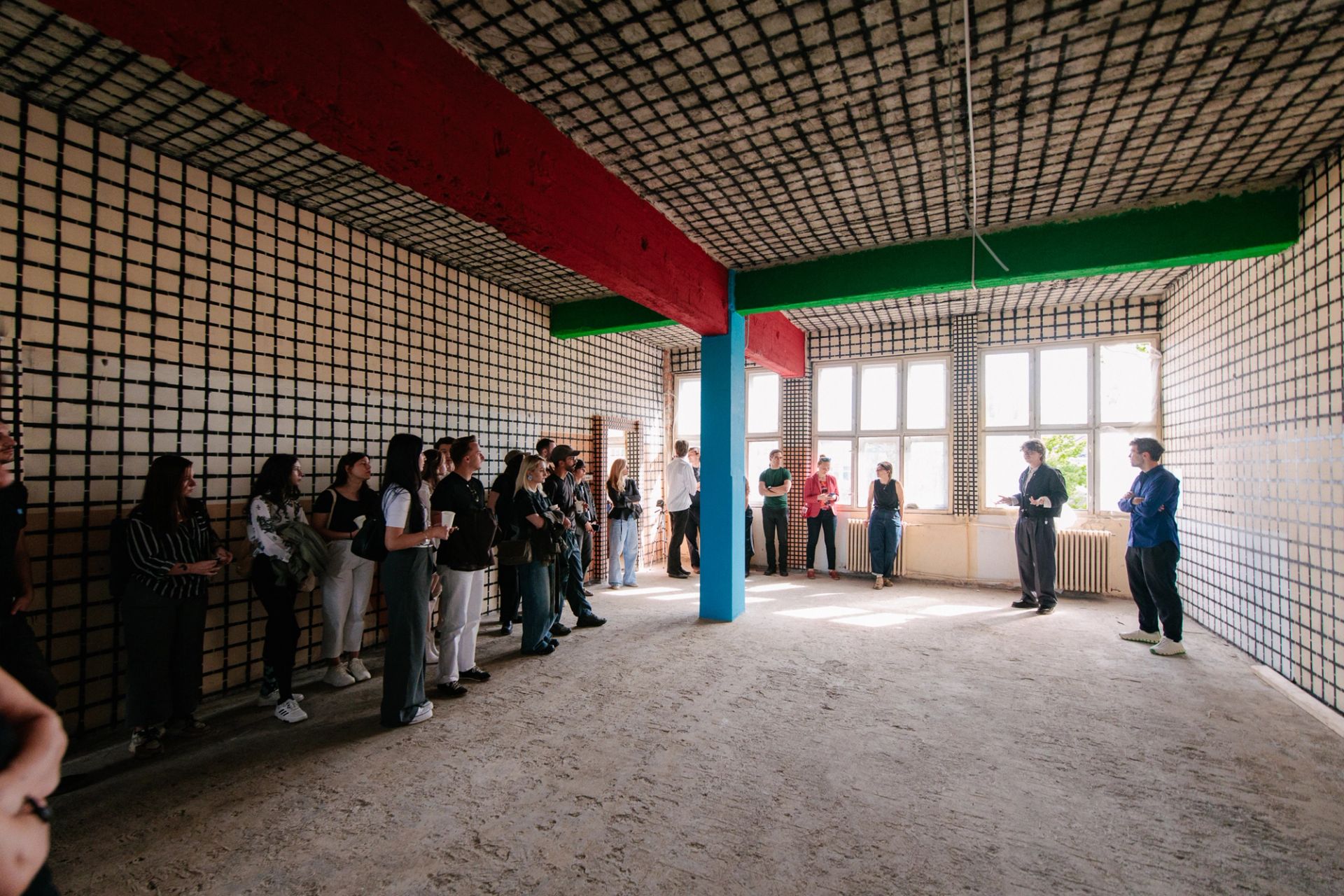
Beta Preview – Curator’s Guided Tour, zxy by Rareș David (Bucharest)
KOOZ In the practice of architecture, one often supplies a number of options and the client picks one fixed outcome. Can you speak to that flexibility of the building in relation to the programmatic speculations you received?
AK Yes, absolutely. In fact, there are two main buildings on site: firstly, the school building itself, which is eighty metres long and ten metres in width. There's a very long corridor on the first floor, with the classrooms placed in a sequence; the ground floor has four really large spaces; currently, these rooms are partially used by a neighboring school as a gym space. With the open call, I think everyone immediately understood the building as a system and some have worked with it, making little changes to the grid. There are some accidents in this grid: a grid is inherently boring, but if you create exceptions, it becomes exciting. Then there is the canteen building, which is more elegant with some very high space. There's a beautiful quality of light. That's a building where the argument for preservation is much stronger, simply because the design has something elegant about it. Generally, people have worked with the fact that the buildings are largely standardised; some go along with it and others push back.
TV It's obviously interesting to throw this question out on the internet to the community of architects, and receive two hundred proposals in return. Evidently there are many ways to view this project; even if we covered all angles, I believe there are still more things to be discovered. Everyone that has been here has definitely challenged the building in their own way, but this is an open-ended process, one idea serves as a catalyst for the next
For the preview in May, you will be able to see some of those ideas realised and I hope that already triggers new ideas. In a certain sense, if this project is never finished — if the space is always challenged, changed and adapted a little bit — it would be in an immense success, because it will signify a building that is truly alive. As I said earlier, we are lucky to have this generic condition that can continuously adapt and morph and transform, to become whatever it needs to be in a certain moment.
"In a certain sense, if this project is never finished — if the space is always challenged, changed and adapted a little bit — it would be in an immense success, because it will signify a building that is truly alive."
AK You can look at most of the interventions as mock-ups, happening in a particular section of the site. Even for non-architects, these might be understood immediately as reproducible installations, producing a particular effect in a certain place but provoking the question, what if the whole room, floor or building receives this treatment? Throughout the site, we are displaying a range of possibilities that somewhat aim to get people drunk on the potential that this building actually holds.
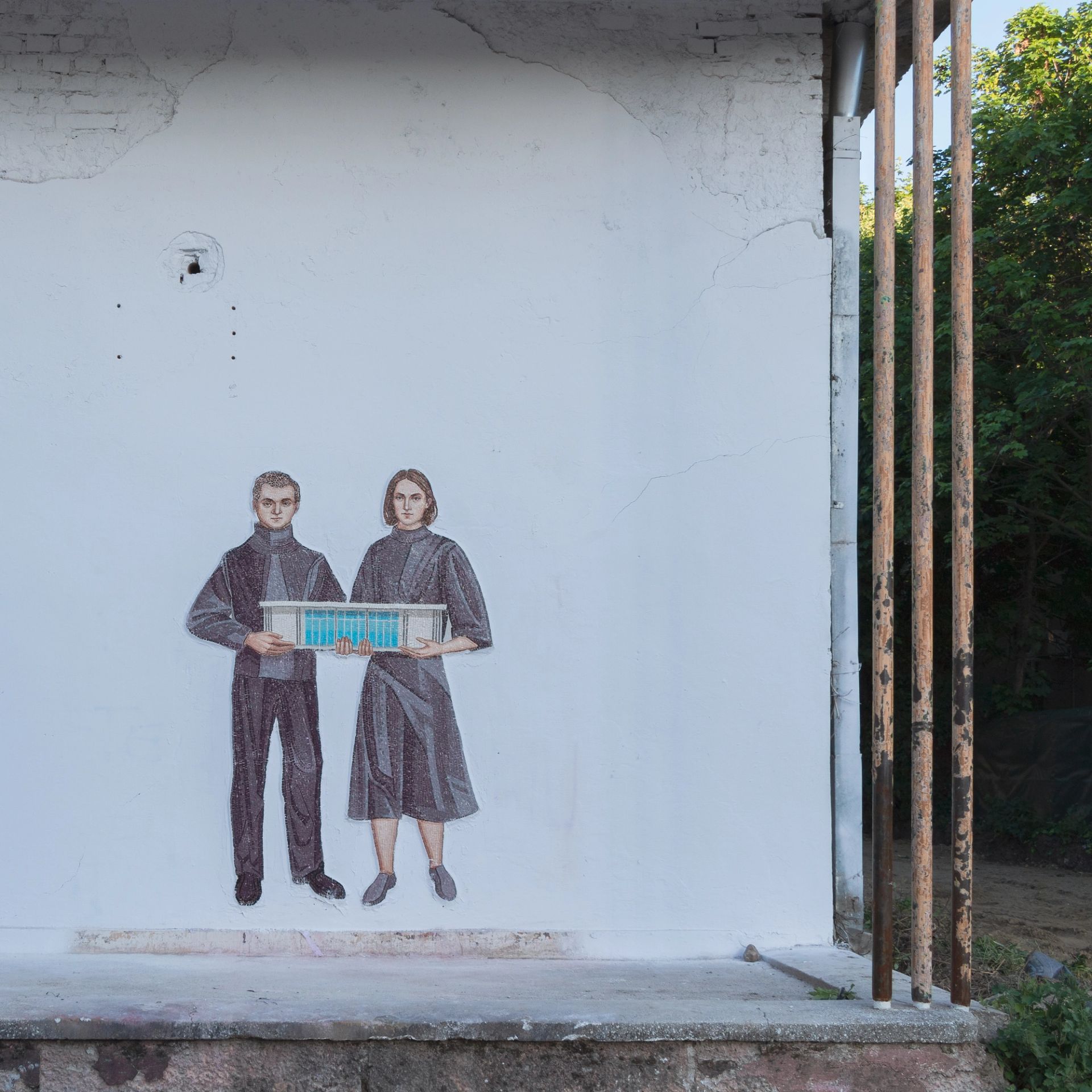
Beta Preview – The Canteen The Double Act by Vlad Nancă (Bucharest)
"Throughout the site, we are displaying a range of possibilities that somewhat aim to get people drunk on the potential that this building actually holds."
KOOZOne last question, as you mentioned the word ‘success’. How does one measure success? Cultural institutions have to confront this question; unfortunately, that often boils down to footfall — while here, success might simply be the removal of the fence, allowing for a greater engagement with the park. How do you define success, in terms of this edition of BETA?
AK I think it's part of a larger question: how do you measure cultural impact? Monitoring the number of visitors is mostly the measure, but in some places, those figures are really disappointing. At the same time, sometimes a place with the fewest visitors can make a huge cultural impact. Some engaging exhibitions act by planting a seed, and then the larger impact unfolds. BETA is really part of the community here, so I believe the impact will be far larger than the number of visitors.
TVFor me, the simple fact that BETA has managed to grow its ambitions year upon year, edition by edition, proves their success. Since participating in a few editions, I have seen their capacity growing and building more complexity into their project. To give it up to them, it’s about the courage to place yourself in a position where things are changing . That's a very uncomfortable position, because you are always operating on shifting grounds; it’s not easy. but it means that you are really participating in a transformation, and this is quite authentic. The fact that it happens again and you can go to the next year, automatically means that it was successful. Of course, they try to track how many people visited or entered the doors, and I think you can prove that success through the numbers as well — but in my opinion, it's just that BETA becomes more and more relevant in their community. That's how you know. Ten years ago, BETA was a group of architects doing a nice exhibition, visited locally; now the whole city is aware of it as a well-known event; it is eagerly anticipated.
AK Of course, as a curator you're happy if you have a lot of visitors; you're also super happy if the project appears not only in specialised media, but on the evening news. This is also a sign that you have managed to connect on both levels, for professionals and non-professionals — everyone gets something out of it. But visitor numbers are a bit like the gross national product: a country with a high GNP is apparently a wealthy country and we assume that people are happy and satisfied and have a good quality of life. But does it really speak to how individuals in society might feel? By contrast, there is the example of Bhutan and its Gross National Happiness Index, by which they try to understand how satisfied people are with their life. It's a different way to measure.
KOOZ What I love about these conversations is how we end up in places that we did not expect, which I think is quite beautiful — thank you both so much.
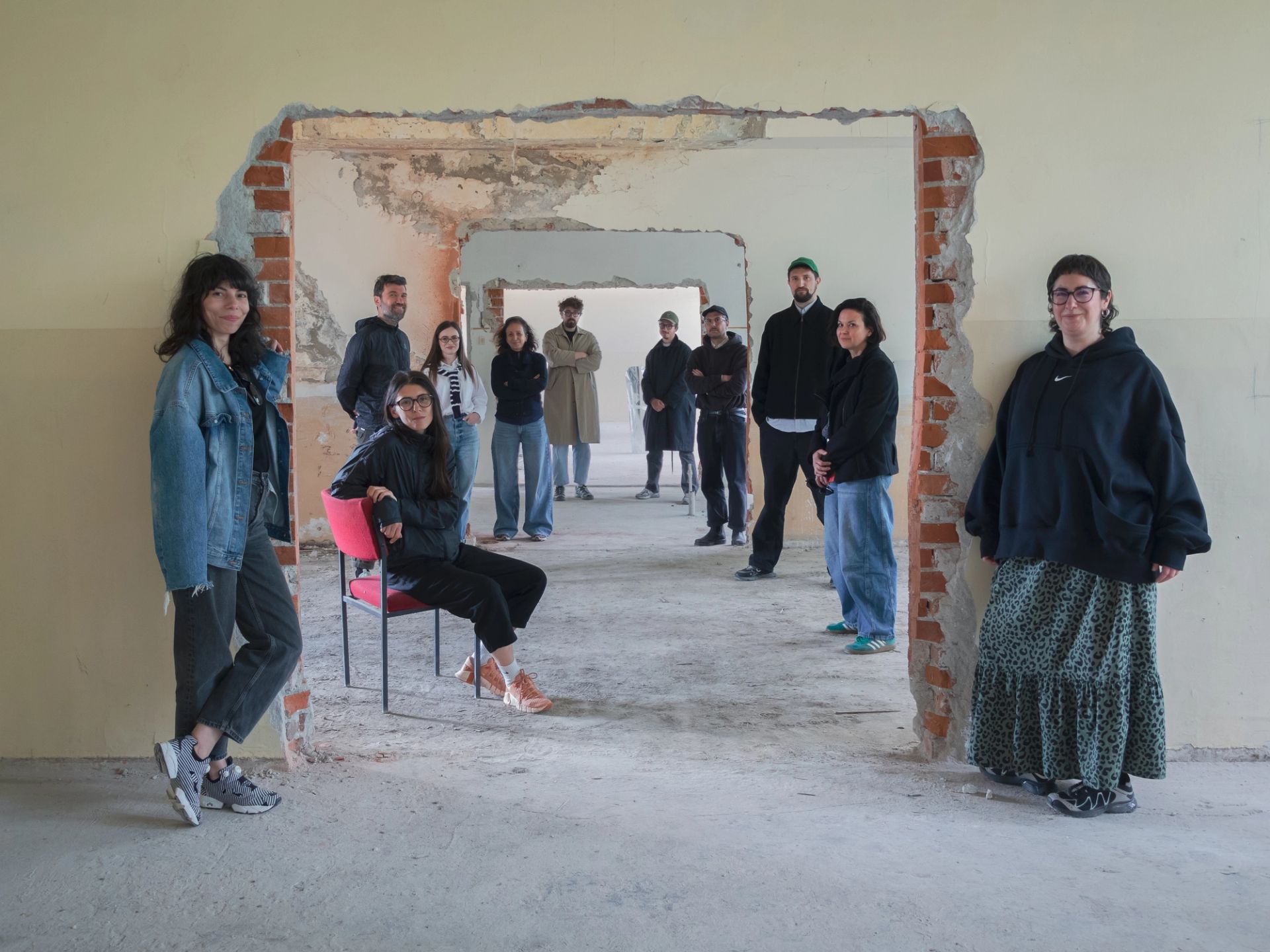
Beta 2026 team at the site of the Biennial
Images are courtesy of David Dumitrescu, Remus Dăescu and Andrada Usvat.
ABOUT
Beta – the Timișoara Architecture Biennial is the leading architecture event in western Romania, initiated by the Timiș Territorial Branch of the Order of Romanian Architects and now in its sixth edition, marking over a decade of activity. Built on a strong network of international collaborations, including its membership in the LINA community, Beta connects emerging practitioners and institutions working across architecture and spatial culture. Structured around the pillars of Education, Profession, and City, the biennial promotes an “architecture of action” grounded in dialogue, collaboration, and meaningful engagement with the complexities of the built environment.
BIOS
Andreas Kofler is an architect-urbanist, writer, and curator, having worked with offices such as Theo Deutinger, OMA and Dominique Perrault, among others. Many of his projects are rooted in a multidisciplinary practice, including work on Greater Paris (DPA) and the exhibition The Image of Europe (TD/AMO) for the European Union. Between 2018 and 2024, Kofler was curator and deputy artistic director at the Swiss Architecture Museum (S AM), where he explored themes at the intersection of architecture, urbanism, and society. He is a regular contributor to L’Architecture d’Aujourd’hui and an associate professor at the École nationale supérieure d’architecture de Versailles (ENSAV).
Tudor Vlăsceanu is an architect, educator and curator. From 2007, he worked at OMA and from 2009, he began developing his own projects; since 2020 he has led his own architectural practice in Bucharest, where he also co-founded the visualisation company Tegmark. In 2022, Vlăsceanu completed a project for the headquarters of a tech company and the House with 4 Palms Pavilion for the Concentrico Architecture Festival. He has participated in numerous international exhibitions, publications, and workshops, teaching at the “Ion Mincu” University of Architecture and Urbanism, the University of Kassel, the Peter Behrens School of Arts in Düsseldorf, and Porto Academy.
Federica Zambeletti is the founder and managing director of KoozArch. Trained as an architect, she works across research, storytelling, and curatorial practice at the intersection of art, architecture, critical theory, and regenerative thinking. Before founding KoozArch in 2022, she collaborated with UNA/UNLESS on a range of cultural projects, including exhibitions, research initiatives, and the transformation of an 18th-century palazzo into a cultural foundation for Anish Kapoor.