As the world witnesses the devastation of Gaza, the question of how to rebuild a territory — where entire cities, neighborhoods, and infrastructure have been destroyed — is becoming increasingly urgent. Among those already envisioning post-war reconstruction is Palestinian-British architect Antoine Raffoul. Born in 1941 in Nazareth, Raffoul grew up in Haifa, from where his family was forcibly expelled to Lebanon during the Nakba of 1948. This personal experience of losing his home has profoundly shaped his decades-long work in architecture, heritage preservation, and advocacy for Palestinian rights.
In this interview, 85-year-old Antoine Raffoul presents to a Slovenian audience, for the first time in detail, his plan for the reconstruction of Gaza, a vision that goes far beyond the construction of new buildings. It encompasses the rebuilding of communities, public spaces, cultural heritage, and the conditions necessary for a dignified life. We spoke with him about how a nearly destroyed Gaza can be rebuilt, what responsibilities architects carry in times of war, and why questions of space and urban planning in Palestine remain inseparable from historical memory, the right of return, and the future of the Palestinian people.
Boštjan Bugarič Could you kindly introduce your work and activities as an architect living and working in the UK, but with his heart for Palestine
Antoine Raffoul I was expelled from Palestine at age six. From Haifa,where we had our home, we went to Tripoli in Lebanon, another port city. I was always in touch with the Mediterranean. I wanted to be an artist when I was growing up. I loved sketching, but my father refused to allow me to continue — he thought art is nothing. That's typical in the Middle East. He wanted me to become a Muhandis, which is an engineer. It’s as prestigious as being a lawyer, and it's a big title in Lebanon. I told him that I don't know anything about engineering or architecture; he answered that I had three months until I would get my visa to travel to the United States and study. He also asked me to go around Tripoli, which was full of beautiful Ottoman architecture at the time. I was never too aware of it, but nowI had a purpose — I would not want to displease my father. I completed my baccalaureate and sketched the architecture of Tripoli. Then I went to America, to the University of Illinois; I was nineteen years old at the time.
BB So you went to study in the United States?
AR I was accepted at UCLA and at the University of Illinois; I chose Illinois because my older brother was nearby and I wanted to be close to him. It turned out that the University of Illinois was one of the best schools of architecture at the time, hosting international luminaires. As a student, I met the people closest to Le Corbusier, Walter Gropius and Louis Kahn at the time. I met Enrico Peressutti, one of the greatest Italian architects. It was in June 1965 and he was my thesis assessor. When I graduated, he gave me a list of all the architects that he knew in London, from Richard Rogers, Norman Foster and to all the important historians.
BB Later you went to work in New York?
AR I took that list and decided to go to New York. I received a fellowship and stayed there for the next four years, full of amazing experiences. I worked with Victor Gruen, a respected and well-known urban planner. He created the shopping mall. At the firm was a young Cesar Pelli, as head of design. But I got tired of the modern architecture and office buildings. I love New York, I think it's a great city, but I wanted to work on Mediterranean architecture, forgetting this capitalist environment. I decided to go and live in London, home of the Balfour Declaration. I could start my activism in the heart of London, where I took Peressutti’s list. One of the people on the list was the architectural firm ABK - Ahrends, Burton and Koralek (OMIT). In London, I also met Norman Foster, Richard Rogers and others. London opened my eyes and I thought, Europe is my place now, not America. I will never go back. Then Oslo II Accord 1992-1993 divided Palestine into three areas and I began to research those areas categorised as A, B, C on the West Bank.
BB What does that mean?
AR We know what's happening in those A, B, C occupied territories [ed. In occupied territories, Zones A, B, and C denote grades of Israeli control over civilian and security operations]. Provisionally, it's zone A, B, C until the two states are sorted out. We were wondering about who gets to build in those settlements. There are not only Israeli but also international architects, like Frank Gehry, Jean Nouvel and Norman Foster. We felt that was not ethical, so we had to expose them and report them to their institutions. It worked to an extent, but there was a big backlash from the Zionist lobby that supported these architects. We were young self-employed architects ourselves and it was difficult to campaign, but we raised awareness about it. That was the crucial thing. We then won the campaign to preserve Jaffa, as well.
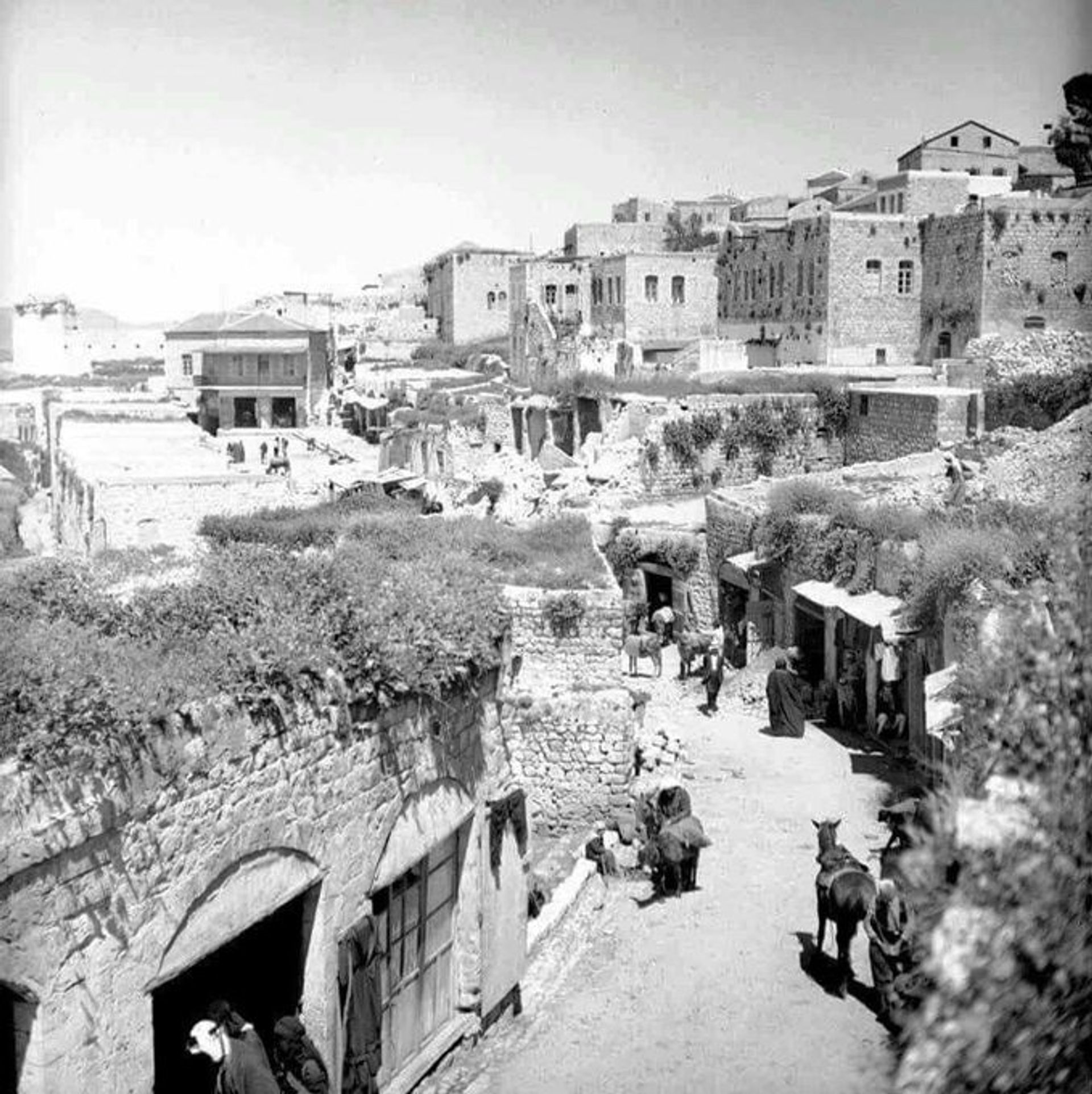
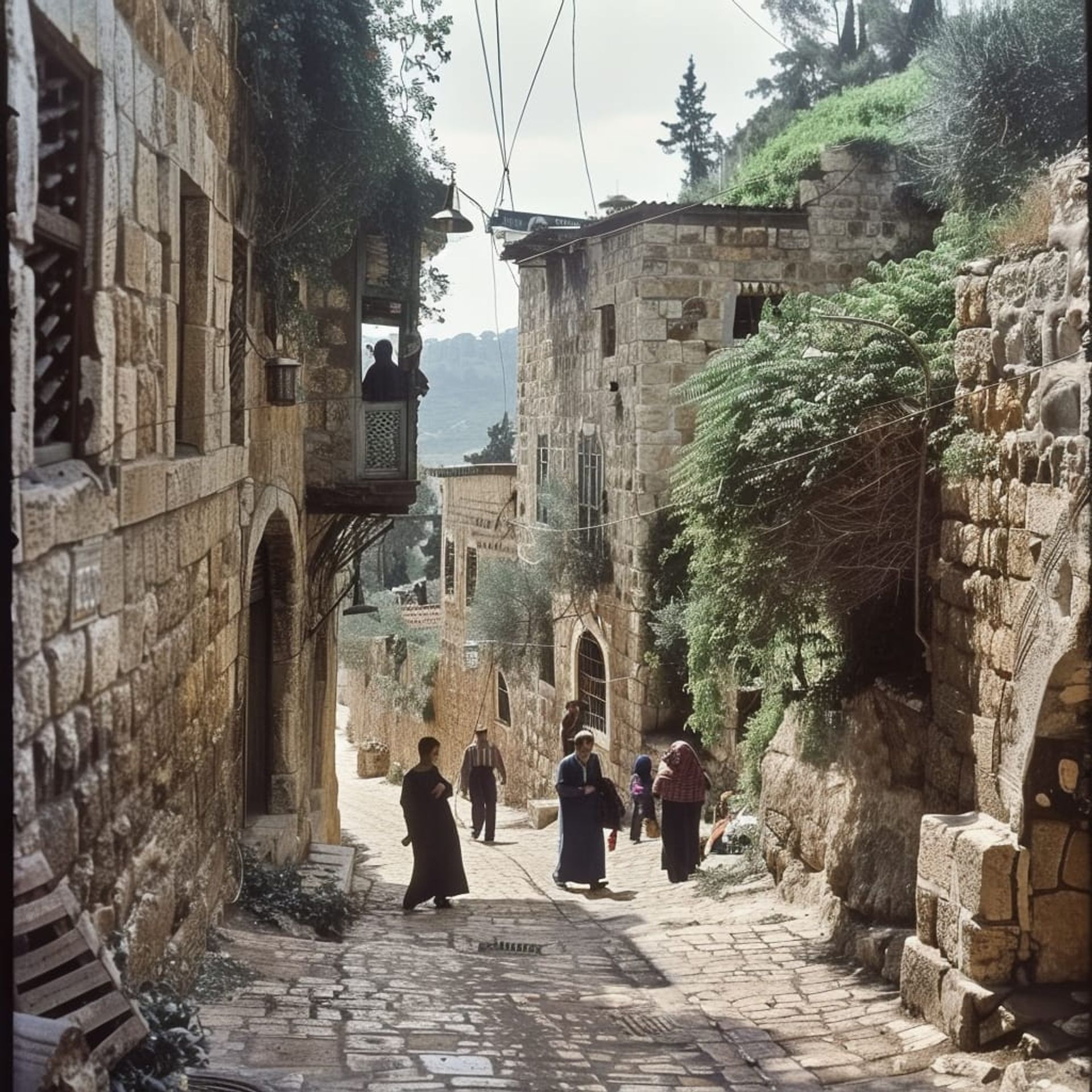
The village of Lifta in 1948 Photo Palestine Remembered Archives
BB For a long time, you have been working in the abandoned village of Lifta, on the western outskirts of Jerusalem. Could you share its story?
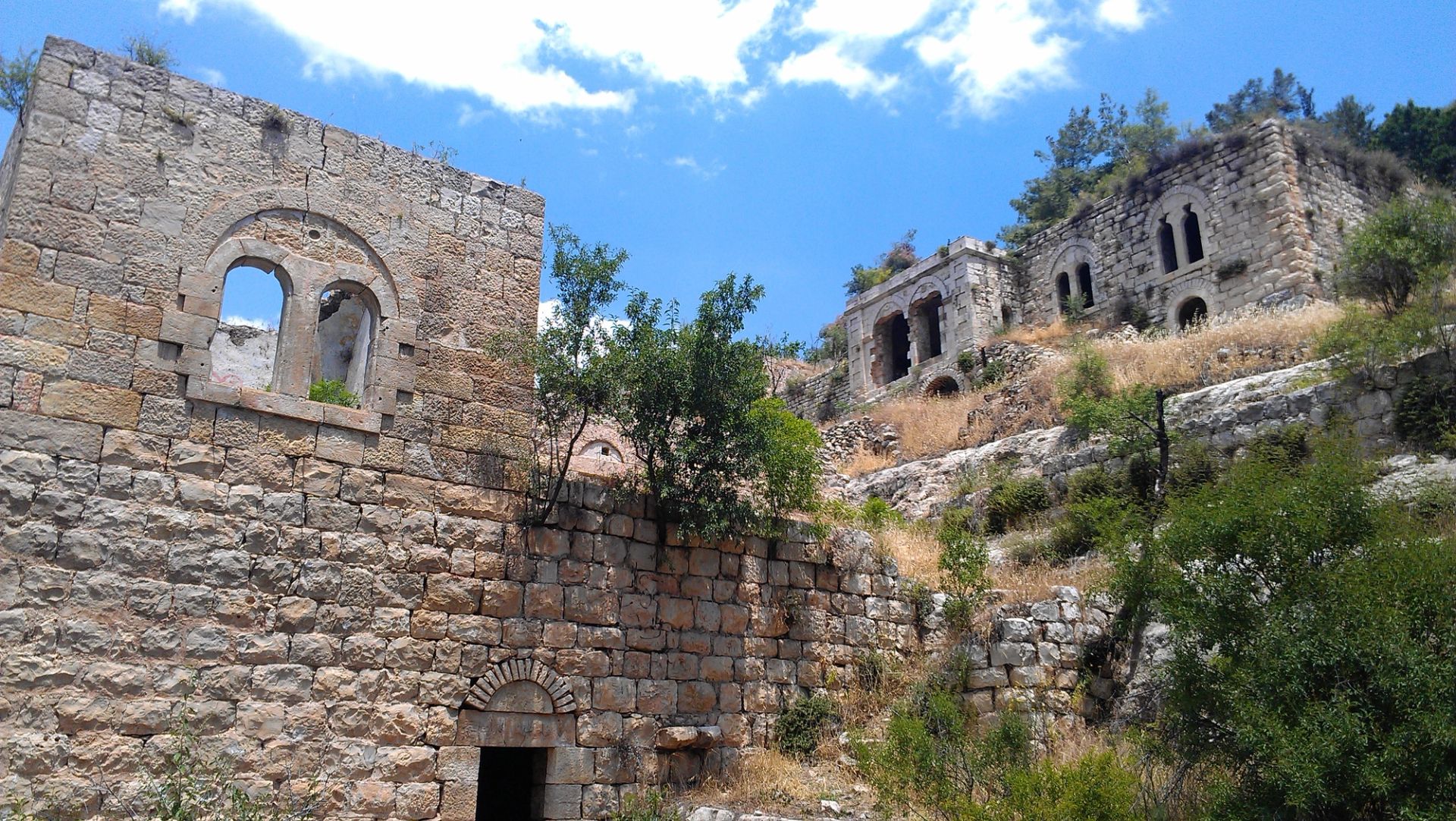
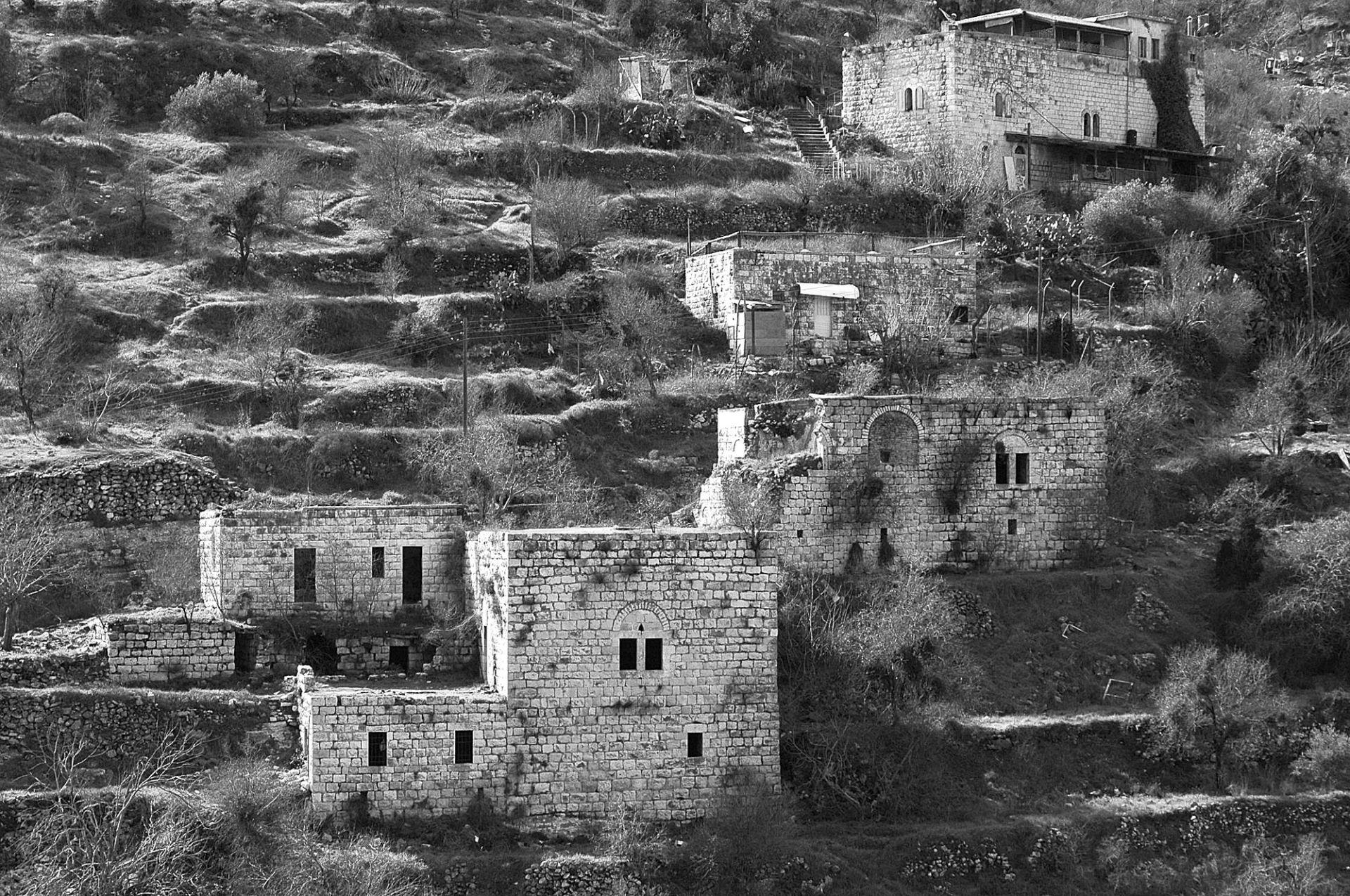
AR I think I was in Italy when I discovered the photos of Lifta, during my research for settlements. A Palestinian village that has been sitting there since 1948. Nobody has touched it. It was like a ghost town suspended in space. Through this work, I met the coalition, the people of Lifta and found out that there was soon to be a master plan to demolish the village. It's called Master Plan 6036, issued by the municipality of Jerusalem; a tender offered only to Zionist developers, not to anybody else. It called for the demolition of the village of 77 homes of Lifta and replacing it with boutique hotels, shopping centres, underground parking, museums, probably for them, not for us. With the coalition of Lifta activists, including the original owners who sat in Jerusalem and were kicked out in February 1948, we filed a court case — which we won, after nearly two years of activism. We, in this case, meant the coalition and local Jewish-Palestinian lawyers. There was a temporary hold on the tender not to demolish and luckily, the court issued an order to survey the 3,000-year old village of Lifta.
BB What was your concept?
AR My concept was and is the return. It was a concept already alive and it's just sitting silent. Homes, mosques, cafes were there. I didn't have to do anything, rather I've learned from it. All we needed was Palestinians to return to live there, for the human element to return. In fact, initially, before the Master Plan 6036 campaign, the people of Lifta returned every day. They cleaned, weeded their gardens. The place and the people are one and one is nothing without the other. Hordes of people came every Friday to pray. They walked from Jerusalem to Liftta. You cannot have a better or more memorable picture of a revival than people going back to their own homes.
BB What was the reaction of institutions?
AR The Zionists didn't like that — the return — so they stopped this influx of people. They allowed them to pray only once a week. Eventually, we put Lifta on the UNESCO tentative list in 2013 — through a local group because we are not a state party; we are not even Israeli. In 2018, we finally managed to get Lifta on the World Monument Watch list. Then as I was relating this story, a TV station contacted me to make a film history of Lifta, to understand what I was doing and why. I asked quite a few luminaries — historians, cultural thinkers, UNESCO workers — to present the story in an hour-long film.
BB What did you learn from that experience?
AR A very interesting question. Part of the making of the film was to create Lifta as it was, with people. We made a digital version of the village. All of that was based on the Zionist survey of Lifta as I couldn't survey it myself. They had done it already in order to convince themselves that there is nothing there — so I had elevations, plans, the terrain, the valley, everything. Somebody sent them to me in London, saying, “You can have it, because I'm not going to work for the kind of body that would demolish Lifta.” I have a library of Lifta surveys. I learned from Lifta. I didn't implant anything; all I wanted to do was just clean it up, bring the people back and let them live their life.
BB Very interesting approach. Can architecture function as a form of resistance?
AR Of course. In Palestinian cases, rebuilding is a form of resistance. The military occupation will demolish, whether it's a tent, a home, a shack. You can see the caterpillars coming — but afterwards they rebuild. That's an inspiration for me: the fact that people are able to rebuild their community and not leave them to the dustbin of history.
"In Palestine, rebuilding is a form of resistance."
BB What is the role of an architect in the context where space is systematically destroyed?
AR To me, memory is very important. Because without memory, we are statues walking in the urban space. I’m not trying to be emotional, but to be practical about it. Our lives are made of our ancestries, our history. I couldn't build in Palestine what I was building in New York City or even in London. Recreating, preserving the memory, especially in the context of Palestinians; I helped to recreate 78 years of memory loss incurred by the Zionists. They don’t want to only destroy the person, but also to destroy his memory. I say that there are two forms of death, destruction is the first, and erasure — to be forgotten — is the second. Palestinians refuse this second death, because they own the memory and they have it in their heads, in their bodies, in their minds, in their lives.
BB What role are you approaching?
AR Give me a chance to rebuild my country, my society with the help of Palestinians. Because they have been dispossessed with a memory in their head, and that's their school. Wherever you go, there's a cactus or an olive tree. When they build, they're building the memory, and I'm there to help them do that.
BB What role could heritage and preservation play in Palestine — both in Gaza and the West Bank?
AR World heritage and world preservation have let Palestine down, I'm sorry to say. All I ask is for such organisations to simply implement their charters, their ideologies. If you read their charters, it's like a Bible. Just apply that thinking to the Palestinian territories, that's all we want. Protect us, because we're unarmed people. We have nobody to help us. Even the UNRWA was a temporary imposition made upon us in 1947–1948: temporary, until we return. We don't want any of that. We need those ‘world heritage and preservation’ people to apply what they have worked for, to implement it for our culture. The heritage of Palestine is significant: it sits on the historic Silk Routes from Africa to Asia. It's not a desolate place that you can forget. That's real heritage. My whole concept, not to be romantic about it, is to recreate that significance. There are three or four demolished UNESCO sites in Gaza. Where were they when 80,000 tons of bombs fell on those heritage sites? Hopefully, we can reach a new phase…
The village of Lifta Photo by Davide De La Guidara
BB Can you explain the experience of urbicide in Palestine to readers?
AR How can you explain urbicide? It's an act that can happen in seconds, for example when 80,000 tons of bombs fell on Gaza, on a strip of 365 square kilometers. If there's a worse word than urbicide, I'd like to find out what it is and use it.
BB If younger generations are to acquire this idea of place and the community, how is memory transferred and transmitted between generations? What is your experience in that regard?
AR I have a huge file of oral histories; elderly people talking to the camera and telling what they have told their children and their grandchildren. We are the messengers of our ancestry. There's nobody else to record us. I went to the United Nations in 1974 to look for my home — I have never seen so many files. All of these are memories, records of homes in my country and now they are dead files. The High Commissioner for Refugees was sitting before me, an Indian gentleman, very respectable. He responded that unless a political solution is found, these files will remain as such. There goes my question linked to urbicide. What we have faced over the last three years — the almost total destruction of Gaza — is the extreme version of urbicide.
"We are the messengers of our ancestry. There's nobody else to record us."
BB There are other forms of urbicide that are happening daily. For example, in some cases, we can think of urbicide as gentrification as well as soil toxicity.
AR I do think of it as urbicide. Indeed the group Forensic Architecture goes deeper into this. Eyal Weizman, who has just issued a book about it, was a friend of ours when we were campaigning. It's his speciality to dig more, while I just scratch the surface of Gaza and find my memories buried there. All I need to do is recover and I hope there is not much more destruction going on. This morning I made a rough calculation: it will take at least 140 years — based on official figures — to clear the rubble. Because it's not just rubble, it's the pollution, the gases, the chemicals in the ground. It all has to be sifted through, which is why it takes so long. They started remediating six months ago, I think, taking 140 thousand tons of waste. Multiply that up to the scale of the 80 million tons of rubble sitting on Gaza. Those are figures from official sources; I hesitate to analyse further because I am desperate to live. I want to live, I want my people to live tomorrow, and I want accountability now.
BB What kind of city could Gaza become without political constraints? What is your master plan for Gaza?
AR It's a reconstruction of the memory. As I said before, the first death is to destroy yourself and the second is to destroy your memory. They've done the first and I'm not allowing them to do the second. I'm interested in recovering the memory from the rubble and letting the people of Gaza rebuild: they are the better architects, not me. When Rafah was eventually opened, an elderly lady was asked where she was going. She said that she would go to her home in the north. What are you going to find there, they asked her. She said, ‘I will not find my home, but I'll find my land.’ And Antoine will be there, hopefully, to rebuild that land. We need to be respected as human beings. The sea is in front of them. And you know what? There's gas in that sea. We are self-contained and we can get through it. Give us a chance and we will do it. Stop bombarding us.
BB As an activist, you're involved in many projects. Tell us about the platform you founded, Lest We Forget 1948.
AR A lot of our communication is intended to engage with young people — young people who want to know — rather than writers or professors of history. I think when I started it, the Internet was a relatively early phenomenon; mostly it was people uploading documents. All I wanted was to relate my story, a story typical of the 750 thousand Palestinians who were expelled. I'm not inventing it. I checked all the resources — for instance, from the British Library — and site is accessible to anybody. It forms a starting point for people to learn about the tragedy of Palestine and how it was divided; how the problem started from nowhere. Now, aided by the Internet and social media, young people are able to investigate such things themselves, but it was a good start when it began in 2006. But I stopped uploading things on it. A massacre had taken place. You record these things and let people decide what to do for themselves. It's a source of information, and it's not the only source — just a Palestinian source from one who experienced it. Take it and start your own trip.
BB You are also an active member of Architects for Gaza. Could you present your activities and experience?
AR The two initiators, Yara Sharif and Nasser Golzari, are friends of mine and professors at Westminster University. They were also part of the jury on the competition to reconstruct destroyed Palestinian villages, an initiative started with Dr. Salman Abu Sitta, with whom I began collaborating in 2016. I brought Yara, Nasser and other well-known architects to be the jurors. When the attacks on Gaza happened, they called me to start a group to rebuild. It was helpful to give them that information. Eventually, our difference in approach lies in the aim to rebuild Gaza or the Gaza Strip. I didn't want to rebuild Gaza as a strip.
BB What was your proposal?
AR I respect the position of AfG; there are many good people in that group with a mission to rebuild Gaza. But I will not confine myself to a strip, because my master plan is not a strip. It's for the idea of return, the idea of the one state solution. I worked for two years on this one-state master plan, which I sent to Dr. Salman Abu Sitta and got a positive reaction. But without a one-state solution, my Gaza master plan is zero. It's a competition between this and that. I saw a photograph yesterday on my phone of what the yellow line is — it is meters deep, worse than the 365 border. It will be made of deep, concrete walls so that nobody can actually creep underneath. Are you kidding me now?
"Without a one-state solution, my Gaza master plan is zero."
BB Is it possible to think about one state solution?
AR Now a lot of people are talking about a one state solution; I've been talking about it for 78 years and suddenly they're talking about it! Now they're talking about the one state because they have occupied all Palestine and they want more of greater Israel. I said they're talking about one state. I've been waiting for this and I can defy them internationally, to say it's for everybody and not Zionists only. All this talk about two states was a dream, it was a trap and the Oslo II Accord was the biggest trap of all.
BB Stephen Karpos — also an architect and a Holocaust survivor — is a friend with whom you have been advocating for peace. You've been touring Europe with him. What is your aim?
AR Our aim is to ensure “Never again”. Stephen’s Holocaust, post-Holocaust, did end. The allies won and we thought, now it's all finished. Never again. Yet in the background, the Nakba was incrementally applied. The same strategies have been incrementally applied until it became a full blown genocide. So in the case of the Holocaust, it is never again, while in the case of the genocide of the Palestinians, it is yet again. Stephen came out of nowhere, I guess my daughter might have introduced me to him, saying "There's a Holocaust survivor and here's a Nakba survivor." And then the film came together, now being made about us. To come around full circle and see it happening, it really is a genocide. We don't want to put values on tragedies, but it's a genocide of children and babies and mothers and fathers for no reason at all, simply because they exist. The Zionists won’t like the idea of filming these two survivors connecting across these events. It's a lovely happy film, not mournful. That's what Gaza and Palestine will be: a happy place for everybody. My doctor was a Jewish doctor — not a Zionist but a Palestinian Jews. Palestinian Jews, Palestinian Muslims, Palestinian Christians, we had everyone there. But don't tell me that you are conflating Judaism with Zionism. Talk to Stephen Kapos about that and he will tell you what he thinks about that himself, from the horse's mouth.
"That's what Gaza and Palestine will be: a happy place for everybody."
Lifta Beyond Compromise Photo: Lifta Beyond Compromise.com
BB Could you briefly outline the initiative of rebuilding Palestinian villages?
AR The outcome of the competition for the reconstruction of Palestinian villages, launched with Dr Salman Abu Sitta, is something that we have been trying hard to internationalise — to take our findings outside of the Middle East region, and show what those people have been thinking over the last three years. Can you imagine a European taking the cause of a Palestinian family and rebuilding their village? The file that we sent to students — including Palestinian students in Gaza, in Lebanon, Jordan and Kuwait — was essentially the file found in the British Library file. As a student, you just take that prescription and make your interpretation. You don't need Antoine to tell you how to do it. The only way you can learn how to reconstruct a village is through all the archival material and the elements, you have the story of what happened. I am not there to provide the instruments for these students with Dr. Salman. Come on, you do it for me. Help me out. I'm not here to master your plan.
"I'm not here to master your plan."
BB You are more like a lit match, initiating all these actions that can activate more people and more of a collective consciousness
AR I'm a crazy person, a perfectionist. I connect with the group of Palestinians in Palestine as well as ICOMOS CIAV and UNESCO groups. Outside, I have freedom to think, to really produce and hopefully, to inspire. It took me two years to make this master plan — just to get it into my head, not to draw. There's very little drawing, it’s still more conceptual. In the end, I could only come back to a one state solution: that was the biggest key for me, to open Gaza up to its own terrain. You don't need a professor to tell you this, you can see it as an architectural student. I repeat the irony of it: it's happening now because they (the Zionists) are talking about the one-state solution. The enemy, they gave me a hand. They want a one state but ONLY for Jews. I want ONE State for EVERYONE.
BB As an elder in the struggle for liberation, what would be your message?
AR Never debate a Zionist. Always ask and always find. Don't rely on somebody else. I did the same. I am a Palestinian. It was easy for me to define because I live it, but you can easily find out. In the last three years, I have never seen so many young people around the world demonstrating for a free Palestine from the river to the sea; they haven't been to Palestine, but they heard about the babies dying. Well, if it took babies to die for these millions to wake up, so be it: that's what happened. In architecture, you don't need people in the streets to be demonstrating; you're an educated person, you have the elements of inquiry, you're able to investigate. You go and do it. That's my message to them. Go for it. Because enough is enough. Never again. We don't want it to become ‘Yet again’!
The village of Lifta Photo by Aisha Mirshani
This conversation was held on the occasion of Free Palestine: A Plan for Gaza – Reconstructing Memory, an event held at the Faculty of Humanities of the University of Primorska, under the auspices of its UNESCO Chair for Interpretation and Education for Enhancing Integrated Heritage Approaches, in collaboration with the Museum of Architecture and Design (MAO) and the Movement for Palestinian Rights.
BIO
Boštjan Bugarič is an architect, researcher and editor. He leads KUD C3, a collective for spatial research of contemporary urban trends, and is a professor in the Department of Visual Arts and Design at the Faculty of Education, University of Primorska in Koper. As an artist in residence for the Ministry of Culture of the Republic in Slovenia, Bugarič was in London (2016) and in New York (2012). In 2011 he was awarded with the Golden Cube Award for the project ‘Public City’. For almost ten years he was an editor at an open source architectural community Architectuul in Berlin.
Antoine Raffoul is a Palestinian-born chartered architect living and working in London. A lifelong campaigner for Palestinian rights, he discovered the beautiful village of Lifta when exposing the complicity of architects in the construction of illegal West Bank settlements. His campaign to save Lifta from demolition has led to it being placed on the UNESCO tentative list. In 2013 he and Dr Salman Abu Sitta inaugurated the annual 'Architectural Competition for the Reconstruction of Destroyed Palestinian Villages. He is also the coordinator of the group 1948: Lest We Forget.