KOOZ Thank you for sharing your project ‘Tuning Noise: Navigating Communication Infrastructure through Thresholds of Visibility’. This body of work stems from the premise that communication infrastructures are designed to ‘disappear’ — presenting themselves as seamless, while concealing the territories, negotiations and material conditions that sustain them. What does it mean to design from this condition of invisibility? Is it a technical inevitability, or a political construct?
Valeriia Chemerisova I don't think invisibility is simply a technical necessity. Certainly, communication systems become harder to perceive as they grow in scale and complexity, but the appearance of seamlessness is also actively produced. Contemporary infrastructures are designed to conceal the continual negotiations, routing decisions, maintenance cycles, jurisdictional crossings, energy dependencies and environmental constraints, that allow them to function. Their apparent immateriality is therefore as much political as it is technical.
Rather than attempting to reveal everything, the project proposes designing from conditions of partial visibility. It accepts that these systems can never be fully represented, but argues that architecture can develop new ways of tracing the thresholds where computational processes begin to produce spatial, territorial, and ecological consequences.
"Architecture can develop new ways of tracing the thresholds where computational processes begin to produce spatial, territorial, and ecological consequences."
KOOZ ‘Tuning Noise’ suggests that infrastructures become most legible through moments of interruption rather than optimisation. What kinds of spatial, environmental or political realities come into view when networks falter?
VC Moments of interruption expose relationships that optimisation normally compresses into a single functioning system. A routing recalculation suddenly becomes a geopolitical decision; a damaged cable reveals maintenance ecologies that stretch across oceans; a millisecond of latency uncovers hierarchies of infrastructure that privilege particular territories over others.
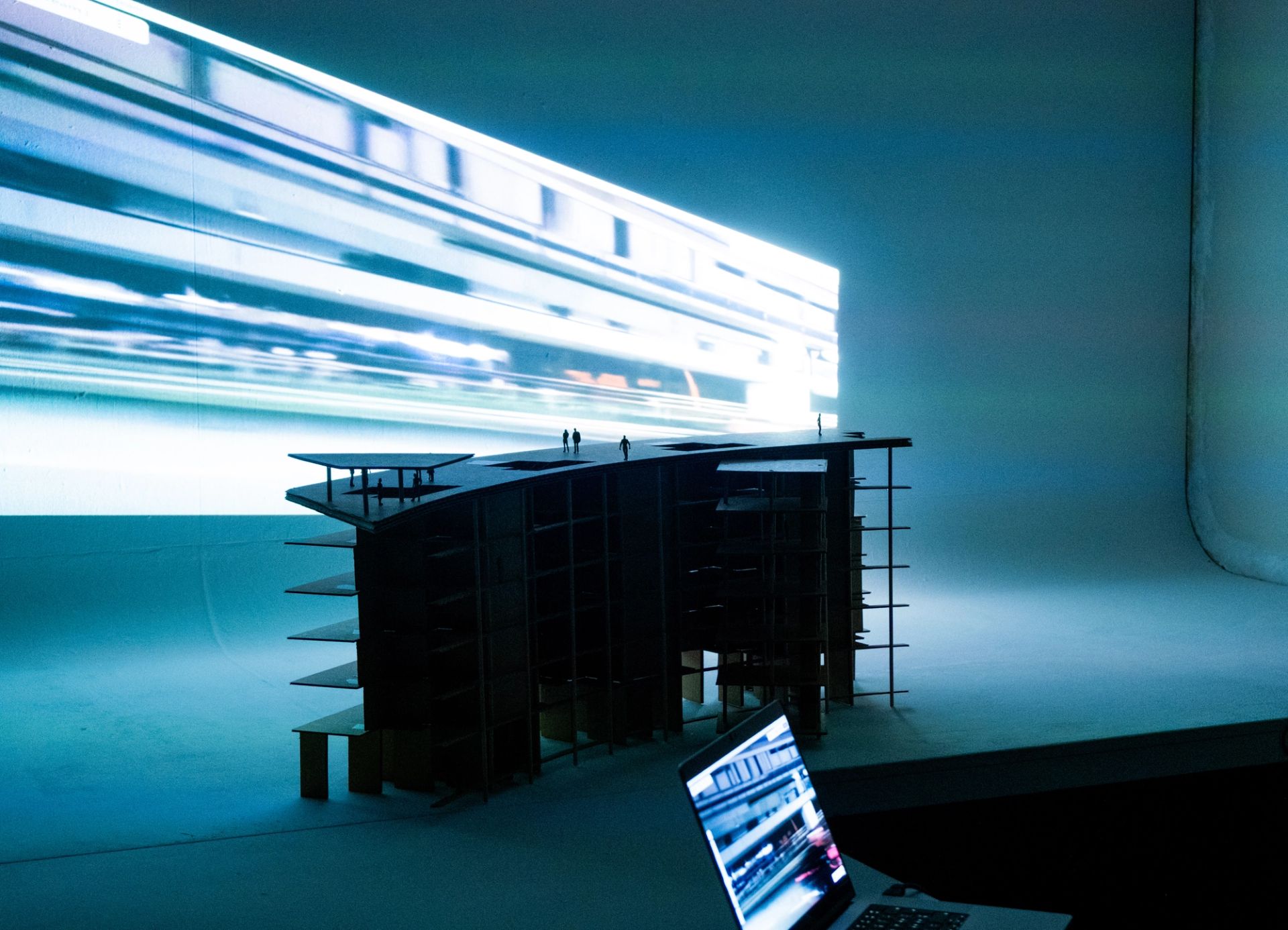
Using Arctic Connect — an unrealised fibre-optic cable, proposed to connect Northern Europe and Japan via the Arctic — as a speculative test bed, the project follows how seemingly local disturbances propagate across computational, territorial and environmental systems. The scenarios explore futures in which sea-ice movement redirects global traffic, orbital infrastructures redistribute connectivity, remote Arctic communities develop greater connection autonomy through local energy and communication networks, and former transmission corridors evolve into maintenance ecologies centred on environmental sensing and collective stewardship. ‘Failure’ becomes less of an exception than a diagnostic and projective condition, revealing the political, climatic and material negotiations through which communication infrastructures are continually reorganised.
"The project follows how seemingly local disturbances propagate across computational, territorial and environmental systems."
KOOZ Rather than representing infrastructure, your drawings expose relationships between computation, territory and ecology. What can drawing reveal that conventional modes of cartography cannot?
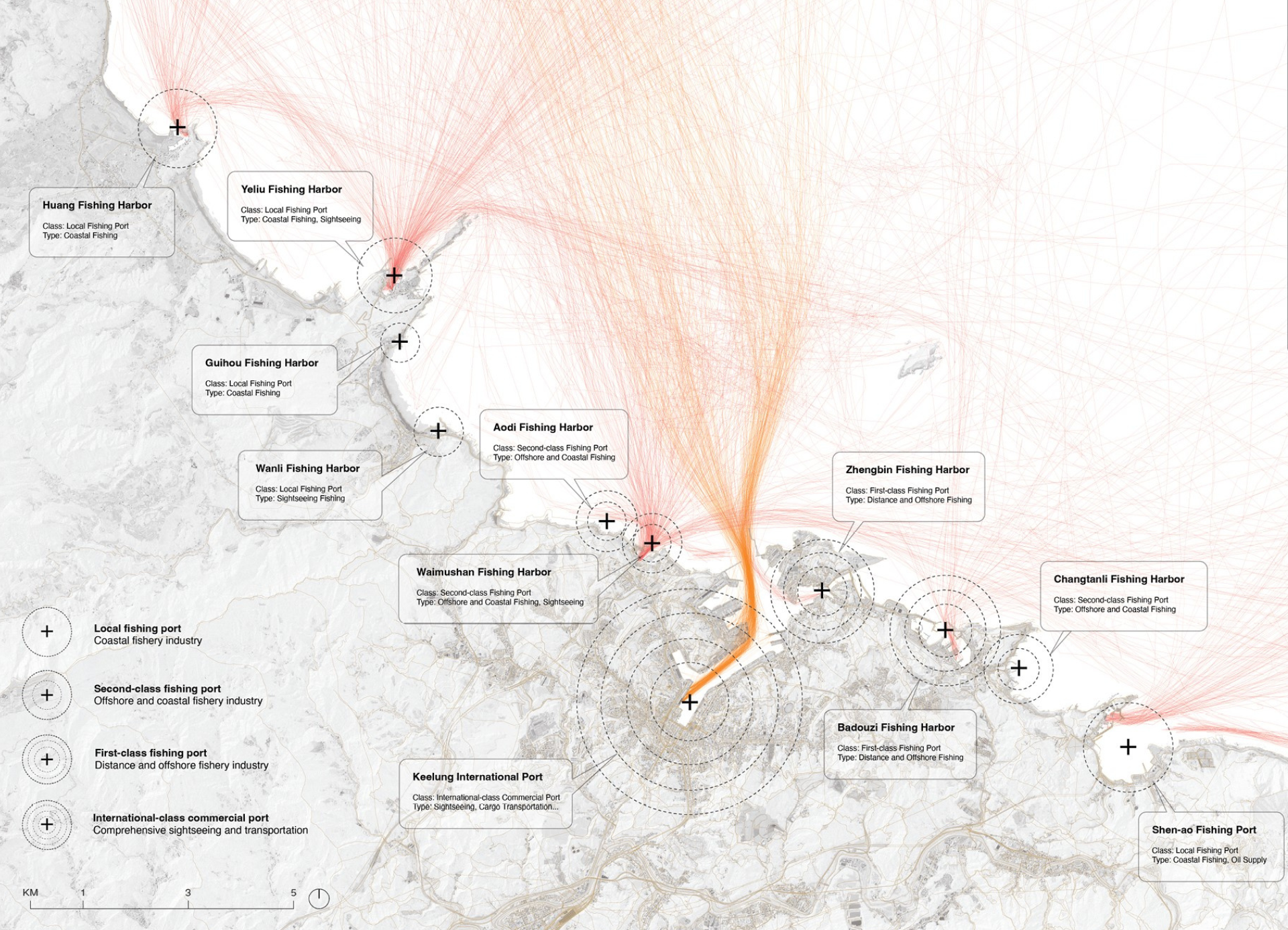
VC Conventional cartography tends to stabilise territory into fixed objects and boundaries. My drawings instead attempt to represent relationships that remain dynamic: algorithmic decisions, routing hierarchies, environmental processes, maintenance cycles and political negotiations.
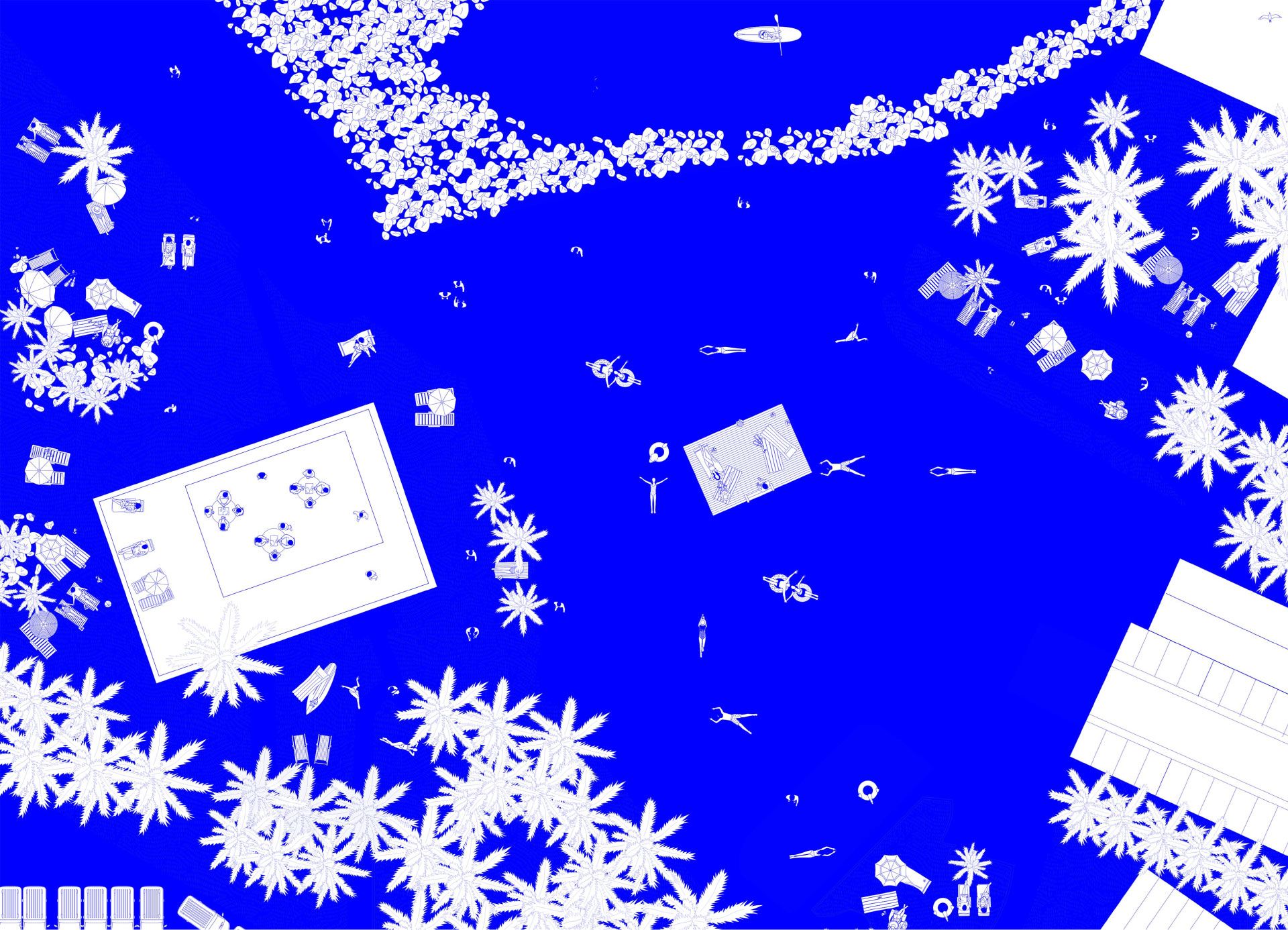
Rather than depicting a network as a single optimised line, the drawings reveal it as a continually shifting field of interactions operating across multiple temporal and spatial scales. They borrow as much from navigational charts, scientific instruments and speculative fiction as from architectural drawing, allowing uncertainty itself to remain present instead of being resolved into a definitive representation.
KOOZ Your research presents computation as inseparable from climate, geology and material maintenance. How does this challenge the persistent myth of the digital as immaterial?
VC The digital has never been immaterial. Every computational operation depends upon physical infrastructures: fibre-optic cables crossing oceans, landing stations, cooling systems, energy grids, repair vessels, satellites and the geological conditions through which they pass.
The Arctic makes this particularly evident because sea ice, permafrost, weather systems and geopolitical borders all directly influence how communication networks operate. Computation, then, cannot be understood independently from its material environments. Rather than existing above territory, digital systems continuously negotiate with climate, geology and maintenance, making these conditions integral rather than external to computation.
KOOZ The project concludes by proposing a new form of infrastructural literacy. What does it mean to navigate infrastructures rather than simply make them visible? Could ambiguity itself become a productive condition for design?
VC Navigation accepts that complete visibility is neither possible nor necessarily desirable. Instead of pursuing total representation, infrastructural literacy becomes the ability to recognise how algorithmic, territorial and environmental processes intersect, even when they remain only partially observable.
In this sense, ambiguity is not a deficiency but a design condition. It keeps infrastructures open to interpretation, negotiation and adaptation rather than presenting them as closed technical systems. The project therefore treats noise not simply as something to diagnose, but as a navigational tool that helps orient us within systems whose complexity always exceeds any single map.
KOOZ As digital networks increasingly organise territory without necessarily producing conventional architecture, what role remains for architects? Is it still about building—or about making the forces that shape space legible?
VC I think architecture's role expands rather than diminishes. If communication infrastructures increasingly organise territory through protocols, algorithms and logistical systems rather than through buildings alone, architects must also learn to work across these operational landscapes.
This does not mean abandoning construction, but recognising that architecture can intervene through representation, speculation and new forms of spatial literacy. In the project, the architect becomes less a designer of stable objects than a cartographer of thresholds — tracing where computational operations become territorial, where environmental conditions reshape network behaviour, and where alternative futures might still be imagined before existing operational logics become irreversible.
"The architect becomes less a designer of stable objects than a cartographer of thresholds."
BIO
Valeriia Chemerisova is an architectural designer and researcher. She is currently pursuing her postgraduate diploma studies at the Architectural Association School of Architecture in London. Her work explores the intersections of architectural theory, memory, and emerging technologies.