This is an excerpt from the BUILT / UNBUILT: Archiving Otherwise reader edited by KoozArch on occasion of the Public Programme accompanying the Pavilion of Saudi Arabia at the 19th International Architecture Exhibition which is available to download at this link.
Federica Zambeletti / KOOZ Could you start by introducing your practice?
Bricklab We are a cross-disciplinary architecture studio that probes the boundaries between research and practice. We tend to adopt an experimental approach that investigates the relationships between site, object, and user to reexamine the role of the built environment in the development of collective notions of place-making and identity. Our research is centered around materiality and urban history and plays a critical role in our design projects. Our architectural work is mainly concerned with public projects including cultural, commercial, and hospitality uses. Informed by our experimental approach to research, we have recently been drawn towards adaptive re-use projects that highlight the layering of urban histories and its potential to support contemporary uses and their associated communities.
Specifically how did the project of Pseudo Archives emerge? What conditions prompted this?
Bricklab is rooted in the city of Jeddah, the city where we grew up, where —inspired by the Situationists — we started investigating on week-ends, after a day at the beach, neighbourhood by neighbourhood, trying to understand its varying built environment. The project emerged as a means of investigating and asking: how could we understand our city’s history? How could we document our city in a different way? How can we capture the nuances of its built environment and its communities? What kind of methodologies could we explore?
It’s important to mention that the project started before mass urbanization reforms, which entailed the demolition of large parts of the city. This condition gave the project a sense of urgency as we realized the importance of documenting as much as we could; what started as a curiosity soon transformed into a sense of responsibility. Between 2021–2022, much of Jeddah’s centre was expropriated to make way for newer more efficient developments. However, this resulted in the displacement of many ethnic minority and low income communities from their neighborhoods.
Within this context, we ask what are the different layers that define decisions around what buildings should be kept and vice versa? What identities can emerge from these changes that are happening? It’s important that we document these structures before they’re gone, not for the sense of nostalgia, but to better understand the identity of the city. Which identities of the city do we want to keep?
How does your archiving work complement existing documentation on the city?
In the absence of a a centralized archive on the built environment and a sporadic distribution of any drawings or information on many of the buildings that comprise the city’s early modern expansion we have been working as detectives, digitising buildings through tools and methods such as those of google maps, photogrammetry, or even just simply by taking pictures. We use information from personal archives, oral accounts, and other fragments of data to reconstruct the narrative of different buildings, streets, or districts. We usually engage with students or interns to document architectural features and digitize them into 3D sketch models that approximate the overall appearance of the structure For us, mapping specific urban areas or drawing certain buildings is never a graphic exercise in and of itself, but rather the creation of a resource which we hope other researchers can use to further investigate these spaces. It’s about making accessible information which would otherwise not be available.
Most of the time we do not have access to the building, and so we also question, how do you archive an architecture without a plan? How can we capture its essence? Do we cast silicone to capture some of the sand? Do we take some of the sand to make something else? It's all about these approximations, investigations, negotiations.
"It’s important that we document these structures before they’re gone, not for the sense of nostalgia, but to better understand the identity of the city. Which identities of the city do we want to keep?"
We explore different ways of documenting both the built and natural environment, from photography, to collecting fragments, to experimenting with different materials to better understand all sorts of aspects of the context and its lived history. For example, we collected sand samples from along the coast of the Red Sea to better understand the impact of the natural context connotations of place and identity. At times, we mix the sand with resin, a petrochemical by-product which is emblematic of Saudi’s modernisation through oil. We really try to convey this tactile aspect of archiving, expanding beyond the idea of archiving as an academic practice, solely associated with images and plans which can be found in books. In this regard, we have also been doing these silicon spills that capture the texture of the ground. Alongside these experimental approaches, we also operate through more rigorous sources of data, collecting newspaper clippings, archival photos to piece together information about specific historic buildings. We also look into different data sources; from local publications that are embedded with storytelling, to international publications that are more research-oriented, to online archives, to people’s personal collections, and also via interviews and walking tours with individuals who live in these neighbourhoods. Through this diversity, we try to create an archive that future generations can peek into and get an insight into specific moments in time.
On occasion of Archiving Otherwise, you presented a wonderful film which itself acts as an archive of the Air Pilgrim’s Accommodation building. Could you expand on this project further and the opportunities that film offers as a tool?
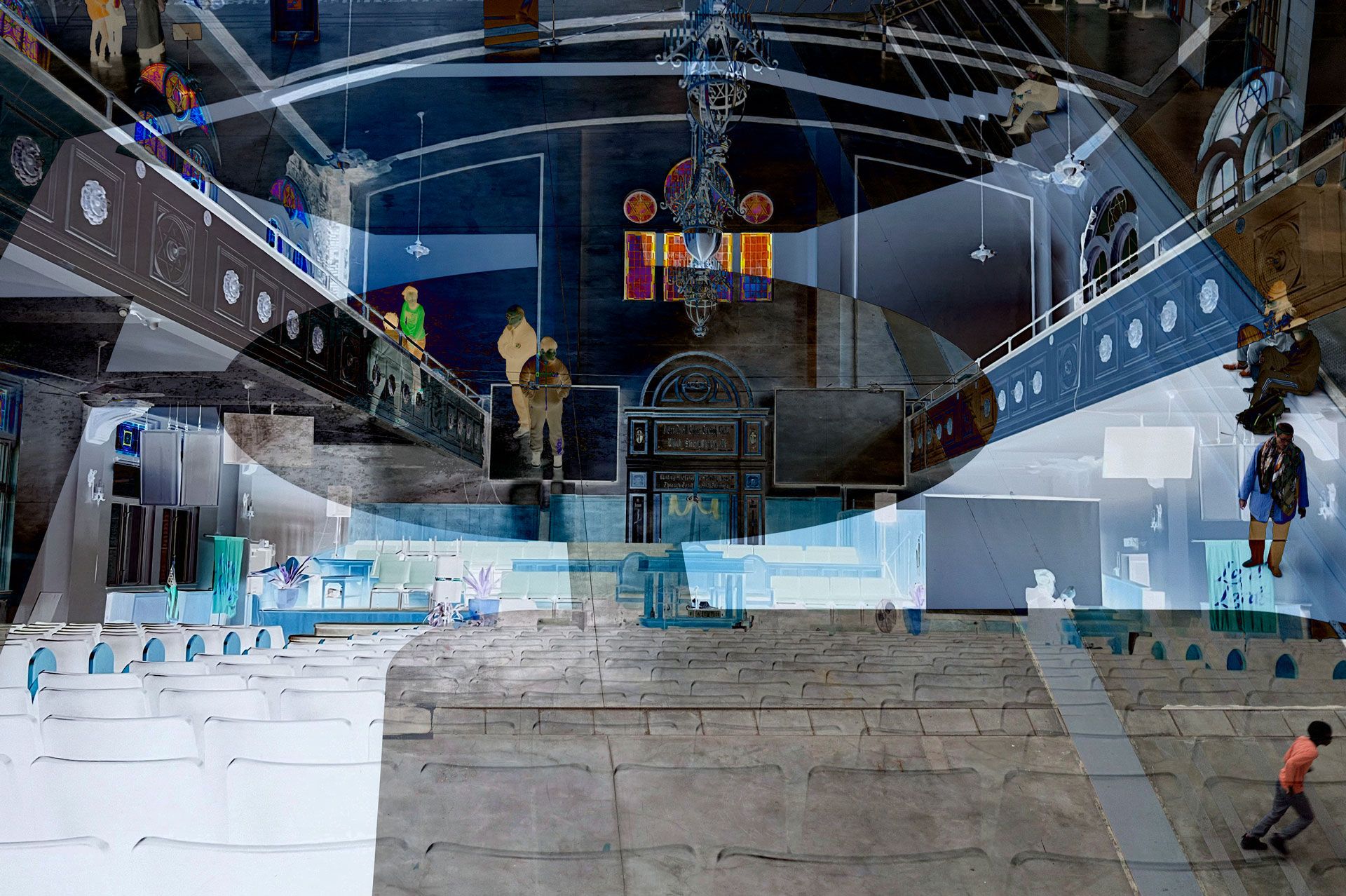
The film was produced as an integral part of our installation and its ultimate legacy. We worked with Ghaidaa Gutub, a former member of our team, to piece together video and image fragments that may capture the structures final moments before demolition. Our last visits to the building were collaged with historical images from different time periods to shed light on the tensions between memory and experience. The moving visuals were overlaid with voice-overs from former users of the building and its surroundings that tell stories of their encounters with the structure and its impact on the surrounding district and the wider city. The short film is an amalgamation of different histories, both remote and recent, that touch on notions of collective memory and cultural continuity.
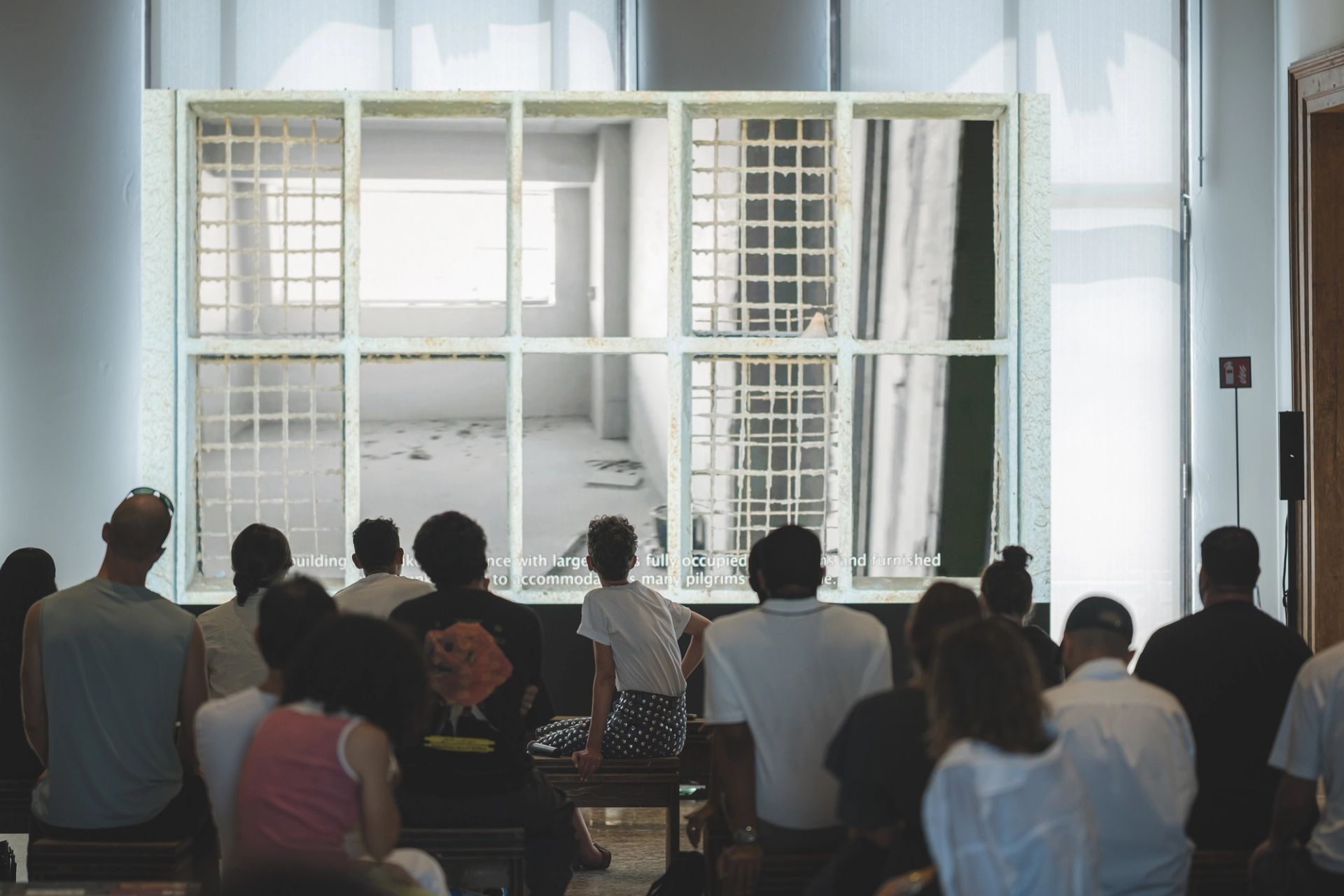
Screening of Bricklab’s film on the Air Pilgrim’s Accommodation produced in collaboration with Ghaidaa Gutub. © John Soriano
A model of the Air Pilgrim’s Accommodation building was also presented within the context of the inaugural Islamic Arts Biennial. What was the value of hosting this intervention within the Biennale?
The Islamic Arts Biennale bridges the past, present and future, offering a profound exploration of belonging and spiritual placemaking. By reflecting on the evolving relationship between Jeddah and its pilgrim visitors, the Biennale captures the city's shifting identity while celebrating its historical significance.
”Air Pilgrims Accommodation 1958 was an installation commissioned by The Diriyah Biennale Foundation as part of the inaugural Islamic Arts Biennale, held at the iconic Hajj Terminal, a landmark designed by Skidmore, Owings & Merrill. Historically, not just a transit point for millions of pilgrims but also a distinct place marking the beginning and end of their spiritual journey to the holy cities of Makkah and Madinah. It offered a poignant backdrop for reflecting on migration, belonging, and spirituality themes.
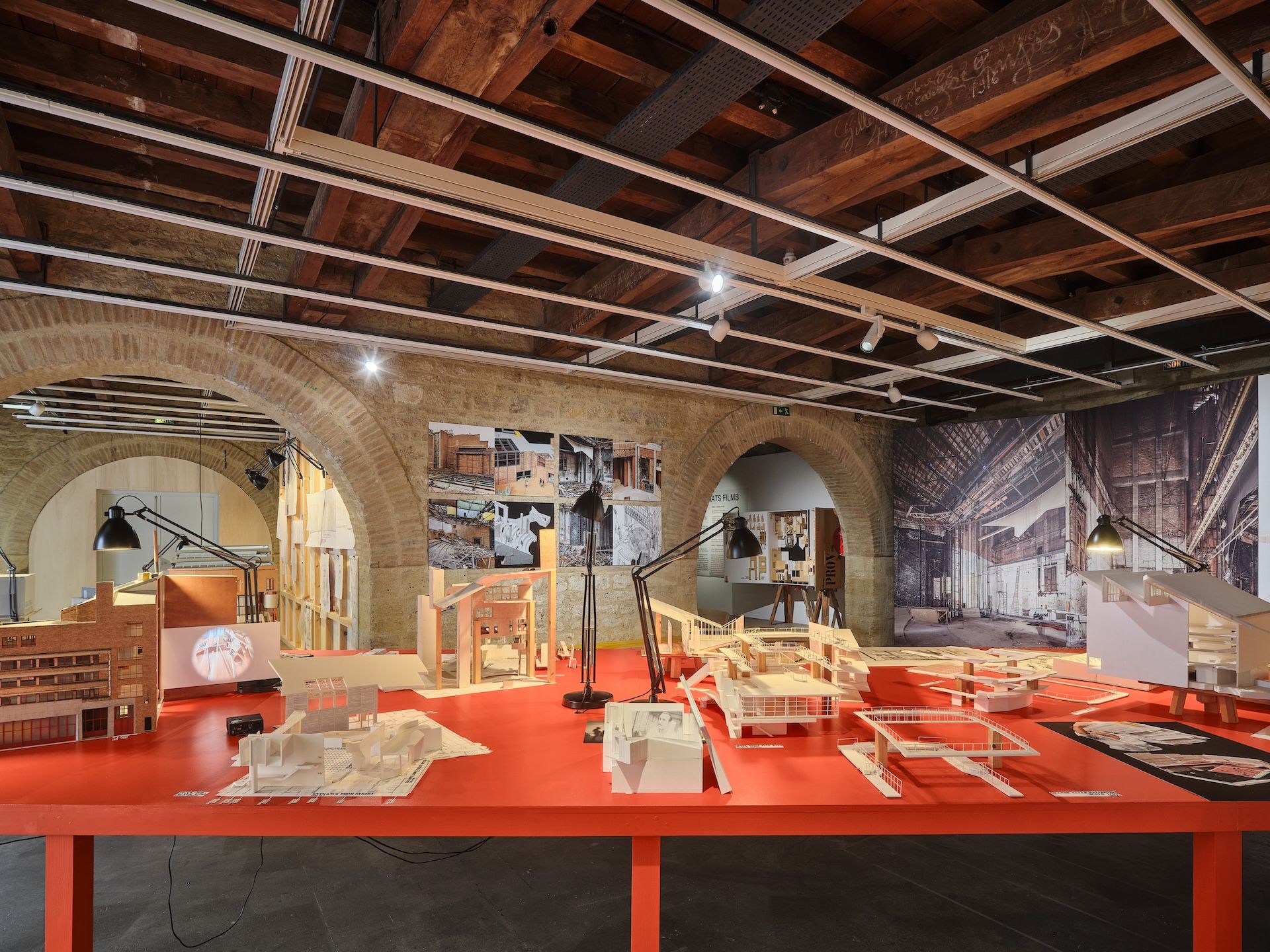
Our contribution to the Biennale preserved the memory of the Air Pilgrims’ Accommodation Building while engaging with broader themes of cultural continuity and adaptation. We presented a two-story, full-scale abstract replica of one of the building’s wings, through the integration of historical elements and contemporary design. The structure included an elevated viewing platform that provided a perspective reminiscent of the original building's layout, along with a sidewalk and piazza evoking the market area of the demolished site to foster communal interaction. The model was constructed out of salvaged items, archival material, and oral histories to connect the past and present.
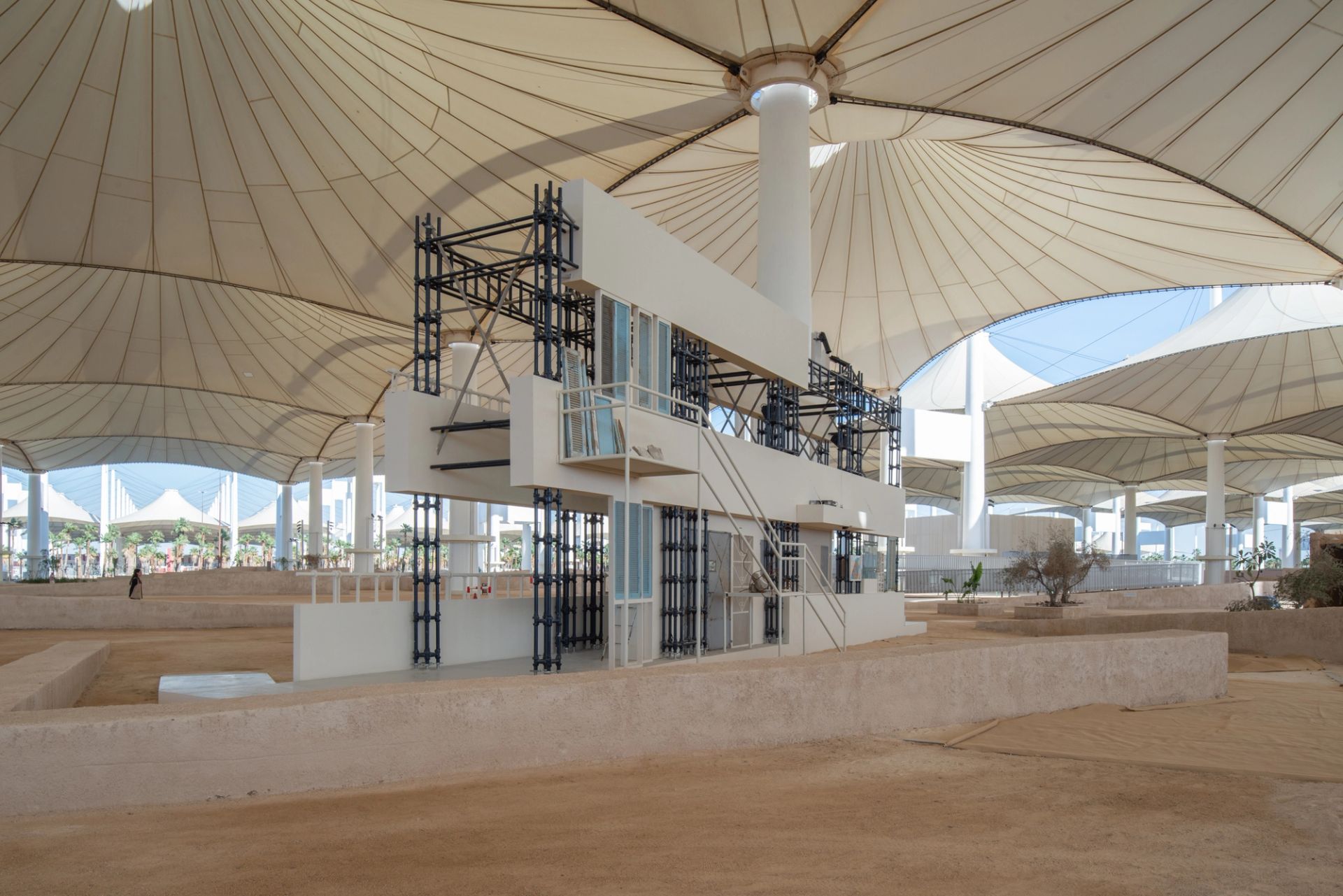
Air Pilgrims Accommodation 1958, a 1:1 scale mockup of the demolished structure produced for the inaugural Islamic Arts Biennale, 2023. © John Soriano
KOOZ Throughout your work you engage frequently with artists and exhibitions. Could you tell us a little bit about the project for Saudi Modern, and the power of the arts in expanding our understanding and interpretation of our built environment?
For ‘Saudi Modern’, it’s important to start from the site of the exhibition, which was a 1954 house that the owners intended to demolish — and which, through the restoration works done for the exhibition, we managed to convince them to keep. The house is an archive itself.
The exhibition was an analysis on Jeddah's shifting urban fabric while drawing parallels between the city’s traditional, modern, and contemporary cultures. Since the discovery of oil by the American Standard Oil Company in 1938, Saudi Arabia has sped towards a technologically advanced future with Jeddah, its vital port city, transforming into a modern metropolis. At the pivotal mid-20th century mark, towns built of mud, bricks, and stone gave way to sprawling expanses of cladded reinforced concrete. Today, the break between historical past and modern present is considered so abrupt that Jeddah’s critical society disregards the cultural value of the city’s early, modern architectural developments.
By researching thirteen structures located within Jeddah, Saudi Modern examines modernism's influence on urban development within the city. Among the modernist structures featured in the architectural component of Saudi Modern are The Printing and Publishing Establishment, The Green Palace, King Saud's Palace Complex, and the Air Pilgrim's Accommodation. This deeply researched survey is accompanied by installations from eight contemporary artists that further respond to the themes and implications of this historic adaptation of modern architecture and the newly urbanised culture it inspired.
The exhibition includes; ‘Arabi Gharbi,’ a neon sculpture by artist Nasser Alsalem, which re-contextualises linguistic relations formed specifically to help modernise Jeddah; artist Zainab Alireza’s installation explores the various dwellings her family has inhabited over the decades. Lina Gazzaz’s ink drawings on nylon reference the role of water accessibility as a status symbol. Aziz Jamal’s sculptures of bathroom ornaments and soaps made from local clays pointing to the ways in which access to water has transformed Saudi society. Alaa Tarabzouni's historical exploration of both decorative and functional breeze bricks in early Saudi Modern architecture and the skilled wooden window crafts they replaced. Filwa Nazer's work with fabrics, steel and wood, reflecting modernism's residential impact on the construction of a merchant home in Al Kandara. Dima Srouji’s video installation exploring the connections between emerging urban centers in Jeddah and nearby Ramallah.
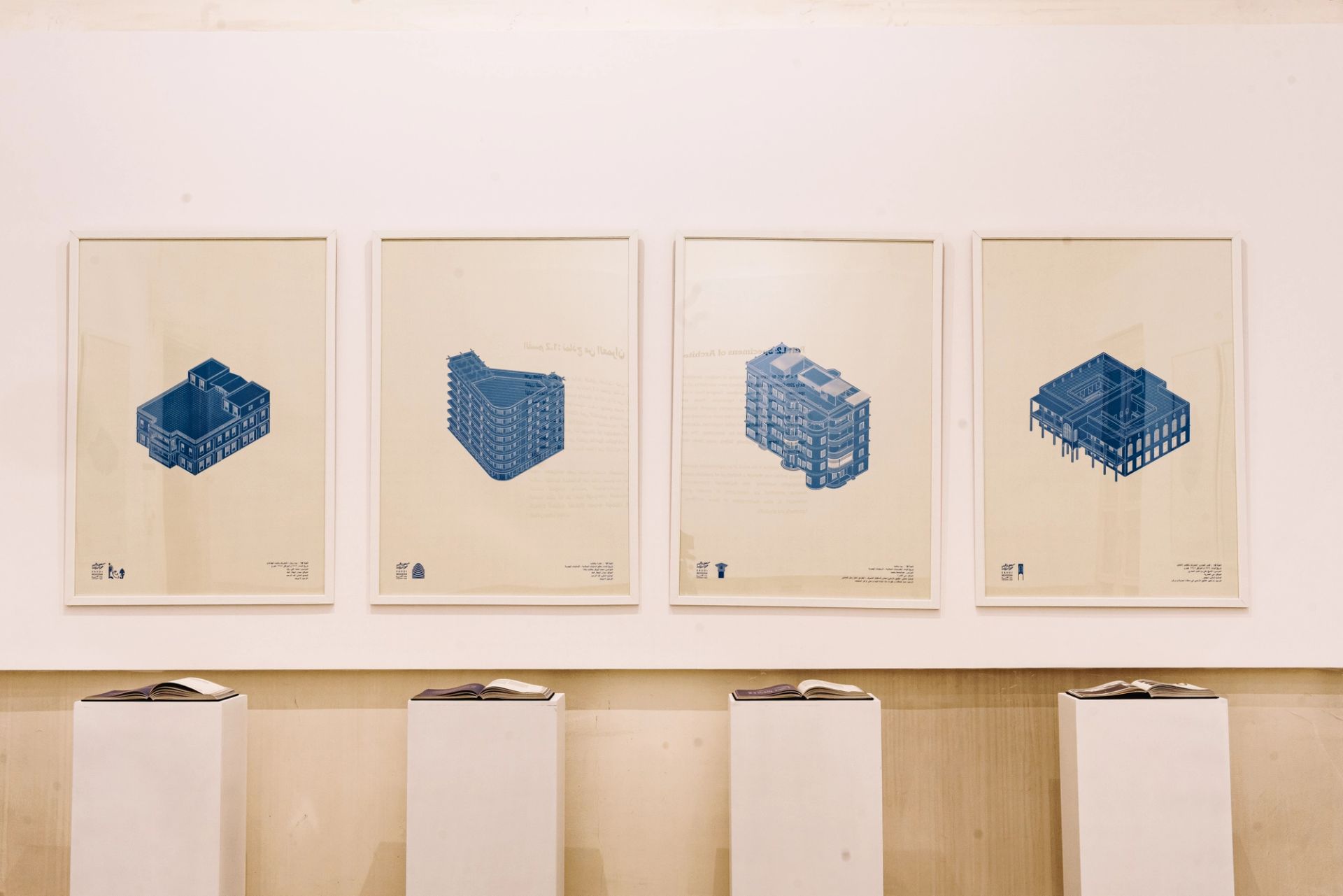
Views of the exhibition Saudi Modern: Jeddah 1938 – 1964 held at the restored 1954 residence of the late Dr Mohammed Saeed Tamer, 2021. © Bricklab & Amr Abuzaid in collaboration with Dar Al Hekma University, Ibraheem Bintaleb
The exhibition was accompanied by the book ‘Saudi Modern: Jeddah in Transition’, 1938-1964, what narratives did this unfold and preserve?
The book specifically focuses on Jeddah’s transition from a modest walled city and pilgrimage hub into a sprawling modern metropolis. The complex urban morphology that characterises it today can be credited to the port city's role in the Saudi Arabian oil industry that arose after the discovery of natural oil reservoirs in 1938. The industry brought foreign companies and institutions, as well as workers and their families, from around the world. The city grew beyond its old walls. Moreover, interactions with modern technologies and development models launched a radical infrastructural and architectural reconfiguration of the urban fabric. As a reaction to this dramatic shift, the language of the vernacular has become fetishised. Modernist developments post-1938 are today commonly considered inauthentic, and many of the buildings, streets, and neighbourhoods that bear witness to the evolution of the city right after the discovery of oil have been demolished without formal archival documentation. In their place, new megaprojects have sprung up. Driven by global capital, Jeddah, along with other cities across the Red Sea, has entered yet a new phase of sweeping urban transformation. Highlighting fifteen case studies, the book further combines scholarly essays with visual contributions, presenting unparalleled documentary research and historical contextualisation of the city's disappearing modernist heritage.
As new digital tools — including AI-driven applications – emerge, what opportunities might these offer for your own practice of archiving?
"We are consistently intrigued by new tools for documentation and digitization, especially when it comes to cases that require quick and agile mobilization. However, we are always wary of the implications such tools may inflict on personal apprehension and intentionality."
We are consistently intrigued by new tools for documentation and digitization, especially when it comes to cases that require quick and agile mobilization. However, we are always wary of the implications such tools may inflict on personal apprehension and intentionality. We firmly believe that the act of drawings and tracing is an active proponent in the development of historic documentation.
Throughout your work, you talk about a future-oriented archive. Could you expand on this notion and its ambitions?
The process of archiving is an integral part of our design practice. As we imagine new futures of our built environment, we are constantly inspired by the beauty of our surroundings and the work of past generations. As such, the archive is intended to inform future decisions. As Nietzsche eloquently notes “....that knowledge of the past is desired only in the service of the future and the present, not to weaken the present, not to uproot a future strong with life.”
About
The Um Slaim School grew from the research-driven work of Syn Architects and the Um Slaim Collective — originally focused on vernacular Najdi architecture — into an alternative pedagogical prototype to be established in Riyadh after the Biennale. Aiming to redefine architecture education in Saudi Arabia, it fostered transnational dialogue on practice-led and research-centered methodologies, exploring how architecture can recalibrate relationships among natural, social, and technological systems through regenerative and participatory approaches. Guided by terms such as Matrilineals, Situated Practice, DIY Archiving, Ritual Matter, Adaptive Reuse, and Sprawling Grids, the program developed a situated spatial vocabulary while pursuing actionable outcomes for the School’s future. The Public Programme Biennale sessions — titled BUILT /UNBUILT — were built around core thematic investigations which included: Archiving Otherwise; Material Ecologies; Pedagogies of Proximity and Relation and Building Participatory Infrastructures. The programme was curated by Beatrice Leanza and co-led by Maryam AlNoaimi.
This conversation is excerpted from one of four readers documenting the laboratory activities, conversations, and key participants of the public program organized in Venice from June to November, as part of the Pavilion of Saudi Arabia—The Um Slaim School: An Architecture of Connection. These readers serve as companion pieces to the two publications produced as part of the Pavilion project, both co-published by Mousse Publishing and Kaph Books.
The Um Slaim School: An Architecture of Connection – 19th International Architecture Exhibition. La Biennale di Venezia (Mousse Publishing & Kaph Books, 2025)
Connections as Method: Relational Pedagogies and Participatory Spatial Practice (Mousse Publishing/Kaph Books, 2025)
Bio
Bricklab is a studio for architecture, design and experimental research based in Jeddah, formed in 2015 by Abdulrahman and Turki Gazzaz. It navigates the interplay between material research, practical design, and the built environment. Its portfolio — from cultural architecture to urban design and public interventions, to scenography and installations — reflects thoughtful responses to changing contexts.
Federica Zambeletti is the founder and managing director of KoozArch. She is an architect, researcher and digital curator whose interests lie at the intersection between art, architecture and regenerative practices. In 2015 Federica founded KoozArch with the ambition of creating a space where to research, explore and discuss architecture beyond the limits of its built form. Parallel to her work at KoozArch, Federica is Architect at the architecture studio UNA and researcher at the non-profit agency for change UNLESS where she is project manager of the research "Antarctic Resolution". Federica is an Architectural Association School of Architecture in London alumni.