This essay is part of our partnership with the Nieuwe Instituut. A series of 10 contributions with 10 former fellows to celebrate the 10-year anniversary of the Research Fellowship Programme. The contributions have also been compiled into the ON RESEARCH reader, available for download at this link.
We are working within and together with cultural institutions at a moment marked by overlapping crises, urgencies, histories and demands for response, emerging from distinct yet intersecting contexts. From an institutional point of view, this can make the present feel no longer like a shared, directional duration, but more like a series of fractured realities: environmental, political, technological and institutional, each (rightly so) demanding attention, articulation, and resolution, now. In this context, uncertainty is increasingly treated as a liability within institutional, funding, and governance structures that privilege clarity and measurable outcomes. Complexity is met with acceleration: clearer positions, faster decisions and firmer conclusions. Solutions operate less as ways through situations; rather, they are signals that the subject remains governable–proof that the situation is still under control.
Over the past year, we [as researchers based within the institution] chose not to host our yearly Research Fellowship. Instead, we took some time — time being a scarce asset within cultural institutions — to focus on what hosting research actually means, and what we can imagine it to be. After a decade of fellowships with over forty individual and collective practitioners at the Nieuwe Instituut we returned to institutional records from before our own time, mapping who had been hosted and tracing their practices, often finding connections between fellows and recurring topics across the years. This act of stocktaking, getting-to-know and learning-from became a way of situating present and future fellowships within a longer trajectory.
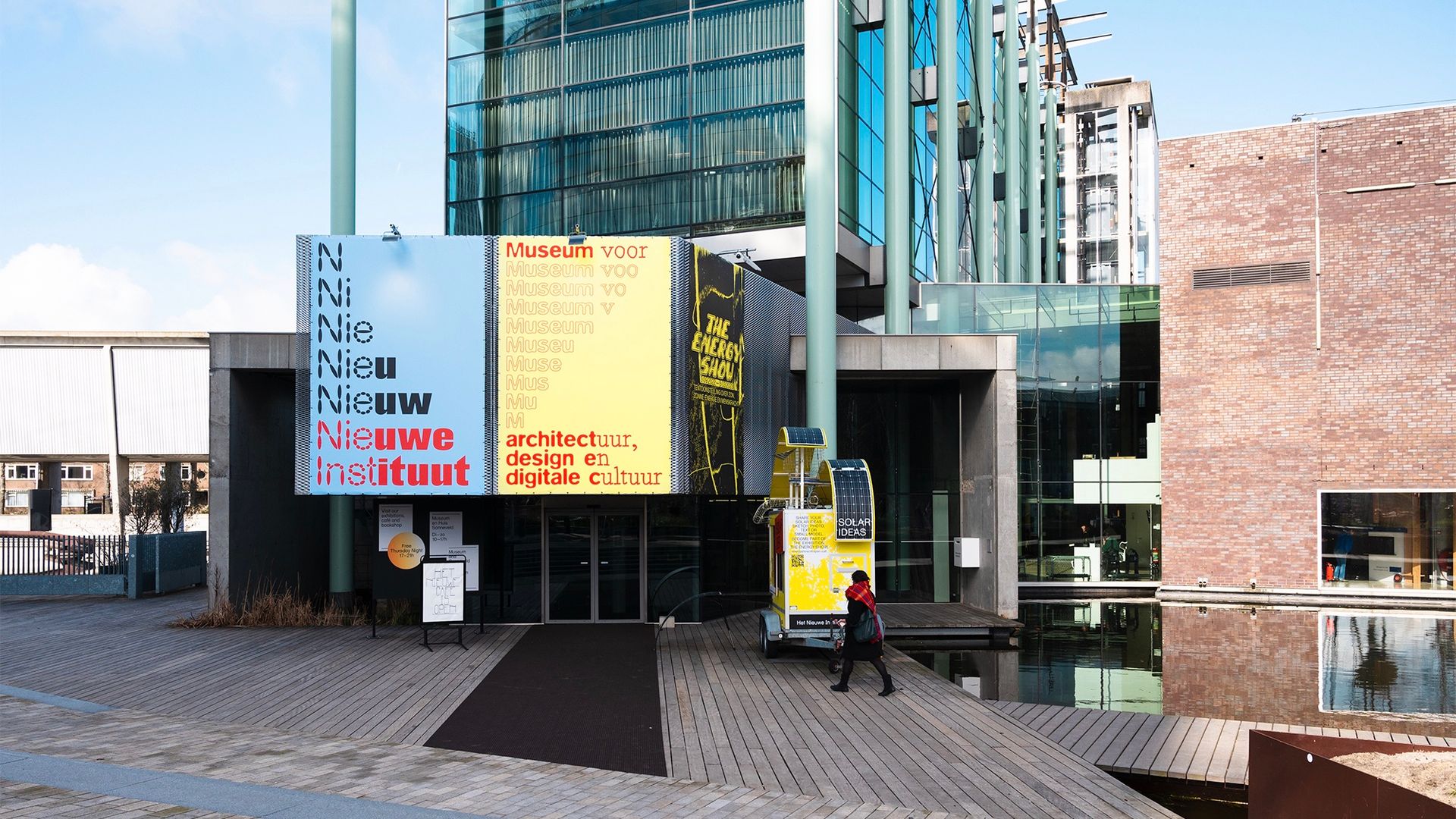
Nieuwe Instituut entrace, no credits known
Cultural institutions are not outside these conditions of intersecting crises and accelerated decision-making. They tend to absorb them through planning cycles, funding structures, public accountability, and expectations of relevance. As institutional workers involved in hosting the Research Fellowship, and as researchers ourselves, we sometimes participate in these pressures, even as we try to resist them. The pressure to conclude is rarely stated outright, but it shapes how research is framed, supported, and evaluated. Ambiguity is permitted only temporarily and not-knowing is expected to resolve. Institutional workers as well as “external” researchers are often asked to hold space for inquiry while simultaneously translating it into forms that can be recognised, contained, and communicated.
Research often sits uneasily in such conditions, not because it avoids engagement, but because it unfolds differently. Research moves through pauses, returns, partial articulations, and moments of intensity rather than linear progression. It emerges through sustained exchange, speculation, and trust —, often asking institutions to act less as stable hosts and more as porous bodies, reshaped by what they host. Our own decision to pause allowed these reflections to unfold slowly: through a series of conversations (over coffee, on online platforms, individually and collectively) and through a publishing trajectory that permitted the material to percolate gradually, across the year.
"Research moves through pauses, returns, partial articulations, and moments of intensity rather than linear progression."
This essay grows out of this year of reflection on what it means to host research and serves as a repository for these branches of inquiry and connections. We worked through this reflective year in conversations with other institutional workers hosting research in the form of fellowships and residencies, writings and conversations by and with former fellows published through KoozArch and a day of reflection, creativity and festivity at Nieuwe Instituut — with guests Cláudio Bueno, Akil Scafe-Smith, Seth Scafe-Smith, Lou Mo, Manuela Zechner, Marina Otero Verzier, Najia Bagi and Siegrun Salmanian — where we explored the concept of research as a shared, embodied experience shaped by collective learning, real-life contexts and unexpected encounters. The event was hosted alongside Brandon LaBelle and Katía Truijen, the authors of the book Epistemic Imaginaries: Learning as Festivity. Following this line of thinking and doing, in this essay we ask a set of practical, yet rather existential, questions: If hosting can make research possible, how does it also define what can appear and what cannot? What kinds of reflexive, administrative, and temporal literacies are required in cultural institutions to host knowledge that remains situated, unresolved or provisional without abandoning the need for moments of articulation and shared grounding?
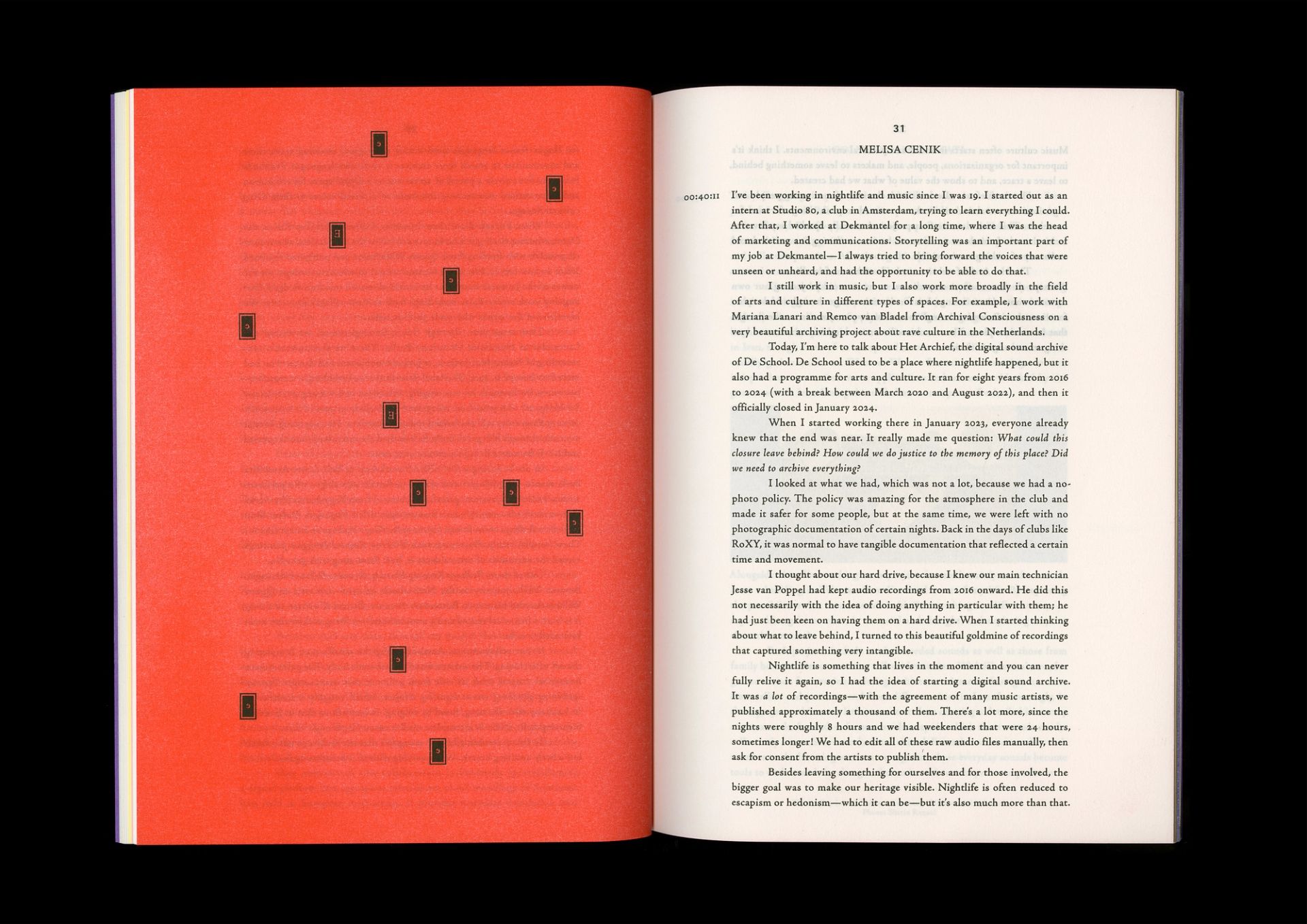
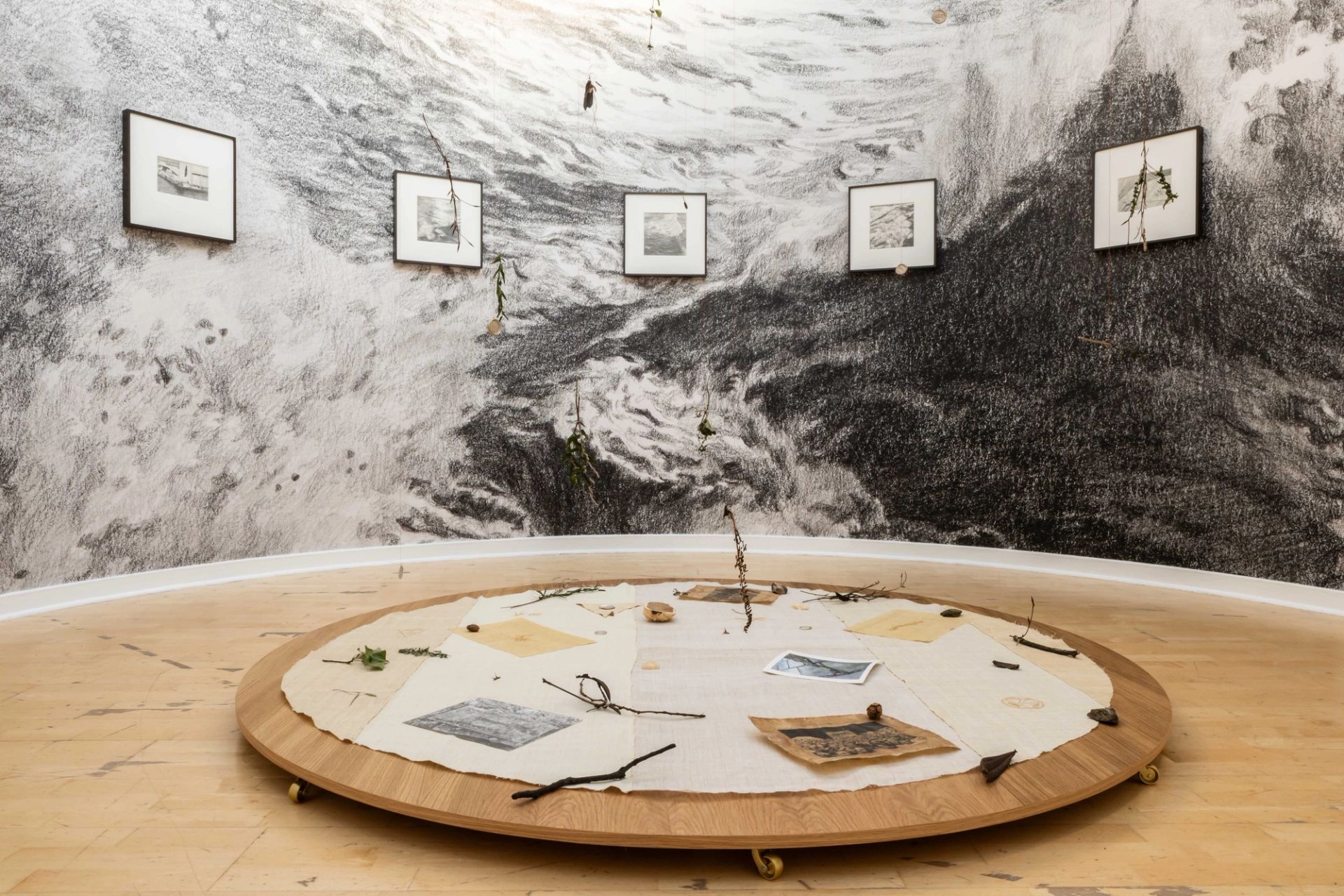
Clipping 2: Sum, Parts - Scans by Catherine Hu
In times when knowledge is rapidly abstracted, universalised and instrumentalised institutions can become vessels to actively support research as situated and relational, where fellowships can be an institutional tool capable of holding complexity, locality and connection instead. To understand research as situated, and support this, the conversation, “Near and Far: researching intersections of site, story, and space” highlights the urgency to understand how research unfolds across different sites, histories and geographies through fellows who traverse different sites, stories, and spaces.
Over the years we learned that hosting a fellowship within an institution goes beyond providing space, funding, or visibility. It is to recognise that research and practice emerge from specific sites, histories, bodies, and relations, and that these conditions cannot be abstracted. Hosting, in this sense, is an ethical commitment to supporting knowledge as situated and embedded. It means meeting research where it's at: where and how it lives at that current moment. And entails recognising that institutional distance does not only separate, it can also enable connection. This approach carries institutional consequences: it asks institutions to slow down, to suspend predetermined outcomes, and to allow research to unfold according to its own local conditions rather than institutional timelines.
This approach is sharpened by the role trust plays in facilitating such work. In the first conversation, which opened the publishing trajectory Marina Otero Verzier describes an intentional shift away from bureaucratic control. In looking back at how the fellowship has been hosted she says: “We tried to reverse that logic and say ‘we trust you’.” In the context of fellowships, trust must become infrastructural. It creates space for research that is experimental, vulnerable, or unfinished — forms of knowledge that are often excluded from institutional recognition but are increasingly necessary in times of social, ecological, and political instability.
This understanding of trust carries throughout further conversations, revealing how it underpins modes of knowledge exchange and production. In the conversation Being with the Many: Practices of Trust with O grupo inteiro, lumbung.space & lumbung.kios, “trust”, Reinaart Vanhoe says, “operates within the space of uncertainty”. In an institutional landscape increasingly driven by clarity and deliverables, especially when linked to research, the fellowship becomes a rare structure that legitimises uncertainty as a necessary condition for knowledge. Supporting situated practices, then, is not only about inclusion, but about defending the possibility of research that resists simplification.
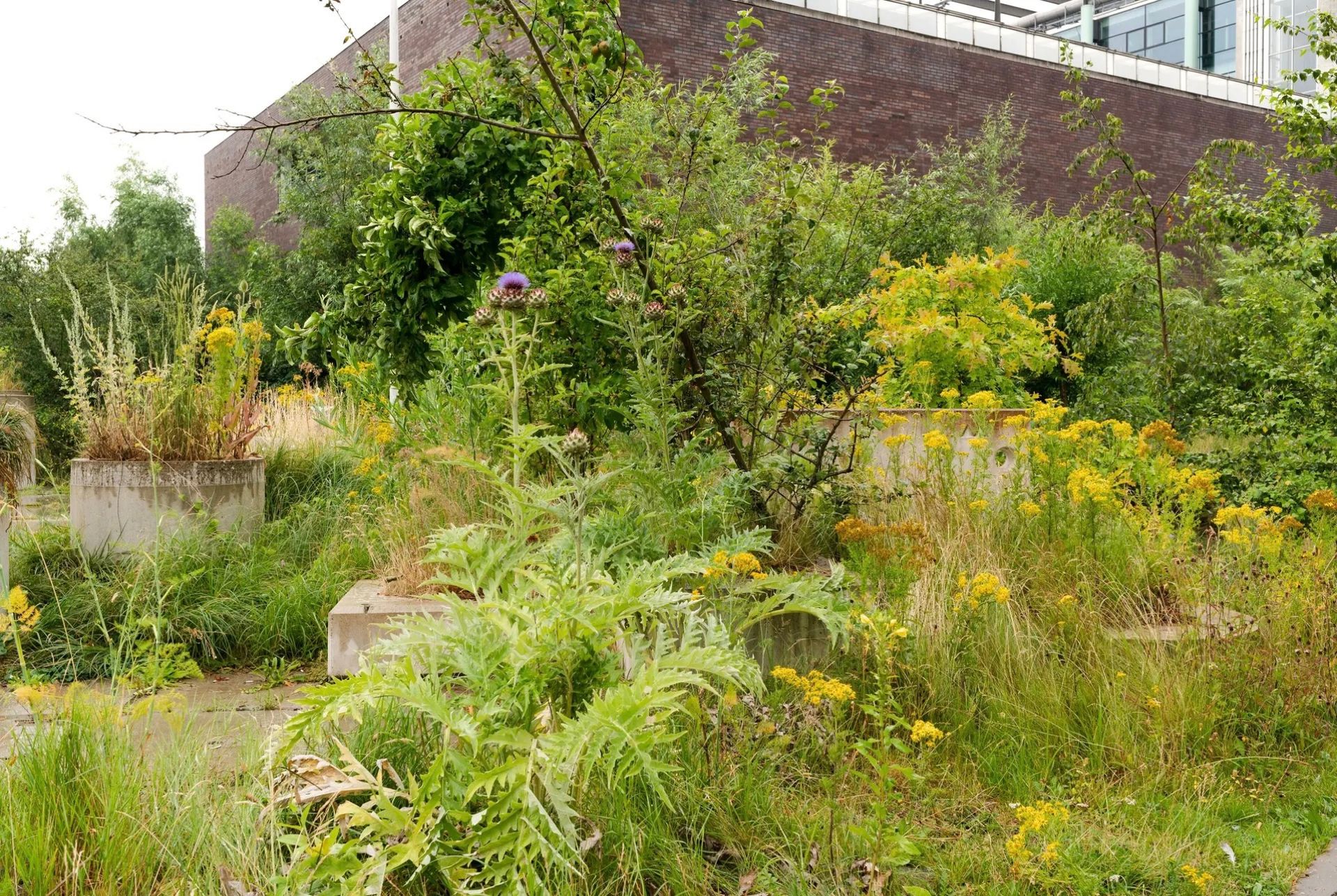
Zoöp Nieuwe Instituut. Photo: Petra van Ree
Situated research also rarely belongs to a single place. In the commissioned piece by Lou Mo, Define and Empower: The School of Mutants, she emphasises the need to bring work “from the outside into the western institutional system without forgetting to keep building and showing outside of this realm.” Fellowships thus operate across multiple sites at once. Sustaining practices that remain accountable to their communities of origin, while temporarily intersecting with institutional space.
Hosting is not a one-directional act; it requires the institution itself to remain porous, responsive, and open to transformation. If fellowships are to support situated practices, then the institution hosting them cannot remain unchanged. Although institutions appear and often function as fixed bodies: concrete-built, and in the case of Nieuwe Instituut quite literally made of concrete. Yet, the institution is also a porous body. And porosity is not a given; it requires labour and continuous maintenance. Porosity means adjusting timelines, revising formats, and allowing practices to influence institutional priorities. Porosity is oftentimes uneven, and therefore never fully present, its capacity always tested. We are learning to understand fellowships as pressure points that keep the institution in motion, revealing limits and testing alternative ways of working.
As Reinaart Vanhoe mentions: “Oftentimes though, this has its limitations, at times, there is no porosity, and in these cases, there is the reckoning of what institutions, at times cannot do. Porosity is not a value statement; it is a daily practice, and as such, not one that is always there in full. It’s easier to critique institutions from the outside, but when you’re inside, you see the constraints… how do we take steps forward, build alliances, and reshape institutional frameworks?” The institution, then, is reshaped not through distance or critique alone, but through involvement, alliance-building, and collaboration also from within. This diversity of ideas and practices generate a rich and healthy institution.
As Krista Jantowski writes in Being with the Many “When institutions step back slightly — when they allow themselves to be hosted by something else…there’s a different kind of openness.”. This stepping back suggests that porosity is not only about inviting others in, but about shifting positions, and allowing for these shifts to occur. Hosting itself, however, becomes rigid if left unexamined and must remain temporal and provisional. Ren Loren Britton uses the analogy of “wedges… to hold the door open to create more space,” as small acts of support as mechanisms for institutional change.
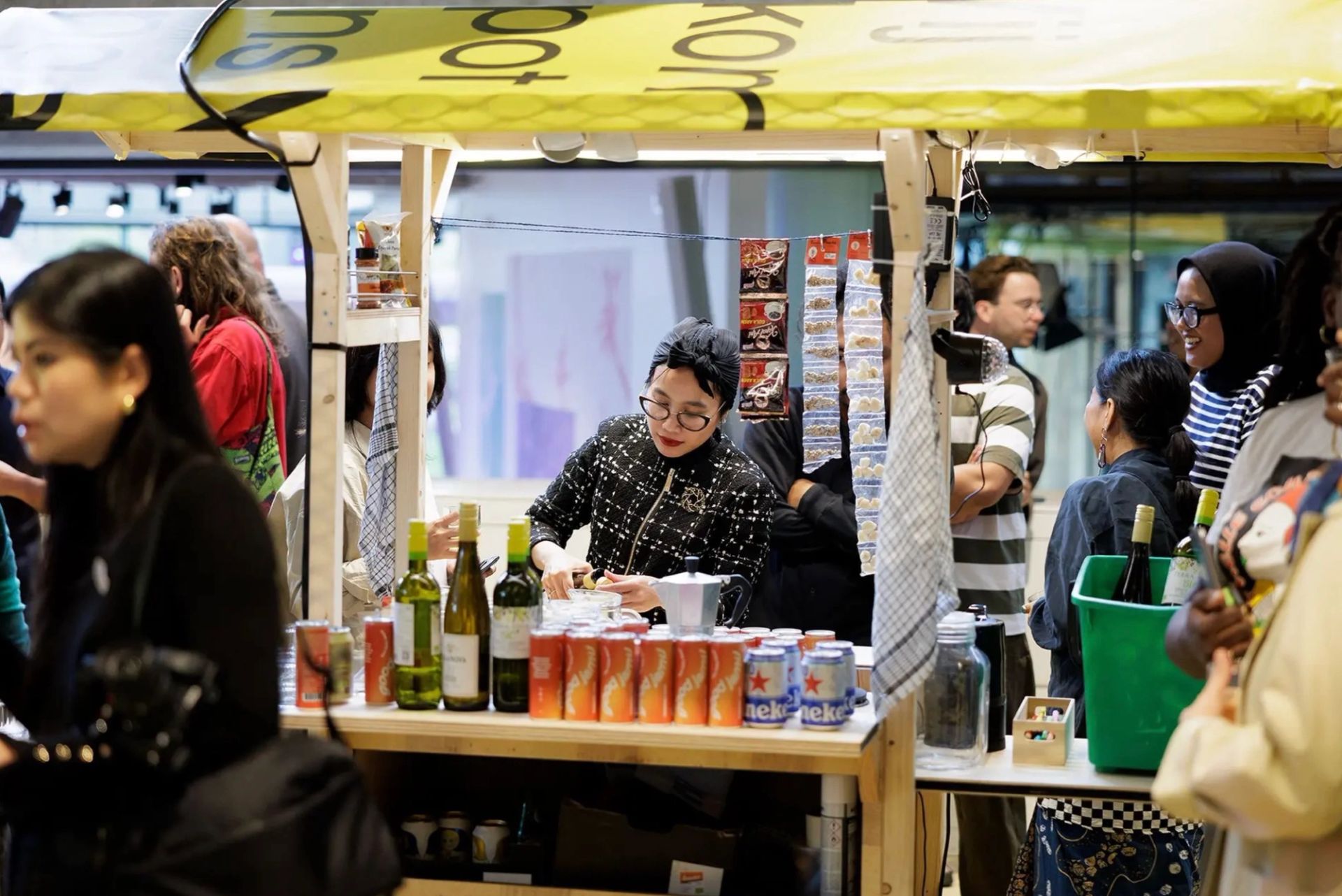
The gerobak, or mobile kitchen, in the GUD Instituut Living Room. Photo: Aad Hoogendoorn
The contemporary demand for conclusions to urgent questions isn’t neutral; it’s symptomatic of a world trying to govern itself out of collapse. These pressures seep into cultural institutions as well, particularly those engaging directly with social and political questions. From inside an institution, this often shows up as an everyday insistence on clarity: when will the research land, what will it produce, how can it be communicated? Administrative systems such as budgets, contracts and reporting formats shape what kinds of knowledge can appear and which ones struggle to find space. As WORKNOT! learns to love the messenger puts it pointedly, “spreadsheets…determine the mechanism of distribution of tasks, resources, and outcomes.” What often looks like neutral logistics slowly reproduces hierarchies of value, visibility, and attention.
"The contemporary demand for conclusions to urgent questions isn’t neutral; it’s symptomatic of a world trying to govern itself out of collapse."
From this position, hosting is not only about offering space and stepping back. In Being with the Many, the conversation with members of O Grupo Inteiro, lumbung.space and lumbung kios frames trust not as a soft condition but as a sustained relational commitment: one that accepts uncertainty, disagreement, and change as part of working together. Hosting involves staying present even when relations are unclear, unwanted or unexpected.
Working inside an institution, this raises difficult questions: why does research need to justify itself through measurable milestones? Whose timelines are we implicitly privileging? In Define and Empower the School of Mutants, companionship and moving at a shared pace matter more than individual success. Being together becomes a way of producing knowledge through the everyday that pushes back against extractive, competitive rhythms.
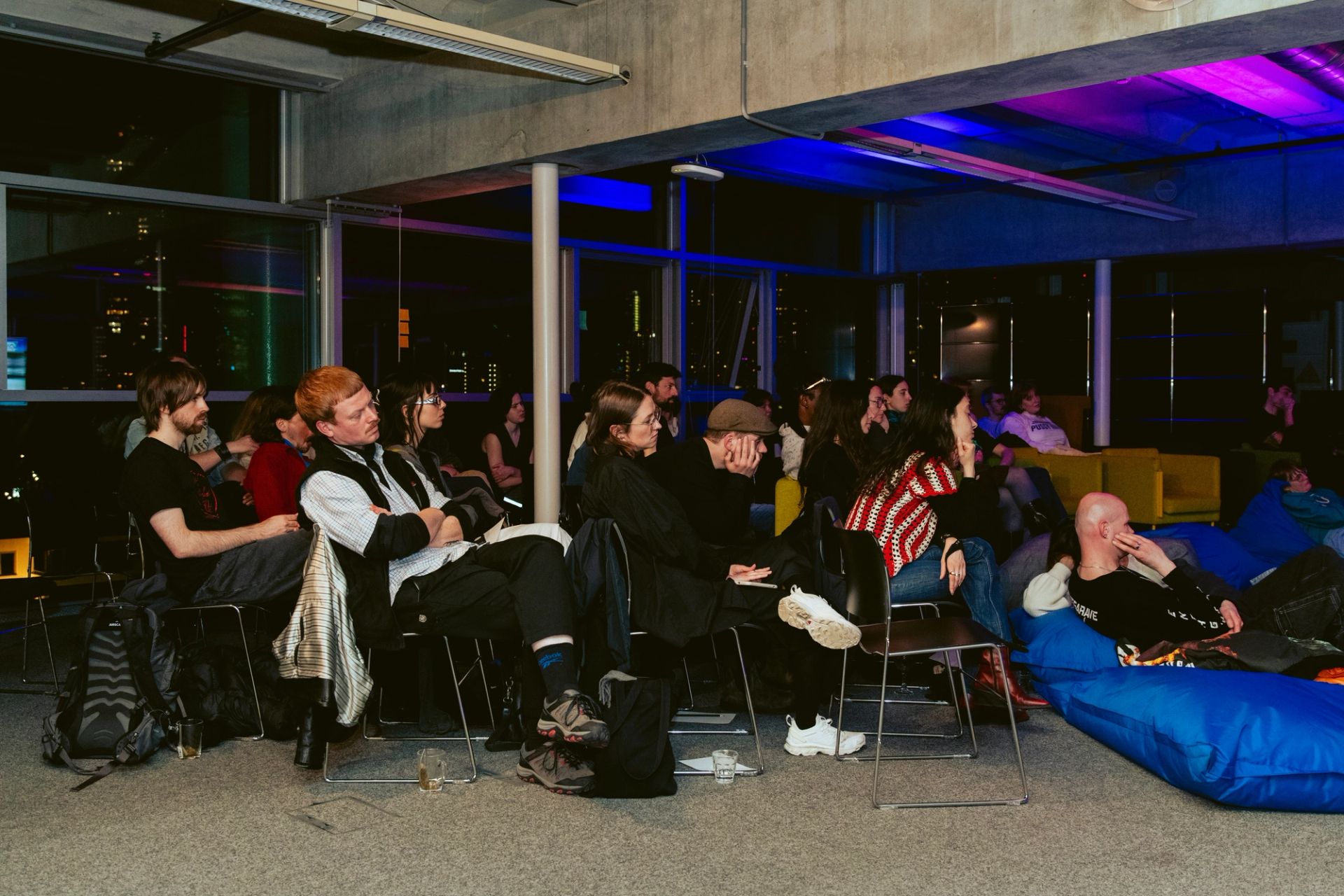
Research Nights: Through Sounds x Rewire, March 2025. Photo: Floor Besuijen
If hosting research in and with cultural institutions means accepting instability, it also means learning to work with time differently. Research, in our experience, rarely unfolds in neat sequences. It moves in bursts, pauses, regressions, and returns. Yet institutional timelines often expect linear progression in the form of proposals followed by development, outcomes, and evaluation. These temporal norms don’t just shape how research is managed; they shape what kinds of research are even possible, or sustainable, in the first place.
"Research, in our experience, rarely unfolds in neat sequences. It moves in bursts, pauses, regressions, and returns."
Across several conversations with former Fellows, this tension comes up repeatedly. In Refusing the Format, Füsun Tretken and Chris Lee speak about practices that move sideways as much as forward, resisting rhythms that equate motion with progress. Similarly, Near and Far, a conversation with Robin Hartanto Honggare, Luna BuGhanem and Daniel Frota de Abreu, reflects on research as a process that unfolds through proximity and distance, rather than through steady accumulation. These are not delays or digressions; rather they are ways of thinking that require time to stretch, fold, and sometimes stall.
Hosting this kind of work asks for what we’ve come to think of as temporal, or unruly literacy. This doesn’t mean abandoning structure altogether. It means being clear about the forces at play, while designing frameworks that can host interruption, silence, and return, rather than simply extending deadlines. In Xigagueta: A Vessel for Contemporary Art, Writing and Thinking, Eva Posas describes thinking as a vessel that holds fragments, hesitations, and unfinished ideas.
A common concern, of course, is then often where this leaves conclusion. If everything remains open, how do we avoid endless drift? What we are beginning to understand is that unruly time does not mean rejecting closure altogether. It means working with temporary, situated forms of closure: moments where research pauses, crystallizes, or becomes shareable, without necessarily being final. WORKNOT!’s essay Against Collective Exhaustion reminds us once again that constant productivity exhausts not only people, but thought itself.
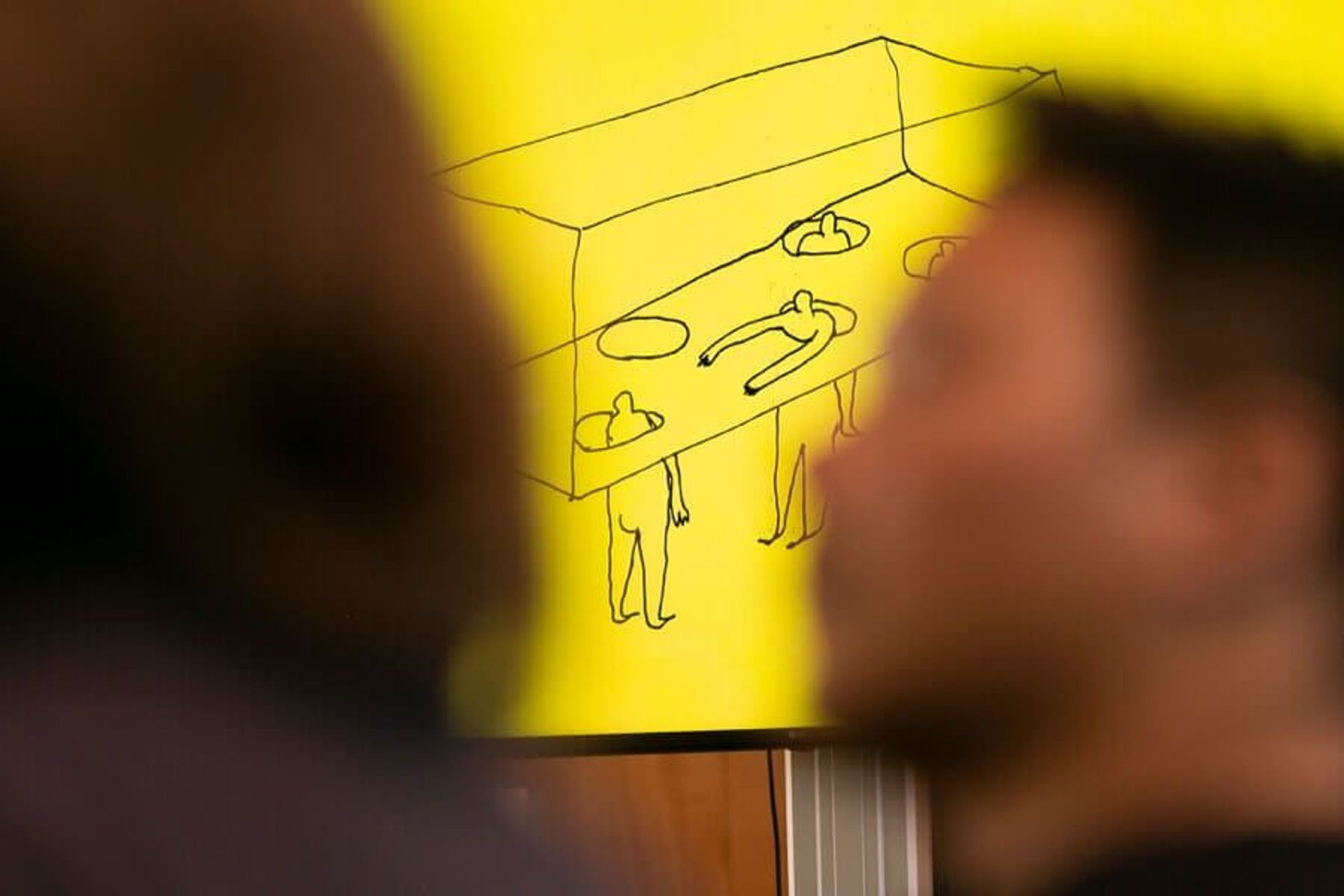
Remapping Collaborations session in May 2023. Photo: Tomas Mutsaers
To host and do research with(in) a cultural institution is to learn how to sit in the in-between. Between beginnings and outcomes. Between institutional walls and the outside conditions where research is situated. Between the self and the collective. Between the public and the private. Between what can be shared and what remains behind the scenes. Between hosts and researchers, and their shifting roles.
Over time, we have come to understand hosting not as a function, but as a practice of attention. We no longer see hosting as support alone; we see it as a responsibility to reshape the conditions we operate within. Hosting makes research possible, but it also shapes its tempo, its exposure, and its limits. Hosting is never neutral, even when its intentions are generous. It therefore requires vulnerability — not only from the institution, but from us who host from within it. It means allowing the institution to stay porous, to resist premature closure, and to act from the perspective that knowledge does not only accumulate but also disrupts. To host research is to encounter practices that unsettle what the institution believes it knows, what we believe we know and how we are taught to know. Perhaps it even asks the institution to shift, at times, from host to guest. It demands openness to being changed.
Research, however, does not happen outside of a life. It happens through someone’s body; through their loved ones, their rent, their health, their doubts and their histories. To host a fellowship is to stay with someone while they are still figuring something out, within the real conditions they are living through. Protecting their time and attention as it unfolds. It means not mistaking slowness for failure, and not turning uncertainty into something to fix. Research moves at the speed of a life. And when we rush a life, it is not only the work that breaks. This is what we carry forward, not answers but a commitment to keep the institution breathing — and as hosts, to remain attentive to what becomes possible when it can.
Bios
Delany Boutkan is a researcher, editor, and curator with the Nieuwe Instituut’s Research team, where she coordinates the annual International Call for Fellows and has led various collaborative research projects and public programs. Her recent work focuses on language as a design material, exploring its practical, theoretical, and pedagogical dimensions within design and architecture. Her writing and editing have been featured in a range of publications, including Extra Extra Magazine, PIN-UP, Metropolis M, Disegno Journal, and Kunstlicht Journal. She is the co-author of Remapping Collaborations (2025) and currently sits on the editorial advisory board of MacGuffin Magazine and the governance board of Design Platform Rotterdam.
Federica Notari Federica Notari is a researcher and programmer at Nieuwe Instituut with a focus on practices of place-making and sonic infrastructures. She initiated Through Sounds, a project investigating sound infrastructures through research, events, and the publishing trajectory, Clipping. Federica is the founder of events and collectives Words off the Page and Discoteca Amore.