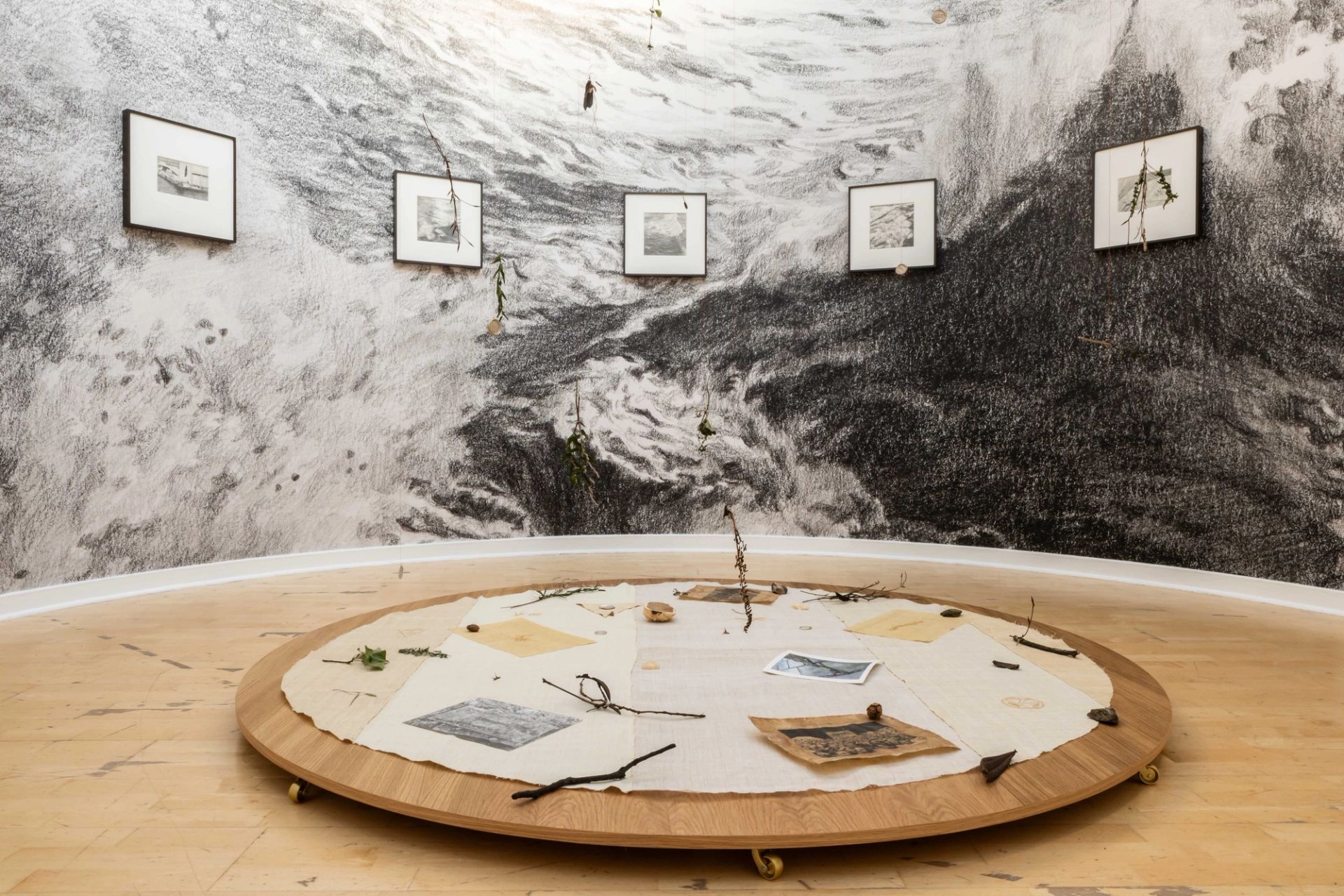
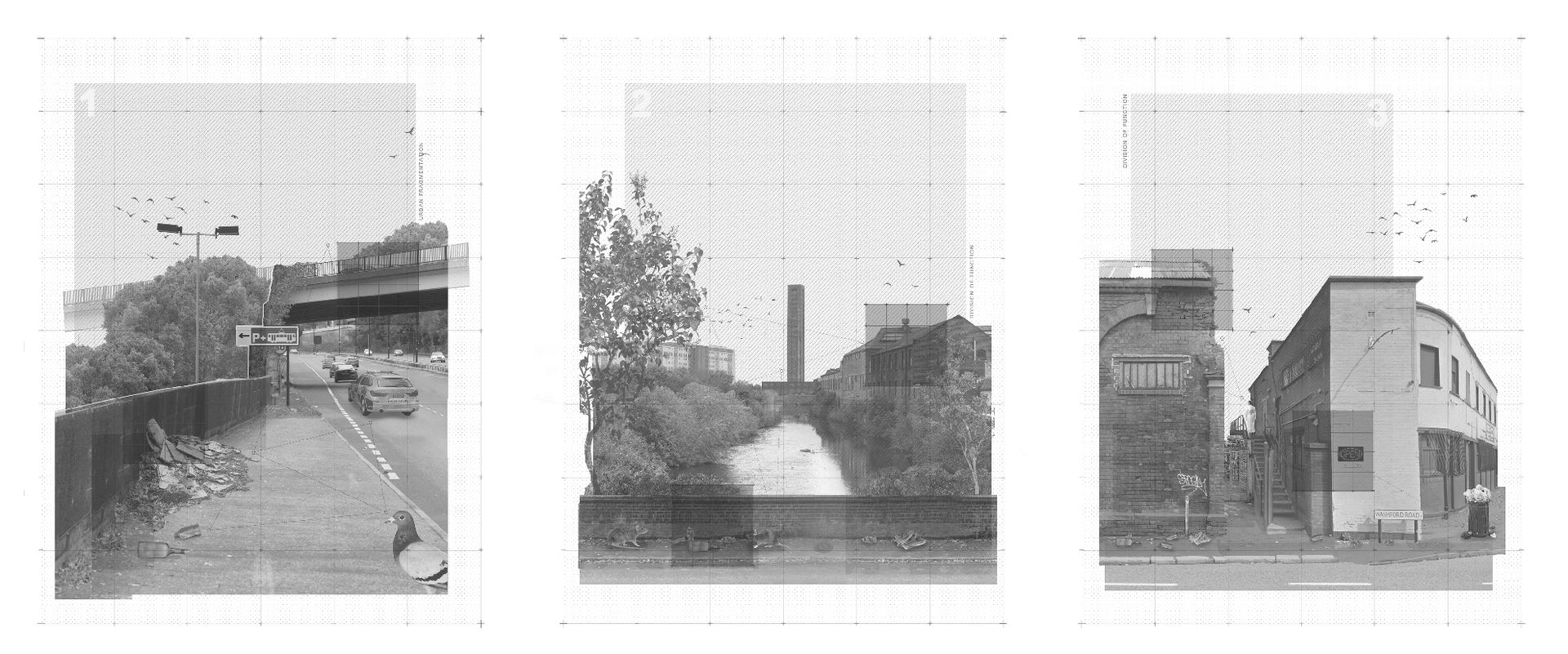
Belfast is a city synonymous with the Troubles. Peace walls stretch across the capital, a short-term solution to deeply engrained societal tensions. This paired with poor urban planning and a lack of investment has created no man’s lands, forgotten spaces where the symptoms of the divided city manifest in the form of sustained deprivation, alcohol abuse and mental illness. 14 of the 20 most deprived areas in Belfast are located next to an interface, unlikely the result of coincidence in a city where governance in turmoil, Brexit and Coronavirus are exacerbating existing divides.
A speculative scenario, aligning with the proposed removal of the peace walls, the Northern Irish Assembly establish ‘The Productive Commons’. Using the long-buried River Farset as a catalyst for change, the initiative is to inject both production and nature back into the proximity of communities. Sustainable urban rewilding and the return of a new, more compatible, symbiotic local production questions the role of employment and industry in addressing the deeper societal challenges of a divided context such as Belfast.
The long tradition of the home brewed Poitín is used as an act of activism. Outlawed as early as the 1500’s the drink has since become a symbol of the right to produce empowering residents to reclaim the ability to sustain themselves in times of economic hardship. The Illicit Poitín is to be legalised within the commons, a free state where its production can be enabled.
A series of follies, supported by a central commons building, facilitate production. The growing of regional crops and building resources bring residents together through shared investment, commonality and self-sufficiency empowering communities. Residents have proven themselves to be passionate, skilled and often desperate for change and ‘The Productive Commons’ aims to harness this, allowing them to take back control of outward perceptions.
The project explores the architect’s role as a mediator between bottom-up agency and top-down governance in the post-conflict divided city, questioning how a more proactive approach can help provide positive change to some of the areas that conflict has impacted most.
The project was developed at the Sheffield School of Architecture.
KOOZ What prompted the project?
TC Belfast is a city synonymous with the troubles, physical barriers divide communities established to keep those with opposing views apart. Protestant and Catholic grievances date back as early as the Battle of the Boyne in 1680 and still manifest to this day. Derives and situationist methods revealed a disconnect between production and the people, no man’s lands and a lack of ownership. Translated to Belfast these no man’s lands, radiate from the peace walls, creating ‘undesirable’ pockets of land, areas where investment is low and deprivation is high. 14 out of the 20 most deprived areas in the capital neighbour an interface structure, their history causing a lack of investment, mass vacancies and high unemployment. Urban planning has further exacerbated problems turning communities back on one another, creating a labyrinth of cul-de-sacs, fenced parks and large plots that remain vacant. The divided city therefore became the context, with the aim of exploring how a more proactive, drastic approach could potentially provide positive improvement to some of these areas.
KOOZ What questions does the project raise and which does it address?
TC Initial research revealed a whole number of more complex questions regarding social inequalities, deprivation and class within the ‘post‘ conflict divided city. Whilst initially discourse appeared to be fuelled purely by religious differences, it became apparent that the violence and tension that remain are in many ways sustained by a lack of investment and neglect for the areas that suffered most in the height of the troubles. A lengthy deadlock within the northern Irish assembly has hit these areas of deprivation hardest, making it a prime opportunity to explore local governance and the return to common ownership. The project began to question the role employment and ownership can play in deconstructing formal and informal barriers between communities. This was done through a speculative scenario where production is integrated back into the proximity of communities though a productive common land.
KOOZ How does the project approach the role and power of architecture within our contemporary society?
TC Dealing with such a sensitive and politically charged context made me question this a great deal during the course of the project. Conscious of my own naivety and bias, the project became about empowerment rather than design. In contemporary society there is often disconnect between those making the decisions and those the decisions effect most. I believe architects can support the bridging of this gap. In other words, residents rarely have the ability to impact policy and promote change and those in power often lack an awareness of the troubles faced by large proportions of the population. Inspired by the work of Teddy Cruz, the project began to position the architect not as a creator of visions or the enforcer of regulation but rather a mediator between top-down governance and bottom-up activism. The architecture itself became a backdrop for the various functions, production and governance within the commons, whilst at the same time still reflecting the social and environmental manifesto of those who will utilise it.
The architect not as a creator of visions or the enforcer of regulation but rather a mediator between top-down governance and bottom-up activism.
KOOZ What role should the architect play within our contemporary climate crisis?
TC Whilst it is essential to specify sustainable materials and reduce the carbon cost of everything we build, an architect’s influence can extend beyond the built fabric of a building. If an architect’s role is to produce spaces to facilitate activity, we must engage with more sustainable functions. This project showed me the power of engaging with the broader mixed typology, Spaces for growing, spaces for making and spaces for coming together. By engaging with these in addition to or integrated into traditional typology design we can provide more socially and environmentally sustainable architecture.
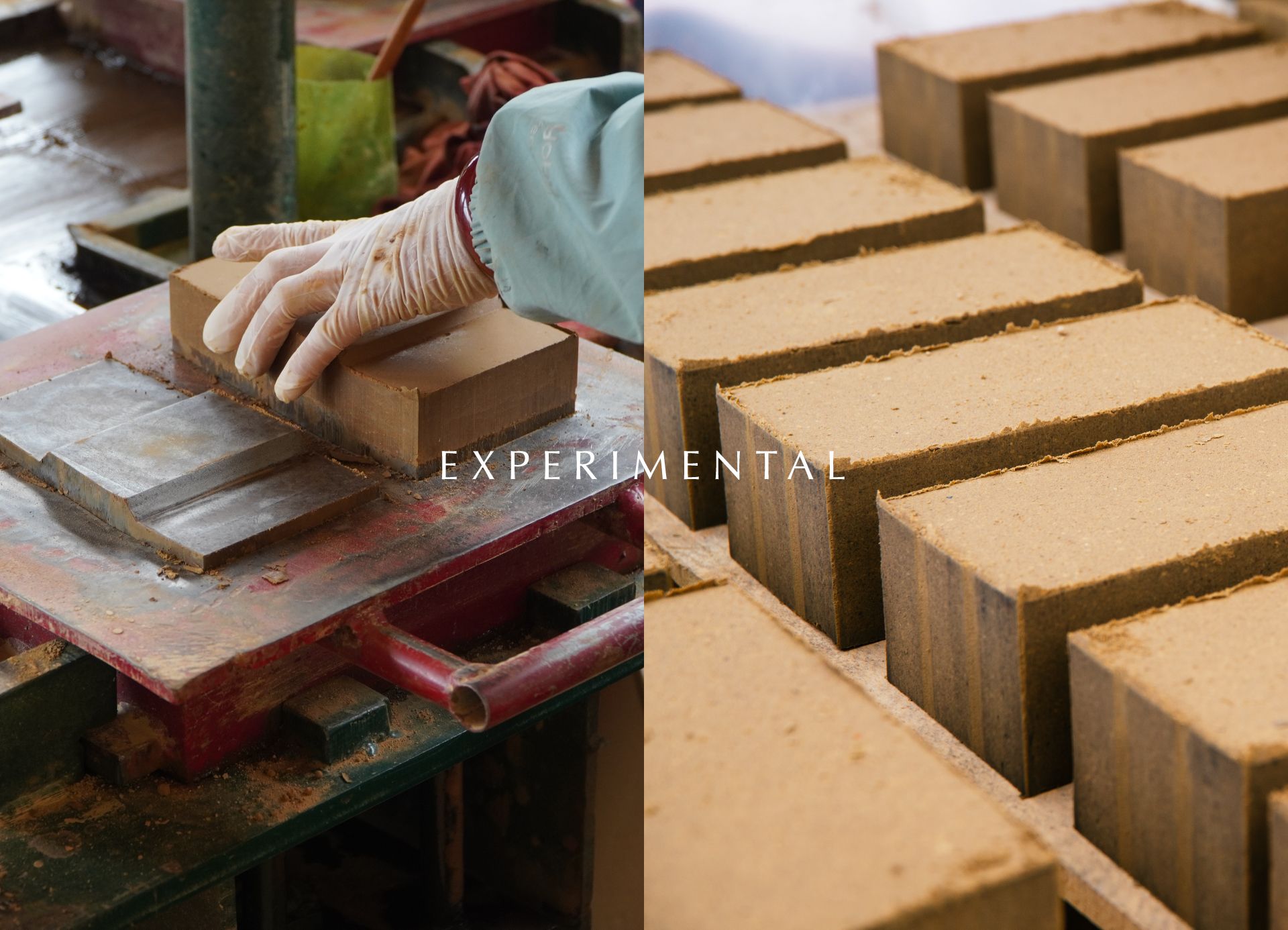
Locality in material choice is also a must and reconnecting to the vernacular is essential to the climate crisis. This can often promote a more responsive and situated response to a brief. The project engages with rammed earth and spoila from the deconstruction of the divided city, beginning to merge both locally sourced and locally reused to create a new vernacular. Thatch is used for roofing, a move that allows it to not only situate itself within the parkland context but also provide a renewable material to be grown in the wetland. Whilst upkeep is needed, maintenance and repair are acknowledged as an essential part of the sustainable agenda and the employment it can sustain.
KOOZ What is the value in designing with and for our planetary ecosystem?
TC The project aimed to create a new parkland by revealing the river, integrating wetland, woodland and marsh each fostering increased biodiversity in direct proximity to communities. The design of this required research beyond that of a typical architectural study exploring eco-tones and the importance of engaging in diversification principles. These conditions began to reveal not only conditions that would provide suitable habitat and conditions for animals once native to the area but also revealed opportunities where we could make the landscape productive. The wetland provides thatch, the woodland supplies local softwood and the water generates energy to fuel the commons building, each of these supported by a pavilion, engaging residents with the processes. All these connections create a more symbiotic relationship between the landscape and the functions we choose to insert within it.
KOOZ What is for you the power of the architectural imaginary?
TC The exercise revealed to me the importance of speculation, looking to the future, be that utopian, dystopian or somewhere in between. It became about not purely painting a desired outcome, but rather questioning ‘what if?’. The long-buried River Farset was the foundation of the investigation and would become the backbone of the scheme, a waterway that once helped initiate, grow and sustain communities. The project began to question not only the river’s role in re-establishing the community’s self-sufficiency but also how common ownership of resources, spaces and structures can promote independence and autonomy. Future-scaping is a powerful tool for architects which can be used not only to imagine the future but to provide critique on societies’ current practices.