KOOZ The exhibition suggests that space is never empty, but shaped by layered histories of the living and the dead. How do your practices approach space as something already socially and politically inhabited?
Kang Seung Lee (KSL) For me, space is always already charged — socially, politically, and emotionally — even when it appears neutral or unmarked. I am interested in how certain bodies and histories are made invisible within space, particularly queer lives that have existed in forms that resist official recognition. There are presences that do not announce themselves, that remain just at the edge of perception. My work begins there — by attending to what lingers, what refuses to settle, what quietly insists. In that sense, space becomes a site of both loss and potential reactivation.
"I am interested in how certain bodies and histories are made invisible within space, particularly queer lives that have existed in forms that resist official recognition."
Molemo Moiloa & Nare Mokgoth (MYL) Our practice over the past eight years (we have been working together for seventeen) has sought to think beyond the myth and invention of the empty landscape and its attendant violence by claiming intimacy — social and political habitation amongst others — with the land and the more-than-human instead of separation and mastery over these. This intimacy is evident across the multiple layers of Mafolofolo and forms the basis of how we conceive of repair work, and where people from the majority world have had to look for models to rebuild their worlds after cycles of colonial ruination. For us, the models are in everyday black life and the ordinary ways in which people reimagine their relationships to land, both historically and in the contemporary moment. In Mafolofolo we look towards the history of the Koni people, oral accounts and the popular archive of South African resistance songs to witness and learn how relation and sociality with the land and other living beings can help us create ourselves anew.
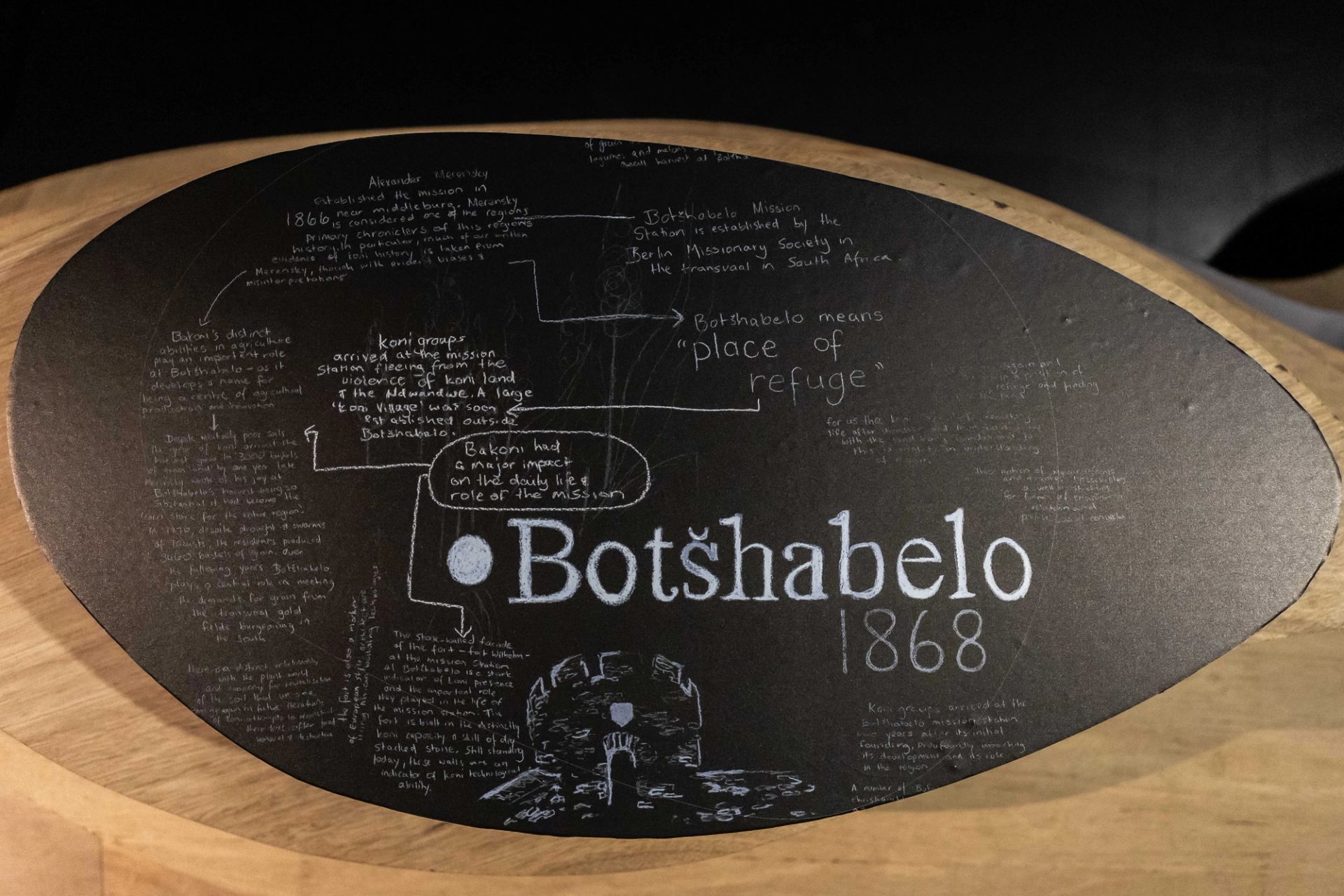
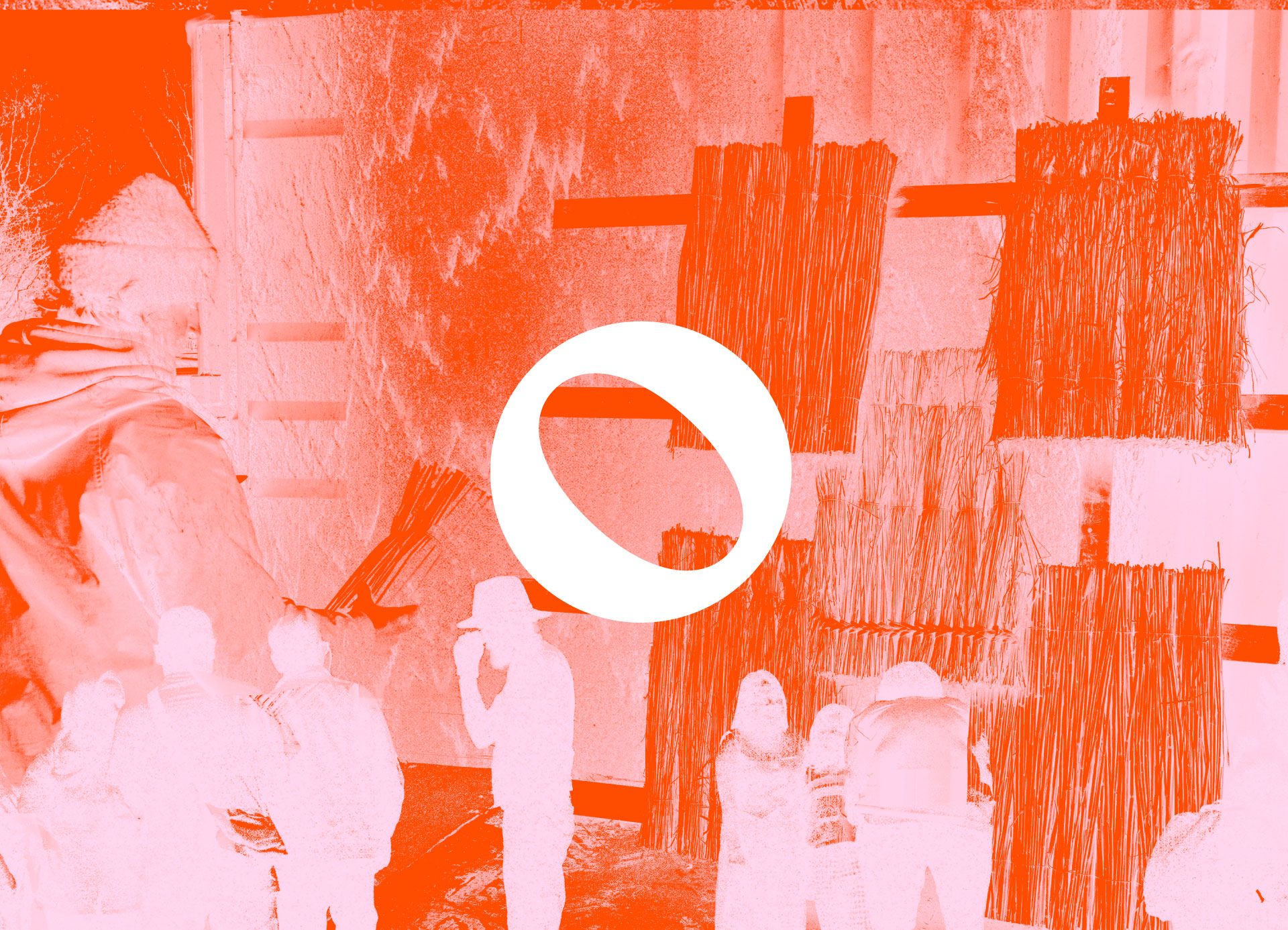
Detail from MADEYOULOOK’s ‘Mafolofolo’ (2022–ongoing), excavating the histories of Botshabelo township. Part of ‘The dead don’t go until we do’, at Talbot Rice Gallery, the University of Edinburgh. Photo: Sally Jubb
KOOZ Kang, your work engages archival gaps around the erasure of marginalised communities, while MADEYOULOOK works with landscapes where histories have been overwritten but remain legible. How do you each understand erasure as a spatial condition?
KSL I think of erasure is not as a disappearance, but as something actively produced — through architecture, policy, and social norms. It shapes how space is felt, how bodies are allowed to appear or remain indistinct. Certain lives are not permitted to leave durable marks. They exist instead as traces — partial, fleeting, often misrecognised. I am drawn to that condition, where something is both present and withheld.
My work also tries to remain with that condition — not to “recover” what has been lost in a totalising way, but to dwell in partiality, in fragments, in what cannot be fully restored. The fragment can hold a different kind of density — one that resists closure. Erasure, then, is not an empty void, but a complicated field that shapes how we move through space and how we remember. Also, in queer terms, this resonates with Esteban Muñoz’s notion of ephemera: traces that are not meant to last, yet persist as affective residues.
"I think of erasure is not as a disappearance, but as something actively produced — through architecture, policy, and social norms."
MYL The project of land dispossession in South Africa has also involved the destruction of ancestral memory and the invisibilising of deeply held relationships between black and indigenous communities and the land. While we cannot account for the sheer magnitude of what has been irreversibly lost, important fragments of these connections remain. Searching for and through these fragments has emerged as an important practice for us and something we think of as an act of repair.
This practice of searching is not entirely about filling in gaps or undoing what has been erased or for that matter about reconstructing some imagined idyllic past, but often involves caring for the fragments themselves, in this current moment. In this way the act of searching is not about the clarity of truth claims, finalisation or even finding, but about connection. Searching has become a labour of honouring both what we know and what has been lost. We search not because artifacts and ruins speak but because the act itself is about forging familiarity with the land through which we search, and in that way is a form of remembering lost connections.
Whatever fragments may emerge from this ritual offer a way for us to think and work through what exists and what remains. But importantly, it also enables us to continue, even with the difficulty of loss.
[...] searching is not entirely about filling in gaps or undoing what has been erased [...] searching is not about the clarity of truth claims, finalisation or even finding, but about connection. Searching has become a labour of honouring both what we know and what has been lost.
KOOZ MADEYOULOOK, your counter-mapping of Bakoni territories draws from oral histories, ecology, and song. Kang, your work traces queer sites across Edinburgh that often leave no visible trace. What does it mean to map what resists visibility or fixed coordinates?
MYL With Mafolofolo we were interested in mapping, doing something other than claiming territory or claiming to understand the land in its totality. For us, relation with the land was far more important. As such this map draws from traditional African ways of understanding the land.
The foundations of our mapping process were engravings made by Koni people as a kind of mapping heritage, as well as oral histories. The Koni engraved topographies of their sprawling settlements into large stones, and these prefigure the violent colonial history of mapping in our context (pre-map maps if you will). These engravings are imagined from above, indicating some kind of relationship to the heavens before it was technologically possible to gain a bird’s eye view of the land. Interestingly, these maps aren’t a 1 to 1 cartographic translation of the land but are connected to some kind of spiritual practice - a practice we don't know or understand as records don't remain (again, fragments). It is also significant that the maps remain in place on these large stones and are not for the purposes of navigation. In Mafolofolo, the map is a large multi-layered floor drawing indicating social connection to land, its transformation over time and connection to an ancestral history.
The rivers in the map, for instance, indicate an intimacy with landscape. All peoples name rivers and relate themselves to specific markers in the landscape in order to move about. The rivers are vital in the engravings and were significant features around which the Koni created settlements. Due to the multiple cycles of removal and dispersal of the Koni we had to rely on the sites of stonewall ruins, oral histories and invention to map not just Koni tenure, but their movements and sites of recovery as a consequence of violent upheaval.
The way naming operates in the map is also a reflection of the colonial inheritance in South Africa and of the political shifts that have occurred in this valley over time. The rivers and towns are named in Afrikaans with only a handful of sites on the floor map using historical Koni settlement names.
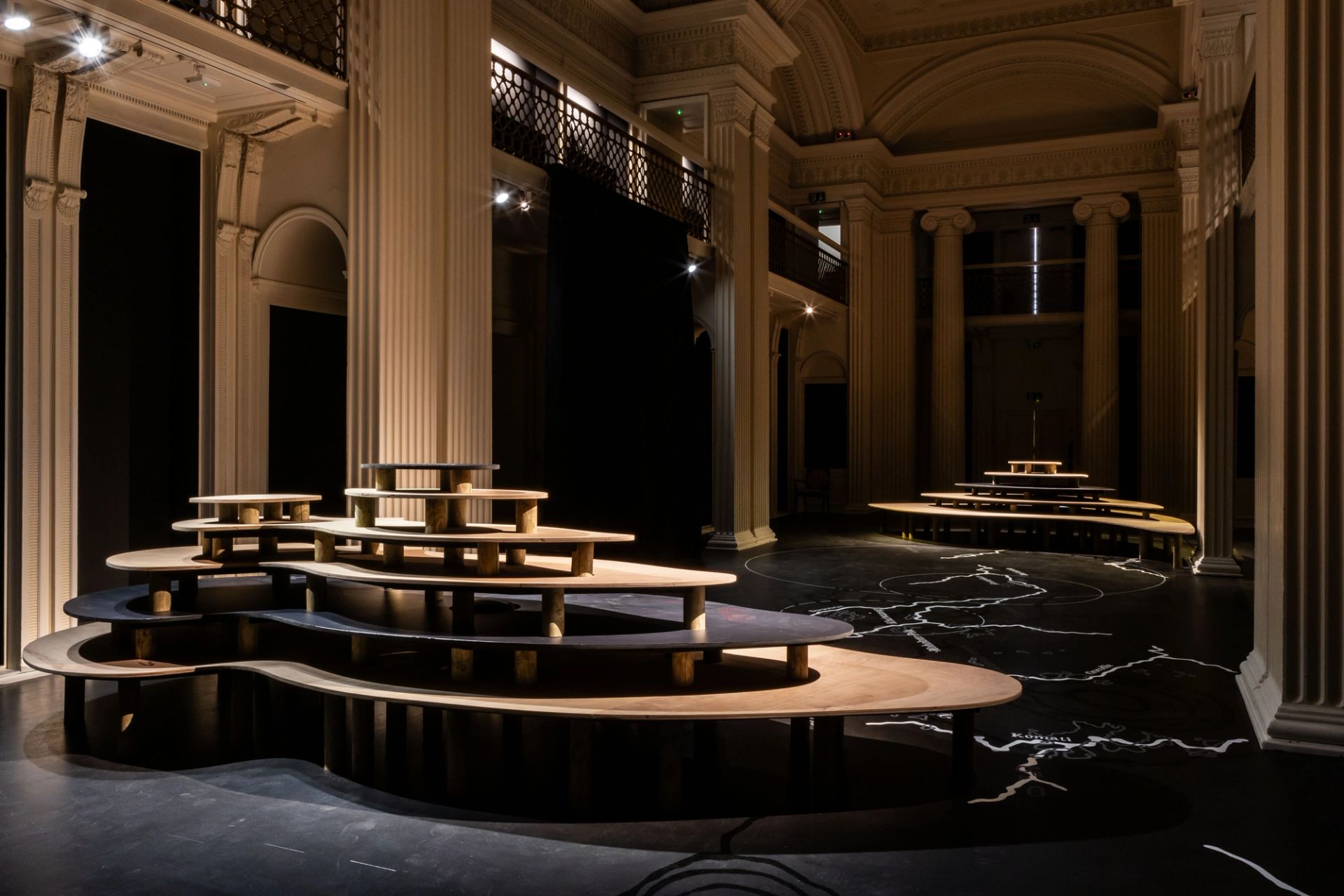
Exhibition view of MADEYOULOOK’s ‘Mafolofolo’ (2022–ongoing), excavating the histories of Botshabelo township. Part of ‘The dead don’t go until we do’, at Talbot Rice Gallery, the University of Edinburgh. Photo: Sally Jubb
KSL Mapping, in my work, is less about locating and more about sensing. Many of the queer sites I engage with — cruising grounds, temporary meeting points, or sites of intimacy — do not have fixed boundaries or stable identities. They exist through use, through memory, and often through secrecy.
To map these spaces is to accept instability and incompleteness. It involves working with indirect forms — stories, gestures, atmospheres — rather than precise coordinates. I am interested in how mapping can become a speculative or poetic act, one that acknowledges what exceeds visibility.
"To map these spaces is to accept instability and incompleteness. It involves working with indirect forms — stories, gestures, atmospheres — rather than precise coordinates."
KOOZ Both of your works expand the notion of the archive — for instance, through graphite drawings after Hujar and Baltrop. How do these approaches construct space rather than simply record it?
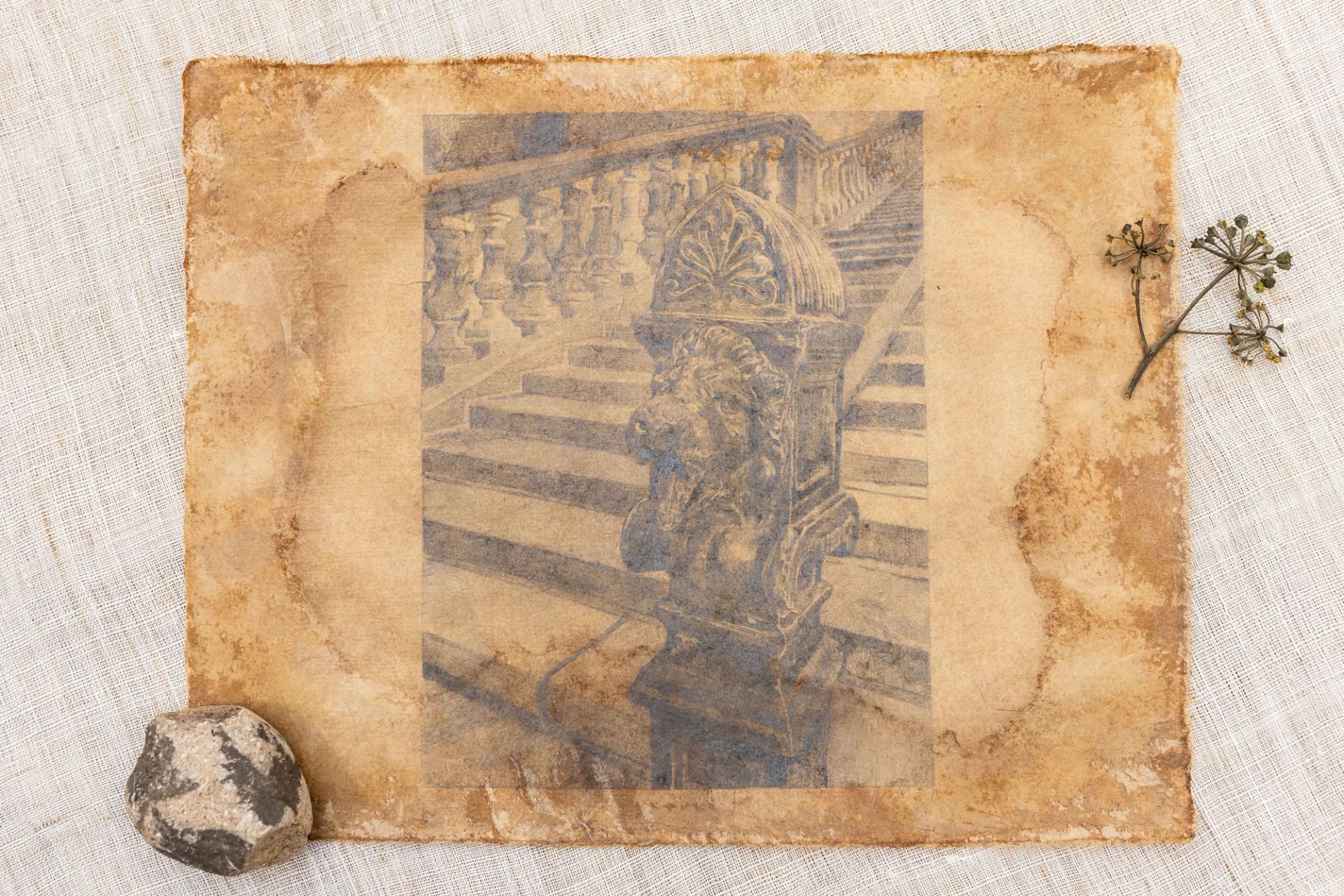
KSL I don’t see the archive as something that passively documents the past. Drawing and embroidering become a way of staying with an image — of touching it slowly, allowing it to shift through repetition. In that process, something new emerges: a space between the original and its reappearance. What is constructed is not a record of the past, but a relation — something that opens between times, between bodies, between what was and what is still becoming.
KOOZ Sound, image, and absence operate as spatial tools in your installations. How do these elements shape environments beyond conventional architectural form?
MYL The use of sound (musicality, field recordings, song and oral histories) was a turn from pictorial understandings of landscape, which rely on the eye and can often engender a distancing and separation from the land, towards more traditional African modes of knowing and imagining the land. These are based on intimacy and the oral/aural. Oral testimony along with the resistance songs and traditional songs, and the mimicry of animal calls in Mafolofolo are historical records of the significance of land in black African lifeworlds. The emphasis in the sounds is on relation and shared space. The content of the songs for instance, speaks to the loss of land and a demand for its return, the songs are sung collectively often in large gatherings, and they are always sung in call and response.
In the context of the installation, sound is an invitation to be together with others as we each have our personal deep listening experiences. Mafolofolo is also about the body and the use of sound is meant to collapse the false boundary between cognitive and somatic ways of knowing. The sound is in 8-channel and intended to be immersive. At points certain sounds like storms reverberate through the body. Other natural sounds like cicadas, birds, frogs and water place us in a landscape alongside other beings and transport us affectively and through evocation.
KSL I am interested in how space extends beyond what can be built. Absence sharpens the edges of perception, making what is missing almost palpable. These elements create a space that is not fixed but felt — something that unfolds in time, that surrounds rather than contains. In my installations, I try to create a kind of spatial tension — where viewers are invited to sense presences that are not fully there. This challenges the idea of architecture as something fixed and material, and instead suggests a more affective understanding of space.
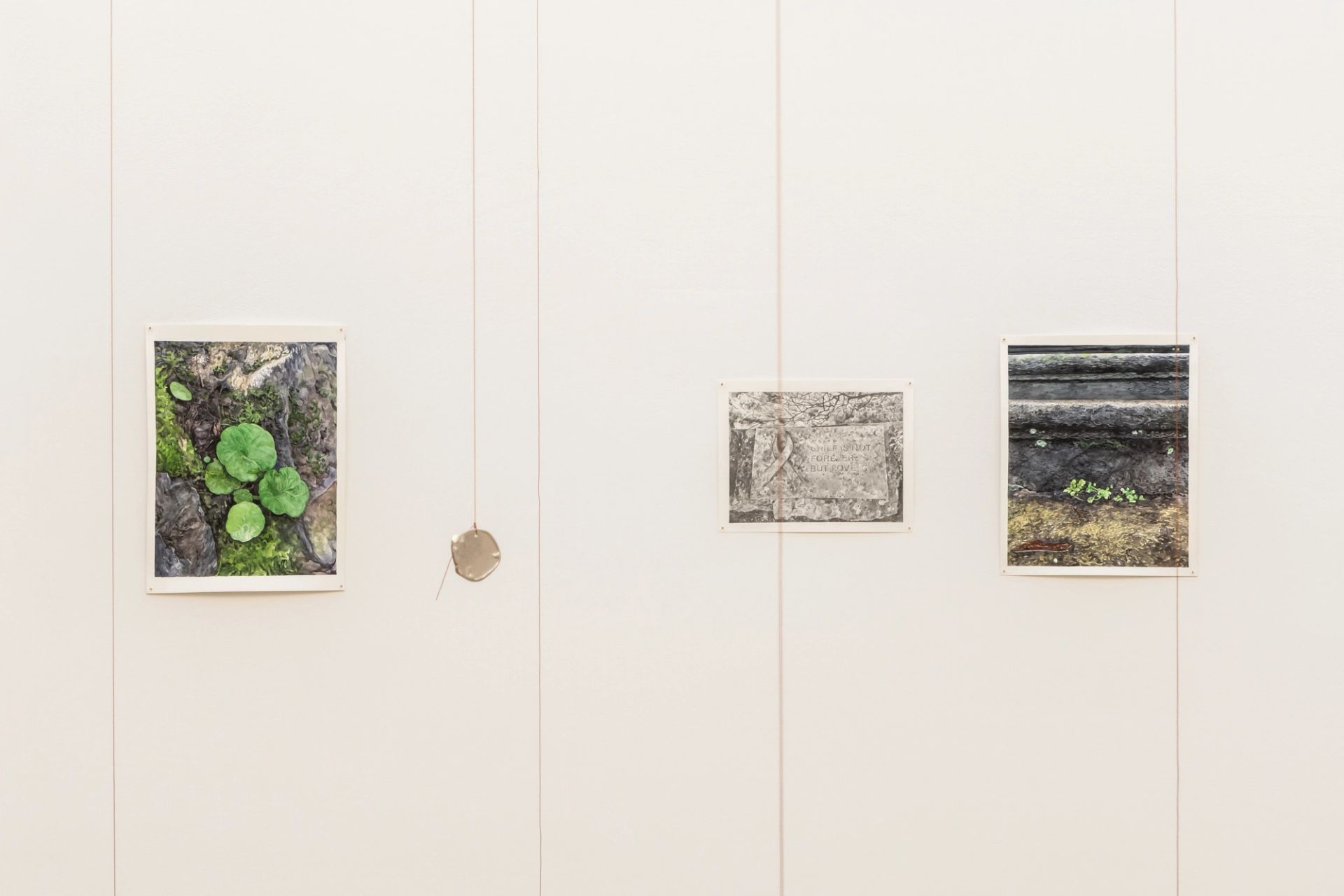
Detail from Kang Seung Lee’s ‘Erasure held like a fierce lantern’ (2026) including drawings and found objects and photographs. Part of ‘The dead don’t go until we do’ at Talbot Rice Gallery, the University of Edinburgh. Photo: Sally Jubb
"I am interested in how space extends beyond what can be built."
KOOZ Your practices engage lineages — of queer communities, ancestral land knowledge, and everyday life. How do you approach space as something inherited, and what does it mean to build with those no longer physically present?
KSL I think of inheritance as something that arrives in fragments — stories, images, gestures that are passed down unevenly. Many of the figures I engage with are no longer physically present, but their lives continue to shape how we inhabit the world.
To build with them is to enter into a kind of relationship across time. It involves care, responsibility, and also imagination — finding ways to hold their presence without fixing or simplifying it. In this sense, space becomes a site of ongoing dialogue between the living and the dead.
MYL We understand the oral and the resistance songs as an inheritance from those that are no longer physically with us, and as a commitment to continue the unfinished business they started. Many of the songs come out of South Africa’s anti-colonial and anti-Apartheid struggles, while others such as the traditional African songs and Christian missionary hymns composed by early African converts are much older. These songs change over time and are taken up to meet the moment and address contemporary concerns. At times these songs are used in resistance to issues that persist, such as the land question, and at other times reimagined in new struggles such as the student-led Fees Must Fall movement in 2015, which placed a generation of young South Africans in direct opposition to our current democratic leaders, to make good on the promises of liberation.
KOOZ Your work points toward spatial futures beyond colonial and normative frameworks. What would it mean for architecture to engage with absence, memory, and non-visible infrastructures as design methodologies?
KSL I think it would require a shift away from prioritising permanence, visibility, and control. Instead, architecture could begin to engage with what is ephemeral, relational, and difficult to measure. This might involve designing with memory, with traces, with forms of knowledge that are not easily translated into conventional plans or structures. It also means acknowledging that space is shaped by forces that exceed the physical — histories, desires, and social relations. Such an approach would require a different kind of attention — one that listens for what is already there, even if it cannot be fully grasped.
MYL Our primary concern is to look to Black life as a model and as a principal locus of knowledge production. Our interest in the Koni and ordinary Black life is in what we refer to as landedness, a concept that highlights black epistemologies and longstanding, albeit often invisibilised modes of relating to land. Landedness emphasises being with and of the land rather than landlessness. It is from these existing models that we can reimagine and reconfigure our current ways of being and relating to the land.
"Landedness emphasises being with and of the land rather than landlessness."
BIO
Kang Seung Lee is a multidisciplinary artist who was born in South Korea and now lives and works in Los Angeles. His work explores identity, community, and collective memory, often engaging the legacy of transnational queer histories, particularly as they intersect with art history. Lee has participated in major international exhibitions such as Singapore Biennale (2025-2026); 60th Venice Biennale (2024); New Museum Triennial (2021); and Gwangju Biennale (2021). His work is held in several major museum collections, from The Getty, Hammer Museum, and LACMA in Los Angeles, to the National Museum of Modern and Contemporary Art, Seoul, among many others.
MADEYOULOOK is a Johannesburg based interdisciplinary artist collaborative between Molemo Moiloa and Nare Mokgotho, inspired by everyday Black practices that have been historically overlooked. Their works encourage a re-observation of and de-familiarisation with the everyday of urban South African life. Since 2009, the works of MADEYOULOOK have considered subjects such as models of memorialisation of histories and oral traditions, black love and urban public space, forms and hierarchies of knowledge creation and dissemination, and the socialities of land and relationships with plant life.