Federica Zambeletti/KOOZ Franco, Lucas, I know you're kind of aware of each other's work, but let’s kickstart this with introductions
Lucas LaRochelle Hi, I’m Lucas. I'm so excited to meet you, Franco — I read your book Cruising Diaries this morning, and I loved it so much.
Franco Dupuy Thank you. A lot of the writing in the book actually comes from an Argentinian blog called 'Usandbaths' that was around in the early 2010s. Blogs like that had a really distinct vibe — they were super-direct, raw and practical. It was all, “go here, try this, watch out for that” — a mix of advice, gossip, codes, and little warnings. I really wanted to bring some of that energy into the book. Oh, and I love your project too! I’m pretty sure I posted something on Queering the Map almost ten years ago. Earlier today, before the interview, I was looking through the map again after all these years. I even tried to see if my post was still there. Honestly, I can’t remember exactly where I left it — Buenos Aires is a big city! — but I do remember going in and writing something…
KOOZLucas, perhaps you could share how the project started. Over the years Queering the Map has gathered hundreds of thousands of stories and snippets; can you tell us about its embryonic phase, and how the project developed?
LLR Definitely. I started it in 2017 — after this bike where I passed by the tree where I had met one of the first people with whom I fell in love, and thinking about how so many of the places that held this lingering significance were outside of spaces that we might understand as “queer” or LGBT+ spaces — like the Gay Village in Montreal, where I lived at the time — yet those were really the places where transformative relationships to other queer people were happening for me. Then, because I am trained as a designer and a developer, the way that I continued that line of questioning was making an interface that could invite more people into how they experience place, architecture and urban planning vis à vis queerness.
"so many of the places that held this lingering significance were outside of spaces that we might understand as “queer” or LGBT+ spaces — like the Gay Village in Montreal, where I lived at the time — yet those were really the places where transformative relationships to other queer people were happening for me."
I put it online shortly after that and it circulated first in Montreal. After about six months, it had the first of its many viral moments on the internet, with the number of ‘pins’ jumping from about 600 to 6500. Then it got spammed by Trump supporters and I took it down, rebuilt it with a team of volunteer developers, and put it back online — and it's been growing ever since then. There's now just over 850,000 submissions in 28 languages across the world — which is wild. Many of those submissions are still in the endlessly long moderation queue, managed by myself and a group of volunteer moderators. So that's the origin of Queering the Map.
Right now, it's an interesting time; the site is having another viral moment, this time on right-wing Twitter. There was a conversation that took place in US Congress in which a member of the Trump administration is questioning spending made under the Biden administration on projects that they deem unworthy of funding for being considered DEI (Diversity, Equality and Inclusion). The clip [shared on social media] starts out with him saying, what is queering a map? The person responding — also part of the Trump administration — starts to make sense of what it is that queering a map means. The response is the most insane gibberish — it feels like it's written by AI, but it's very real. She says something like, “since the age of cartography, we've had pretty good maps, but maybe they weren’t gay enough?” and “I took critical theory in college, and I think they use queer as a verb?” — which is amazing, that's the good part — and then there's a mention of DEI flash mobs in what this person calls Kargi Stan.
It's absolutely insane, and is now prime right-wing clickbait material… So I'm figuring out how to respond to this particular wave of circulation. The gag is that they're not even talking about the website Queering the Map; the dispute is about a funded research project that was inspired by Queering the Map. Of course, right-wing Twitter doesn't care about facts, so this rage around the website is now circulating in that environment. I thought I would bring that into our conversation, because it's at the top of my mind — so that’s a bit about the project, where it's been and where it is in this very present moment.
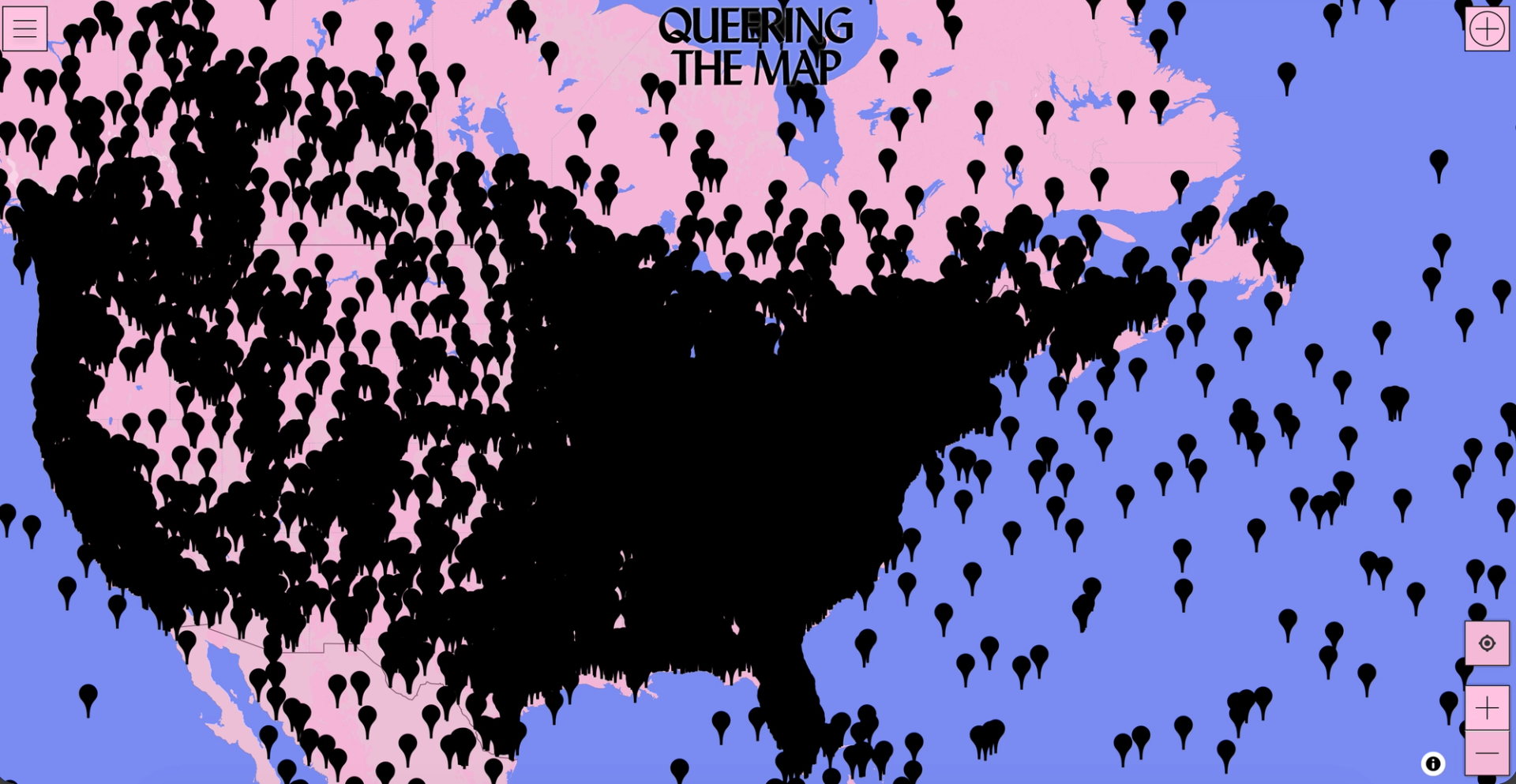
Screenshot of Queering the Map, a community generated counter-mapping platform for digitally archiving LGBTQ2IA+ experience in relation to physical space.
KOOZ Franco, you mention the texts that appear in Cruising Diaries while Queering the Map is also very text heavy. What prompted the need or the importance — beyond recognising and geolocating certain sites — to read and reference places through writing? In Cruising Diaries, I'm also interested in connecting the text to Franco’s images — often way more revealing, in a literal sense — whilst the text allows you to maintain a hidden or private aspect. What informed the way you work with the textual components?
FD What I like a lot about Queering the Map is that it is an archive form for stories which somehow also act as a documentary of an era. At the same time, it works like queer memory — it's full of fragments of anecdotes; it's very choral, and made by a community, rather than singular stories that travel out. I realised, when I was trying to locate the pin that I'd posted ten years ago, but I could not be sure of it because the site is anonymous. You don't see the name of the author — which I get, it's a good decision. That makes things more global or universal — so that now I'm not even sure which story I left: like, I've just read one pin about kissing a guy at a bus stop — was that me? Because I remember reading something very familiar: “I was waiting for the 152 bus, and he kissed me and I could taste his flavour on my lips.” I don't remember writing that, but it could have been me; what does that mean? So I do like that a lot about the project — how universal and shared it makes us feel.
"it works like queer memory — it's full of fragments of anecdotes; it's very choral, and made by a community, rather than singular stories that travel out."
LLRTotally, I feel like that too. There are a lot of reasons that the website is text-based. Obviously, one of them is privacy — not showing images makes things more anonymous, and that's really critical for the project in terms of its global scale and negotiation of visibility. But I think what you said is actually more interesting, about the poetic aspects of the anonymity — which was intentional in the design project, thinking about queerness not as an individual neoliberalised category of identity, but rather as something that we become through action: queer in relationship to the world and in relationship to one another. We are not queer things. We're doing queer things.
There's a kind of slipperiness between the person who writes the story and the person who reads the story. That was such a beautiful anecdote that you just shared, about not being sure which story is yours anymore. You can slip into the narrative voice of someone else through this act of misremembering — which, of course, the project has always been about. It's about memory, which is always fragmented and always has a nebulous relationship to “truth”, or truth with a capital T. I feel that text allows for that more than image.
When I was reading your book — I should say, I read it as a PDF copy on the computer — the text is what first grabbed me. And then I had to remind myself, oh yes, there's also images and I have to attend to them. But there's something about writing — specifically, writing about things that necessarily have to negotiate visibility — in which text almost gives away more feeling than images can, while also maintaining a level of secrecy required for the continuation of practices like cruising, or of sharing queer desire in public or semi public contexts. After absorbing all of the text, I spent time looking at the images, and I wanted to ask you about the use of the fisheye lens, and all the holes. It was as if you were adding another sense of abstraction onto the images, many of which are already quite abstracted.
"queerness not as an individual neoliberalised category of identity, but rather as something that we become through action: queer in relationship to the world and in relationship to one another. We are not queer things. We're doing queer things."
There's a kind of slipperiness between the person who writes the story and the person who reads the story. That was such a beautiful anecdote that you just shared, about not being sure which story is yours anymore. You can slip into the narrative voice of someone else through this act of misremembering — which, of course, the project has always been about. It's about memory, which is always fragmented and always has a nebulous relationship to “truth”, or truth with a capital T. I feel that text allows for that more than image.
When I was reading your book — I should say, I read it as a PDF copy on the computer — the text is what first grabbed me. And then I had to remind myself, oh yes, there's also images and I have to attend to them. But there's something about writing — specifically, writing about things that necessarily have to negotiate visibility — in which text almost gives away more feeling than images can, while also maintaining a level of secrecy required for the continuation of practices like cruising, or of sharing queer desire in public or semi public contexts. After absorbing all of the text, I spent time looking at the images, and I wanted to ask you about the use of the fisheye lens, and all the holes. It was as if you were adding another sense of abstraction onto the images, many of which are already quite abstracted.
FD It's quite interesting that you were more attracted to the text over the images. I think what pulls you in so fast is really the voice. It has a bit of that blog style I mentioned earlier — really direct, raw, full of rumours, stories, gossip, memories, fantasies… But it also shifts between autofiction and something more practical; you’re never totally sure if it’s fiction, real life, a manual, or some mix of all of those. You can relate your own histories, while the pictures are already there… I don't think that Cruising Diaries is a documentary project: it's part archive, but it's also part fiction, part reconstruction. If I had to choose a category, it would be a fictional archive or an affective archive [1] — which also relates to how queer memories and archives work, unlike traditional archives. Traditional archives exist to verify, stabilise, provide evidence of things that actually happened. I'm not interested in that. I don't think you can actually do that with cruising; the whole thing about cruising is that it cannot be recreated or restaged.
"Traditional archives exist to verify, stabilise, provide evidence of things that actually happened. I'm not interested in that. I don't think you can actually do that with cruising; the whole thing about cruising is that it cannot be recreated or restaged."
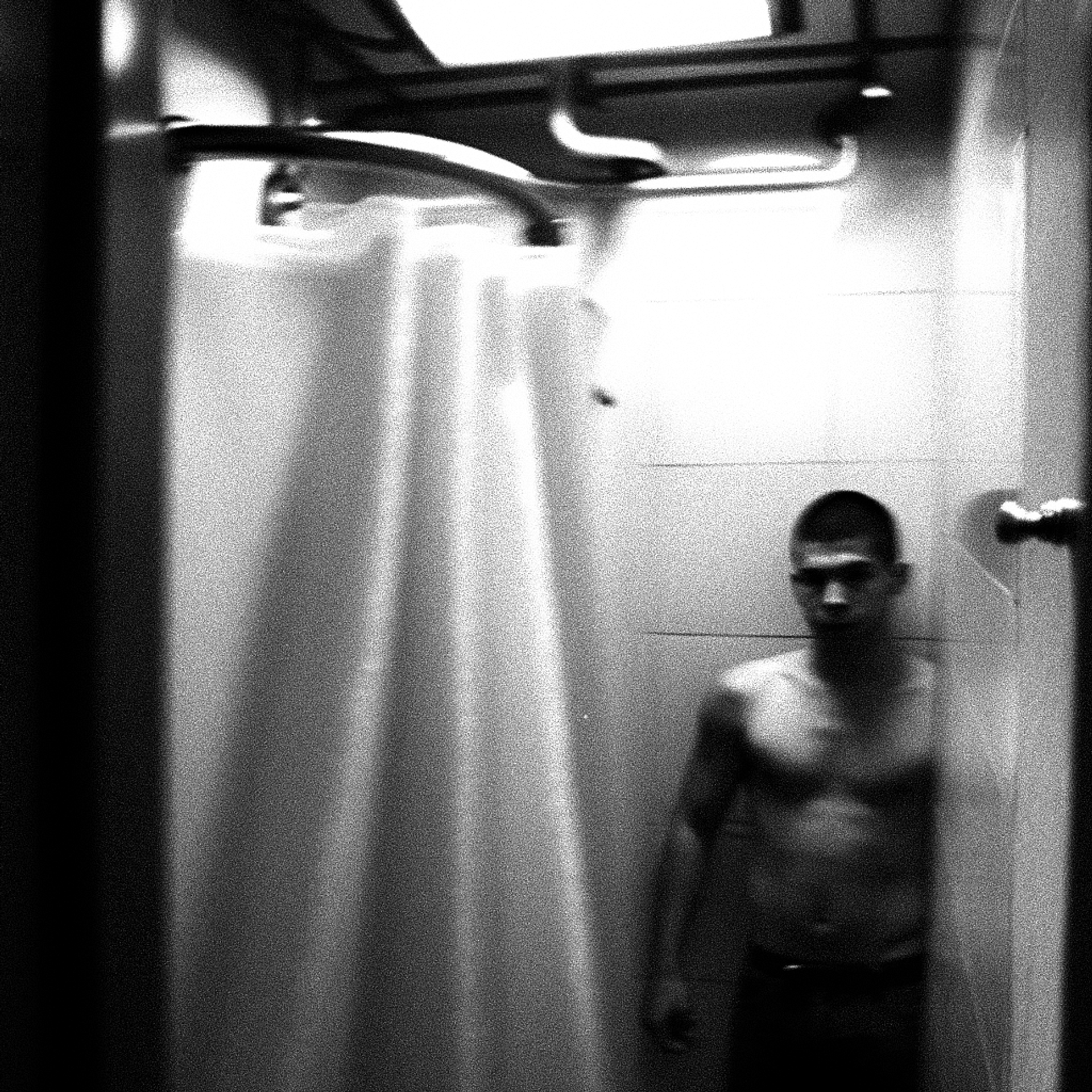
The idea that I was attracted to in my own project, especially at the beginning, was about how to capture this practice that is simultaneously so hard to document. That’s really how it all started. I was already going to these places anyway, and taking pictures with my phone just felt natural. Then, as image-making tools got more advanced over the past few years, I started experimenting—sometimes reworking old iPhone photos with Photoshop, Lightroom, or AI tools, and other times creating new images inspired by spaces, moods, or moments I’d experienced myself. Especially with the fish-eye lens, I guess I was just trying to get the space to be the hero of the shot; in bathrooms or in little cubicles, you need those lenses to frame the image in that way, to catch the experience of that tight space. A few years ago, image-making tools became much more sophisticated; I started manipulating iPhone pictures, to mix them, modify them, even using tools like Photoshop, Lightroom, AI. I could be recreating or modifying these images to make new ones, building a body of work that made sense all together, while also being loyal to the practice [of cruising] itself and to the person or persons also — that means not breaking this pact of anonymity. It’s also about respecting the intimacy of the practice itself and not to be someone from the outside, photographing or capturing phenomena — but rather to make work from being inside of it.
LLR Beautiful. I love the idea of using these image editing tools — and I would be so interested to know more about the AI tools you were working with — as a strategy, to use digital tools to increase the ambiguity, to actually bring it closer to the way text already functions. How do you think about the work in relation to these technical tools?
Franco Dupuy The technical answer is, quite a lot! I’m always a bit careful with this question, because as soon as you mention AI these days, it tends to take over the whole conversation. For me, that’s not really the point of what I’m doing.
I started to mess around with the photos in more creative ways. Suddenly, I could treat the images more like raw material than proof: mix them together, change them up, give totally different places the same vibe. It also meant I could rebuild scenes I never could’ve shot directly, especially without outing anyone or messing with the anonymity that’s so important to this culture. What I found interesting was that these tools could actually make the images more ambiguous, not less.
KOOZ Looking at Queering the Map and particularly QT.bot, which is something like a progression of the idea, I'm really interested in your relationship to AI. On one hand, Queering the Map is an incredible tool for the collective mapping of fugitive experiences, memories. But such an archive can become extremely unsafe if misused, can’t it? How do you navigate a state in which everyone feels safe enough to share memories, which could plausibly be utilised in harmful or completely autonomous ways? How cautious are you in using AI and in making the map legible to those kinds of tools?
LLR That tension is exactly what prompted me to start working with machine learning, because I was already seeing it in use. In earlier models of data analysis used in academic research projects around Queering the Map, there was a mode of using these tools to “make sense” of the data, in deductive terms. Roughly, that’s when you take many things into a rule-based system, and try to make them reach a known outcome or coalesce into one thing using deductive logic. That deductive logic of sense-making felt very antithetical to the project of Queering the Map, which instead was about increasing complexity. How many different ways can we think about how queer and trans people are relating to space based on geographic context?
In that sense, [certain types of] AI emerge as the ultimate probability brain, a tool to distill everything down to the mean. So then the question became, can I use these same data analysis tools — that feel very antithetical to the kind of slippery nature of queerness and of these stories — to actually explode them from within and make them more opaque in their form? For instance, by training a model to only partially understand what's happening in the structure of the text, and then to output texts that fail to pass as human written. I guess what I'm trying to do with QT.bot is to see if there are ways of using machine learning outside of deductive logic, to make or extract particular kinds of meaning-making from this archive.
KOOZ Reflecting on formats, obviously Queering the Map and other projects that you engage with are digital by nature, whilst Cruising Diaries exists as a beautifully analogue object. Franco, what motivated you to produce it in this rather precious imprint? What does it mean to kind of translate those ephemeral observations, memories, and feelings into a physical artefact?
FD Honestly, the simple answer is I just felt like something was missing. There’s plenty of theory out there about cruising, and you see it in all sorts of places—film, soft porn, chat rooms, social media. But I hadn’t seen a book that tackled it like this: something intimate, visual, narrative (autofiction?, photobook? ) and also really physical as an object. Then too, I became really interested in the contradiction of the format itself. Cruising is all about things that disappear: brief encounters, memories. So making it into a physical object felt important to me. I wanted to give it a body, some weight, a presence.
"Cruising is all about things that disappear: brief encounters, memories. So making it into a physical object felt important to me. I wanted to give it a body, some weight, a presence."
You really see this in the last chapter of the book, where I included photos of traces I found in cruising spots: like a popper bottle, used condoms, cigarette butts, little baggies of coke, and so on. For me, those images hold that same contradiction, somewhere between speculation and documentary or archival photography.
KOOZI often think of the book as a snapshot or frozen moment in time. Going back to Queering the Map as a project of ten years and counting, what has changed over time? Franco, I'm also super interested in your perspective as someone who posted a pin all those years ago — how would you feel about going on it today? Would you record the same memories, or would those have changed?
LLRYeah, I guess that the project has gone through different waves; often there'll be someone in a particular context who will find it and, I assume, share it within their geographic networks. You'll see that in the moderation queues, with specific locations becoming much more populated. It's interesting then to see how the language that's used has evolved; there's the confessional, first person narrative that reigns dominant on Queering the Map. Within that, there are different forms of address, or different ways of using humour and sincerity, and these seem to change in relation to the place. So if there's a couple of posts written in a really humorous way in one location, you'll start to see that as the form that people choose to use in that location, based on what's come before.
Obviously, when COVID happened, there were a lot of posts about experiences of isolation or breaking isolation to meet people. In the aftermath of October 7, there were many posts that were made in Palestine and in Gaza and so that created a particular way of writing and relating to the platform. There's also different waves of movement between sincerity and irony; this seems to happen really often, and I'm not exactly sure what that maps onto, if indeed it does map on to any larger cultural shifts. That is also the general tone of online writing; it seems to move between periods of hyper-sincerity and periods of ironic detachment. At present, that's really what is most interesting to me about Queering the Map as an archive. As the person responsible for communicating the project through platforms like this, or on social media, moving in between those affects and putting them into circulation is really important. I often talk to my friends about what to do in a particular moment, like when the platform is circulating on the right wing internet. The way of responding to it often comes down to using humour, which is a very common queer tactic to negotiate these phobic visibilities.
FD It's so interesting how through different years, times and presences, we change the way we write. I found that to be very accurate in my own case; I'm not the same person I was ten years ago, when I first visited Queering the Map. Probably the stories I read on there back then were about coming out, or like “My first kiss was on this bench.” Those were the kind of stories I remember seeing, and I can see some around Buenos Aires right now. I found that very interesting and even useful, somehow. But do you have a way of knowing when posts were made? And if you do, why did you decide not to share the time or date with viewers?
LLR Yeah, I can see the time of the submission in the back end, which isn't to say that story itself happened then — the stories tend not to happen at the time of its submission — unless it's being live shared, like this is where I am getting fisted — or maybe there are people live-adding to Queering the Map at the same time. Maybe it's happened. That submission timestamp does exist, but there is no requirement in the interface to say that this happened on such and such a date, which is in line with a larger conversation about the ghostliness of cruising spaces.
The ur-text for this project, or one of them, is Cruising Utopia, and I guess I’m still attached to part of its logic. There's a line by José Esteban Muñoz — if I can recite it verbatim — in which he says, ““performance never completely disappears but, instead, lingers and serves as a conduit for knowing and feeling other people." His argument went against the dominant performance studies theory at the time, which was Peggy Phelan's idea that the central truth of performance and performance art is its ephemerality. Muñoz argues that no, in fact, performance lingers in space. I was really attached to that idea of what it would feel like if we could move through the world and feel the presence of queer pasts and I think that we do feel those currents. There are reasons that certain areas become cruising sites; those are often architectural and infrastructural, but I think it's also simply because of the practices that happen there. We know we can do certain things there; we know we can return. These things do linger, and they exist concurrently. The idea of not having the timestamp was to continue that logic, in the form of an interface whereby these stories could be happening at any point.
"There are reasons that certain areas become cruising sites; those are often architectural and infrastructural, but I think it's also simply because of the practices that happen there."
KOOZ I was on the site looking at a small city next to Tehran. There's an entry which says, We need help. I wondered when this was uploaded: did it come during the protest, or five years ago? It’s interesting that such messages speak to a condition which may not be tied to a specific time but rather enables it to live through time, right? How soon after a submission is made, or a location is pinned, are you able to see it?
LLR They sit in a larger moderation queue, which is still extremely long. So the website is not by any means “up to date”, in terms of pins uploaded in the immediate moment. Sometimes things will come through and get moderated more immediately; that really depends on our capacity.
We might assume if someone is using it in a particular time of emotional duress, that it does provide some kind of comfort. It's an interesting choice to use Queering the Map, which is anonymous, undated, ambiguous in many ways. It functions very differently than a time-based feed, in which the sense of urgency and immediacy is more present. I think that generally, people who use Queering the Map know that it takes a while for things to be moderated; there's a different temporality. To use your example, to post on Queering the Map about needing help in Tehran is probably a very different thing than posting that on Twitter and looking for specific kinds of aid. It's more of an existential plea that's happening there, perhaps.
KOOZ Clearly, a lot of labour goes into the Map. How do you make time to support these kinds of projects? I'm also thinking of Cruising Diaries. Like, how do you create space for other people within that kind of work, and how sustainable is the labour behind that?
FD Well, we have different projects; in comparison with Lucas, I started this work only three years ago. Of course, it was more self initiated, through my own actions as an individual, and then working with graphic designers, with printers, and with the publishing house — in this case, Set Margins — to find a way to get this to print. The book was self-funded, between me and Set Margins from the beginning. Now it's more about letting the book go public, sharing it, doing some talks or interviews — that's when the book starts to come alive, in a way. It means you can approach things through other directions, different subject categories. In Mexico City last year, we talked a lot about public spaces; at another moment it could be more about queer memory, or more about AI. It takes things beyond the bookshelf, making it part of a conversation.
LLRI love it; I think that's also what interests me the most about Queering the Map. Federica, you had asked how things have changed since the beginning of these projects to the present. When you make something and you put it into the world, whether it be a website or a book, it changes its meaning over time: the way Cruising Diaries is received now and in the way that you talk about it will likely be different, in a couple of years. In relation to Queering the Map, that is what makes the labour — the immense amount of administrative and data labour — worth it: it’s in having conversations like this, where I can think about the project in relationship to the work that other people are doing.
"that is what makes the labour — the immense amount of administrative and data labour — worth it: it’s in having conversations like this, where I can think about the project in relationship to the work that other people are doing."
Because it's been online for so long, with these different moments of virality, my research and relationship to Queering the Map is perhaps less concerned with my original questions — like, how do queer people describe their relationship to space, architecture and infrastructure? Right now, I've been fully sucked into questions around the digital in relationship to Queering the Map. So I'm interested in what it does as a digital object, the kind of attachments that people have to it, and how those attachments change over time. That's the kind of labour that feels the most fruitful for me, and what keeps it going. Otherwise it is an immense amount of updating; the infrastructures of the website have to be updated every couple of years. Figuring out how to display close to a million pins took years; for instance, working with different developers on how to avoid clustering the pins into a simple form with a number on top of them — which again, felt antithetical to the hyper-multiplicity that the interface was set up to engage. I'm still trying to figure out how to make the project sustainable over time, as it grows and as my own interests and attachments to it change.
KOOZ Many historical cruising sites are disappearing due to urban transformation. I was wondering what your projects can do in relation to that, but maybe imagine other ways that these projects can extend or transform over time.
FD Going a little ways back to the question of what happens when you start throwing some light on these matters. Cruising itself, is something more furtive, or happens in the dark, and it's more anonymous. So my answer would be different, in that the archive is not innocent. When you start to document cruising, as in this case, it changes some things. In my case, I don't think that making cruising visible is about liberation. It could either regulate or domesticate, but especially overexpose something that does not need to be overexposed. Maybe that's the difference between Cruising Diaries and Queering the Map — in which visibility can be liberating in most cases. Also, the making of the book is not about squeezing another object out of the work at the same time. It's more about how to allow this practice to endure without betraying the conditions that make cruising possible. I guess that's the goal of the book, because if no one talks about it, it's condemned to the shadows, it will vanish at some point, right?
For me, it’s not really about preserving these spaces, as if you could somehow freeze them in time. You just can’t. And honestly, that’s not even what interests me. What really matters is the practice—the way desire moves through the city, how people keep finding each other, no matter what: apps, surveillance, changes to the city, whatever. I don’t think cruising just disappears that easily, because it’s really that in-person, physical part that makes it matter in the first place. So for me, it’s less about saving places and more about leaving a trace, a kind of counter-memory, a small record of something that usually disappears.
KOOZ An interjection — and excuse me if this seems somehow patronising — but to what extent do you see Queering the Map as a ‘service’ … Can one talk about that in that way?
LLR Yeah, I actually don't find that patronising at all. In fact, I love it, because that is ultimately how I think about the day-to-day labour of it — and why I want to sustain it. Yes, it's both an art project, and a pseudo-social media platform but ultimately, I think that it is a service.
To your point, Franco, we're negotiating the endless dance of how to make art about queerness or transness when you know that making such things visible comes with risks. But, if it wasn't for the internet… The internet is where I first saw that there were “people like me”; and to be really #representationmatters about it, that did save my life — as cringe as that might be to say.
"we're negotiating the endless dance of how to make art about queerness or transness when you know that making such things visible comes with risks."
FD We are around the same age, so I guess those internet spaces were our platforms to dive into those worlds. The generation before us had other formats—bars, magazines, certain spots in the city, more coded ways of circulating information. I think that’s always been there. There have always been some places where the community would gather to talk about these subjects. It’s more about finding a balance where the right people can find you, without everything becoming completely exposed. And I think those spaces matter because they don’t just prove a community exists — they actually help create it. Because at some point, you need to get more people involved in your world.
LLRThere's this notion that word of mouth entirely escapes the kind of visibility traps that one might fall into if one is using the internet or printed publications. But I think it's always about negotiating risk. You could tell the wrong person or the wrong person finds out — but even cruising itself about risk. The risk of being found by a phobic public is certainly some part of the drive of cruising in a lot of ways. Obviously one hopes it doesn't happen, but when one is cruising, that risk is part of the game.
FD Yeah, even that feeling will change over time to become something different. Take Queering the Map for example, the content and tone of the stories people share over the website are always shifting. Maybe these days you go cruising because it’s exciting, it turns you on, whatever. Imagine you’ve got your own place, your own place with no roommates, but you still choose public cruising for all sorts of reasons, right? But fifty years ago, you might have been out in some dark park just because that was the only spot you could go.
What I’m saying is, the reasons people reclaim public spaces are always changing.
LLRYeah, I feel that very much. In terms of my recent attachments to cruising — particularly in this period of time in which it feels like the internet is ruining the world — returning to the more away-from-keyboard cruising spaces feels so much more exciting, absolutely.
FD I was thinking about that. The writer and artist Leo Herrera talks a lot about cruising and analogue cruising. He asks something like, ‘when did we normalize having to pay for cruising?’ There are certain apps, like Grindr and many others, where you can pay up to $50 every month to be part of this community. Then you start to realise that you have become part of a market; that someone else is making profit from your desire. It's almost the opposite sensation to cruising itself. One of the first pages of my book asserts that this is a free practice; you don't have to pay for it, which is kind of a big statement for that. So I wouldn't say that using the paid-for apps is cruising. It uses the same logic around proximity, but certain logics of the market and the apps are different. Cruising in real life feels closer to questions of freedom itself, rather than being on the phone.
LLR Totally; the market logic extends from the governance of the platform into our bodies themselves — in the kinds of photos you take, the semiotics of those photos have certain kinds of value within the market. Which is not to say that such semiotics don’t exist in a cruising space — obviously, there is hierarchy — but the idea of tags is another level, as well as the semiotics of certain kinds of images, certain locations that the images are in. With cruising, I find there's such a freedom in negotiating oneself in the immediate environment, in relation to other people. It allows you to become something different than the thing that you are when you circulate on the internet.
FD It’s also about taste; perhaps there are certain bodies that you find beautiful, or but also you are the person in the moment, the one that is choosing or being chosen. It's not based on algorithms. Nowadays the algorithm governs those apps too; it's not even about who is near anymore — rather if you pay more for premium services, you can become visible to more people (here I’m talking about Grindr, specifically). Esteban Muñoz, the writer you mentioned earlier, talks a lot about the body and performance. The body itself is very present in performance art; increasingly, of course, we realise the importance of being present physically to witness those performances, in the same space. That's what digital life has taken away from us, while making new codes along the way.
LLR Totally. This was so wonderful, to get to talk to you both. Thank you for making it happen.
FD It was so nice to be able to talk about these things philosophically, and in terms of theory. I honestly think that Lucas’ work makes so much sense with mine; almost every chapter of the book starts with a map…
LLR I love it so much. When I got to the end of the book and saw the blank pages, I was like, no, no, no, how have I gone through this so quickly!
KOOZ With that, congratulations to Franco on selling out the first edition. I understand a second edition is on the way, so more readers can find the work. We love it when new kindreds and collaborations are born out of these conversations. That's the best matchmaking we could ever make; thank you both for this conversation.
BIOS
Franco Dupuy is an Argentine director and photographer based in Mexico City, best known for film credits including Love, Stories, Three, Our Own Private Scene (2017) and La isla desierta (2015). His first book, Debut y Despedida (Paripé Books, 2023), explored rituals of love and loss; his second, Cruising Diaries, was published by Set Margins in 2025 and is already in its second edition. He also leads the online archive and digital restoration project for Metrópolis, a cult Argentine magazine from the 1980s which ran for only two years and 14 issues.
Lucas LaRochelle is a designer and researcher whose work is concerned with queer and trans digital cultures, community-based archiving, and artificial intelligence. They are the founder of Queering The Map, a community generated counter-mapping project for digitally archiving LGBTQ2IA+ experience in relation to physical space. They have lectured, facilitated and exhibited at many international events, venues and institutions, including at the Guggenheim Museum, Ars Electronica, Museum of Design Atlanta, Onomatopee and many more; they have also written and published widely across cultural and academic fields.
NOTES
On the notion of an “Affective Archive” see Ann Cvetkovich, An Archive of Feelings: Trauma, Sexuality, and Lesbian Public Cultures (Durham: Duke University Press, 2003), where queer archives are described as preserving not only evidence or historical knowledge, but also affect, intimacy, trauma, and forms of memory that often resist the logic of traditional archives.