Founded in 2019, the Porto Design Biennale (PDB) is the only large-scale design event taking place in Portugal, which gives it the added responsibility to critically contribute to enrich discourse in and around the discipline in the country’s context. Organised by a design school (esad) and in partnership with two adjacent municipalities (Porto and Matosinhos), the event manages to extend its reach to the local community, the student population, and the professional class. Its fourth edition, spearheaded by Italian design curator Angela Rui, is titled Time is Present: Designing the Common, starts from the assumption of “time as a shared resource and design as a political practice.”
The event makes a bold choice to focus the majority of its programme in seven so-called “Happisodes”. These manifest as long-term co-design projects, grounded in local public and shared spaces, and established as offerings for all. In her curatorial statement, Rui notes how the Happisodes “aim to act as facilitators of conviviality.” In order to shape the biennale, Rui assembled a young, female curatorial team with multidisciplinary backgrounds, comprising Matilde Losi, Eleonora Fedi, Nina Paim and Andreia Faria. The curatorial process centred around community-building, listening and deliberation, and the outcomes, which opened to the public in late October 2025, were proposed as potentially permanent, as both an invitation and provocation.
Vera Sacchetti Angela, a key decision of your was to change the format and focus of the biennale – with seven ‘Happisodes’ taking centre stage besides the main exhibition “Time is Present”, a locally-anchored public programme with Comunoteca, and an uncommon editorial exploration into the realm of fiction in the publication Parallaxes: Common Stories. The biennale was communicated as a proposal, an offering, potentially to last forever. To what extent is this idea of permanence an invitation, not just to rethink the permanence of such events, but also to change the way we work as curators?
Angela Rui When you think about a project, you don't just think in terms of performance of the opening days, or the few months of an exhibition; rather, you think about how to start something knowing it will need time to gestate and then walk on its own. This is a metaphor that is very familiar to those who have children, and it's a challenge, because you can't create this permanence on your own. That’s why the PDB team is so important, because in fact the biennale is a collective project on all fronts.
The biennale project was based on the idea of changing the legacy of temporary events. Because it's the only way to operate today. More and more articles are coming out about the effect — for example now with the Winter Olympics — that major events have on a city, beyond the scale of the places that organise them. We know that resources allocated to culture in particular are increasingly limited, and there is a frustration in experiencing these temporary events with enormous intensity — putting in a lot of resources and energy into a project that then closes and is gone. That may be the effect of an exhibition, but not that of an event that also includes a great deal of territoriality and involvement with the local communities.
VS How was the interaction between the curatorial team and the local team?
AR The positive thing has been to see how the Porto biennale team have really made this project their own. They've had a lot of conversations, particularly with the municipalities and politicians — they’re still happening now. It's all a process of acknowledging and building loyalty even to changing politics. So this notion of Time is Present is linked to the fact that the present is always different from itself, in the sense that it's constantly changing. The condition of believing in a project means that even on the part of the organisation, there is this willingness to go with it, even if the local government changes again [Portugal held its local elections in October 2025, just before the biennale opened]. Folks were willing to pick up these conversations and move on — and they do it, they organise it themselves, which is great.
For the next edition of PDB, I have suggested that the team does not start from scratch, precisely because they've changed everything and they're much more involved in acknowledging their role, which is important. So it's about understanding that you have a tool in your hands; what we managed to organise was actually achieved by them. We were behind the scenes, providing some guidance on methodologies, saying, ‘OK, why don't you try meeting these people or those people’. But in the end, the local actors are well-established as a team; they can decide to have another curator, or perhaps leave a legacy of the project and agency to the team, so conversations that can continue beyond the fact of the biennale. It’s also an approach to retain this triangulation between being an institutional body, a school, and trying to work with the territory.
The effect is there and that the intention is precisely to ensure that these efforts remain and continue. The latest news is that in the end the new city council has endorsed the Serpentina playground project, so this is going ahead. Obviously, you can't have this effect with all the projects you've initiated, but in reality, one is enough, because that's an example of change that is possible, right? It then becomes an approach that can be understood by all.
VS How has your relationship to the theme and the idea that Time is Present changed over the last months as the biennale kept running?
AR It hasn't changed. There remains a great need to still believe that perhaps it makes sense to devote oneself to the moment, without great speculation. If you intuit this present moment, you are in a position to have a genuine effect on the reality that is close to you. At the same time, however, one must embrace the values that you would have brought with you. In our case those are most closely related to the exhibition, where in the end feelings are what guides us, right? And then you understand that in that case emotions are not cosmetic, they are structural, because it is what moves you. But time is always part of this process; you have to understand that it takes a long time. When you enter into these conversations that are already about the idea of permanence, it can take months even just to broker a meeting with certain people; in the meantime, the contract that the previous council gave you expires… The only thing you can do to stay is to keep it active, not to let it go cold. There is no legacy without agency, and that is a form of resistance.
"There is no legacy without agency, and that is a form of resistance."
VS Nina, let’s discuss the way you envisioned Comunoteca, the shared library of PDB — which also speaks to this idea of resistance. This project essentially transformed the more traditional conference format, instead defining itself as a shared library, meeting point, collective space for reflection, organisation, struggle — but also rest. What was your initial idea?
Nina Paim I was interested in creating a more sustained mode of engagement where we could meet each other on a more regular basis, but there would be time in-between these encounters, to create space for other things to hopefully arise in between the programme.
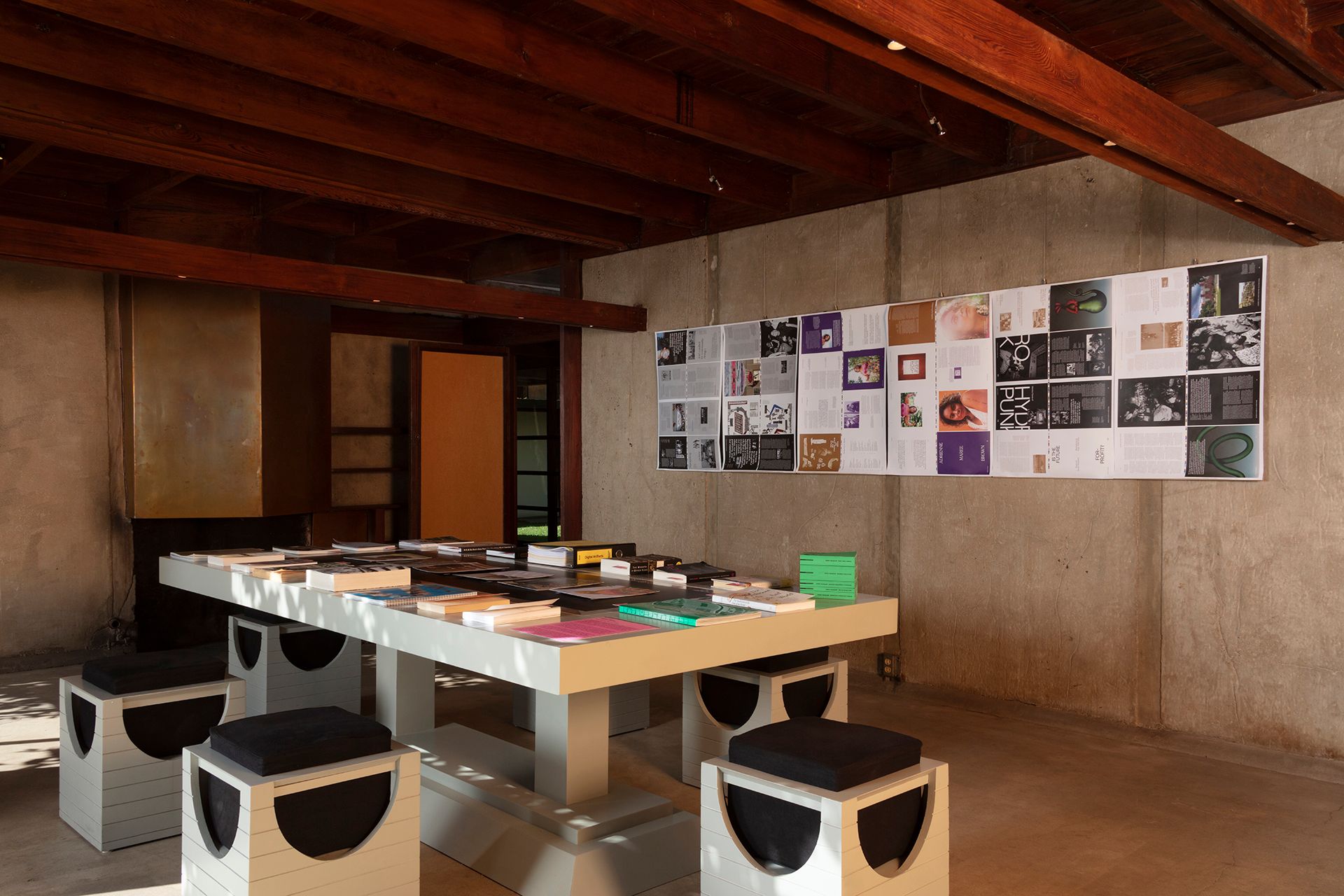
The initial idea was to create a gathering space, a union headquarters, or a student common room at school — one which is always open, and because it's always there, different kinds of things can emerge. For that, you need a central location, a comfortable seating area, coffee, and books. We chose the Biblioteca Municipal Pedro Ivo, a public library in the Marquês square, in the centre of Porto, easily accessible by bus and metro. It’s a small, modernist glass pavilion that functions as a library for children, and for the three weeks of the Comunoteca programme we were able to extend the opening hours.
VS You mentioned the term ‘union’, which can be interpreted in a variety of ways, not just as a place to meet but as an idea or a space of solidarity, where people can come together and fight for common rights. One thing that struck me about the programme you created was that not only did you create an anchor for the local Porto context, but you also made connections between what’s happening at the local level and internationally.
NP In my initial conversations with Angela and Matilde [Losi], we discussed the idea of “Hours for What We Will”, drawing from the 19th century labour union movement, which fought for eight hours for work, eight hours for rest and eight hours for whatever we will — basically for the capacity to do things that are outside of the domain of work. Today, in this environment of late capitalism — with design as a creative discipline very much at the edge of precarity — I feel like everyone in this field is constantly overworked and tired and maybe operating at their limit. And because of how our labour situation is structured, there are very few places for us to meet and actually talk about the struggles that we are facing; to way collectivise, and share tactics of survival. This was the idea behind Comunoteca, alongside the idea to learn from other disciplines.
For example, we invited SINTARQ, the Portuguese architecture union, to give us a tutorial on how they formed, and to understand how such an initiative could be implemented in design. We also had regular assemblies, led by Estruturas de Apoio (‘Support Structures’), three designers based in Porto that were already thinking about ways to self-organise, and this echoed and reinforced the input that SINTARQ gave us. Additionally, we asked everyone who was part of the programme to contribute to a list of books on the themes discussed at Comunoteca; we tried to buy all of these books, and have them freely available at the library — as they still are.
VS A tangential, but very important aspect of the impact of Comunoteca lies in the way that the hosting space allows you to reach unexpected audiences.
NP Yes, the library stayed open late so that we could have the events, but the books that we had collected were and are still there, permanently. As this venue operates as a library for children, it is mostly visited by women with children. A few times, I saw mothers with kids; the kids looking into the kids' books while she looked at others on labour, precarity and even how not to exclude artist mothers. That’s partly why I was so excited about this place of gathering, because it could be a model. When I had my first child, I would go to places around town that offer activities for children, but nothing for you as a parent. Creating spaces where one can fulfill one’s intellectual needs while your child is playing that interests me, as it’s something I missed in my own life. Then too, the library is a very small space — it feels quite busy with only twenty people. This was another intention: not to create a big auditorium with a huge divide between presenters and audience, but really an intimate gathering, made by whoever is there.
VS Maria João, the idea of a city that welcomes children is at the core of the intentions behind the Serpentina, one of the biennale’s Happisodes. But the idea for this project already existed, initiated by you and Patrícia Costa; how did the biennale inject a new dimension into it?
Maria João Macedo The way we describe Serpentina is as a civic movement for urban transformation, based on the needs of children. This is based on the principle that cities are good for children, and that adapting to the lives of children is also good for everyone else, bringing in notions of intergenerationality. Serpentina began largely from the indignation that my colleague Patricia and I felt as mothers. We didn't know each other beforehand, it was this common desire or frustration that brought us together.
As a social educator working with participatory methodology, Patricia brought a certain way of doing things to the table, while I brought experience from my work as a communication designer. I strongly believe that with the power of communication, you can also bring people together and give visibility to important issues. Patricia and I had been applying to several grants, as we had been trying to get the Serpentina project off the ground for some time. That's when I told Magda Seifert — the director of the Porto Design Biennale — about our desire for Serpentina. A few months later, she contacted me and said, ‘Look, the curator of this year's edition thinks your idea fits in.’ That was the first time we got a positive response.
VS So the biennale helped you get things off the ground, perhaps in an unexpected way.
MJM Yes, definitely. On the one hand, it effectively gave us a grant so we could start working; we had to ensure that people were paid at least a minimum wage over time. On the other hand, allowed to get in touch with the municipal government to actually intervene and get involved in the site. It would have been very difficult for us to get the city council to listen and open up the possibility to actually move forward with such a project and. In fact, I think others had tried before us and failed.
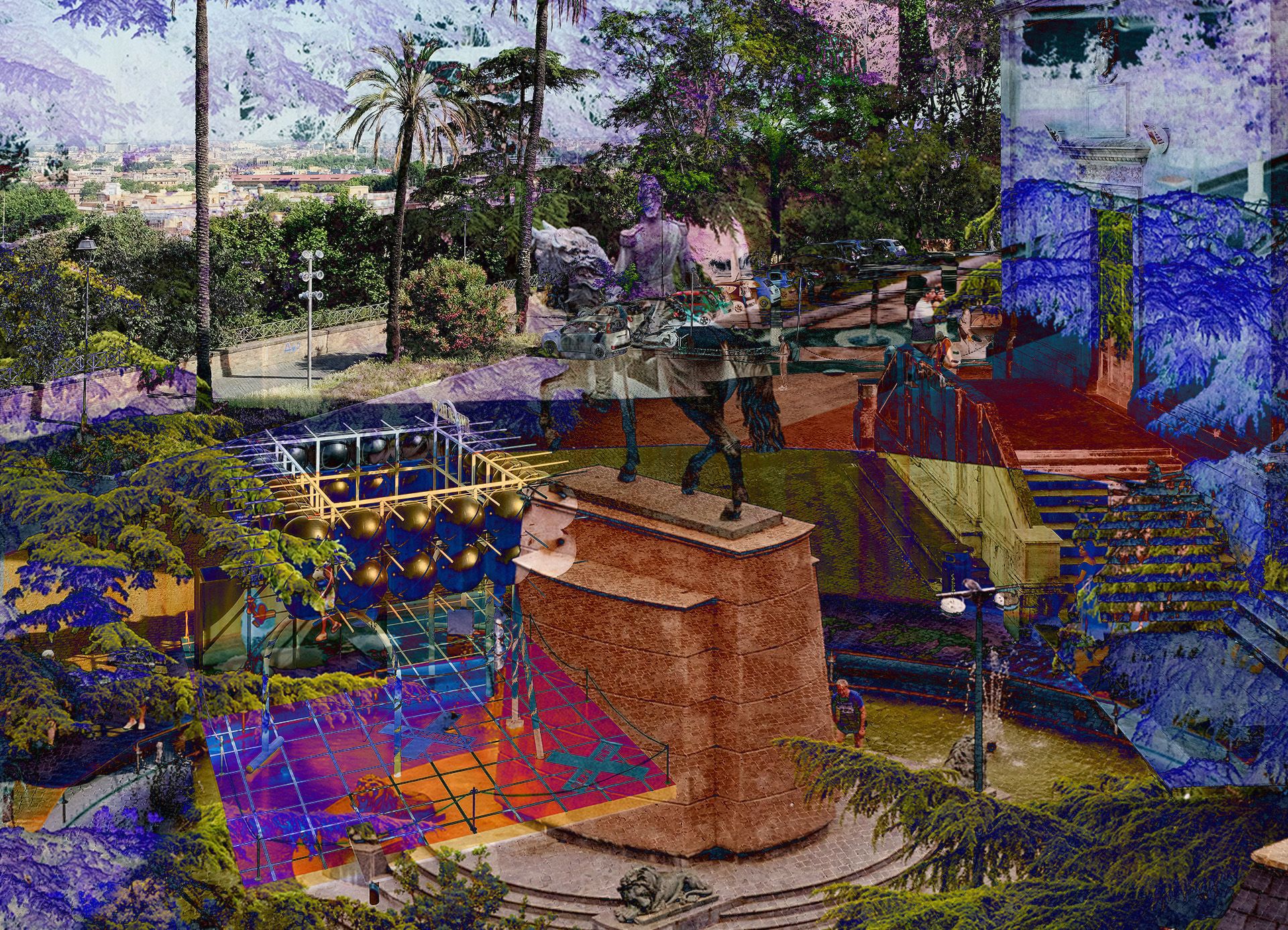
VS At the biennale, Serpentina was represented by an audio installation at the park where you aim to redesign a playground. This was a small fraction of the work you’ve tirelessly pursued in co-design workshops with children, raising public awareness, and hosting several events where you rehearse a child-friendly city. Where is the project now, and what are the next steps forward?
MJM Well, a few days ago, we had a meeting with the new deputy mayor in Porto. We have a design that we believe in, although it doesn’t quite fit with what the city has been doing in terms of playgrounds. This is mainly because we are proposing some interventions that go beyond the limits of a typical playground. We are also trying to get the city council to frame this decision in terms of a larger Playable City programme. Next year, the city council will go ahead with the remodeling and creation of a total of eleven playgrounds, in addition to ours. We believe that if this is not framed within a programme that thinks about the paths and routes that children take between home, school and the playground, the sites won’t work, falling short of what they could be. Our most recent proposal was precisely to create a framework to think about the city, using the playground as a starting point.
VS You’ve also recently launched a national campaign.
MJM Indeed, because this is not a problem specific to Porto. This was really a strategic idea: realising that with a movement of this kind, the more people it can win over, the better for everyone and the better for the cause. We began to make it real; in terms of planning, resources, and advertising, we were gathering partners and we realised that we could even use animated billboards around the country. We printed more posters to put up in Lisbon, as the capital city, also as an argument to lay before local authorities; we wanted to put pressure on decision-makers. The campaign was very successful and in fact, the current mayor of Porto ended up promoting the campaign himself, on social media. Recently, we have been contacted by other informal groups — not only in other neighborhoods in Porto but also in Lisbon and Braga — who want to initiate similar processes. We will start by sharing experiences and building a critical mass.
VS Nina, how has the critical mass that you gathered around Comunoteca continued beyond the three weeks of the programme?
NP Continuity is always a work of hope. The hope is that by creating a space for a community to gather — for the people in Porto and those who participated in the programme — this will help them and us to continue having those conversations. But that cannot depend on the effort of the biennale, nor on mine. Of course, I would very much like Comunoteca to exist beyond the biennale, so I’m very hopeful that it will remain as a gathering space for the community of designers and cultural practitioners in the city. It would be very important to have this space — to come together to vent sometimes, but also to dream.
VS Planting these seeds is only part of the effort; what will come will come. Things grow not because we want them to, but due to the will and engagement of those who take part. I think it gets easier to stay engaged when you remember how you felt in the moment. As Maya Angelou said, “People will forget what you said, people will forget what you did, but people will never forget how you made them feel.” Angela, I return to my first question. How can engaging in the methods you have chosen for this biennale contribute to changing the way we work as curators?
AR Just think about the word: to ‘curate’ means “to take care” of something. In the end, it doesn't mean following a line of production, as is often interpreted — it means taking care. But then there's the moment. There's the historical, political moment, in which perhaps we should all be much more aware of the positive power that our role can have. The power of the moment can shift thought, it can open up a different image of reality. For me it's always about pushing the boundaries of where the impact that a curatorial project related to design can have, but positively, on everyday life. So has curatorial practice changed? Yes, it has. If we want to act in the present, we can't work on models from the past, especially disciplinary ones. If you want to work on a reality that is eco-social, you can't rely on large economic resources. There are mechanisms we can use to be able to produce relationships in a different way, in a world that is basically exhausted. They are forms of visibility for realities that have no visibility. But they all arise from a feeling for change; that is, all projects that share that value. So is this a movement? Should we take it that way? Can we even push it a little further? This is also a curator's job, to understand how to insert the subsequent ideas into new dynamics, where that change can really be applied and tested.
Bios
Maria João Macedo is a graphic and communication designer, focusing on books and visual identities. Working primarily with artists, curators, and cultural institutions, the studio she runs under her own name is responsible for the revised visual identity of Culturgest, the series of publications dedicated to the Serralves Museum of Contemporary Art Collection, as well as many artist books. She is also a founding member and responsible for the editorial programme of Sismógrafo, an independent space dedicated to curating and presenting contemporary art exhibitions in Porto, since 2014.
Nina Paim is a Brazilian designer, curator and editor, co-founder of Futuress, and publisher at Bikini Books, Porto. She is especially interested in how books, exhibitions, and events can create spaces where people meet, share, learn, and change together. Her work focuses on directing, supporting, and collaborating – mainly through her roles as a curator and editor.
Angela Rui is an Italian curator and researcher based in Milan, working in design theory and criticism.She believes that design is positioned as a critical practice that problematises conventional ways of inhabiting and experiencing the world founded on human control and exploitation of other bodies. Among many other projects, Rui curated exhibitions including ITALY: A New Collective Landscape (2023) at ADI Design Museum in Milan and AQUARIA. Or the Illusion of a Boxed Sea (2021) at the maat in Lisbon
Vera Sacchetti is a Basel-based design critic, curator, and educator. She specialises in contemporary design and architecture. In 2025, she curated Earthrise 25: Where to, from Here? at the Circolo del Design in Turin and co-curated Right Here, Right Now: Bioregional Ways and Situated Practices at the Covilhã Design Triennial. In 2023, Sacchetti co-founded Fazer, a new design magazine in Portugal. In 2020, she co-established the Design and Democracy platform, which maps the intersections and overlaps.
About
Porto Design Biennale is an event fostering debate, welcoming concerns and multiple perspectives, as well as stimulating interest in design, driving new discourses and practices that increase the discipline's prospective capacity to outline innovative solutions to collective problems. Curated by Angela Rui, the fourth edition (2025) is titled "Time is Present. Designing the Common". It focuses on design as a social catalyst, exploring how it can shape collective experiences, strengthen communities, and create lasting social relations.(2025)